What Is This Hybrid?
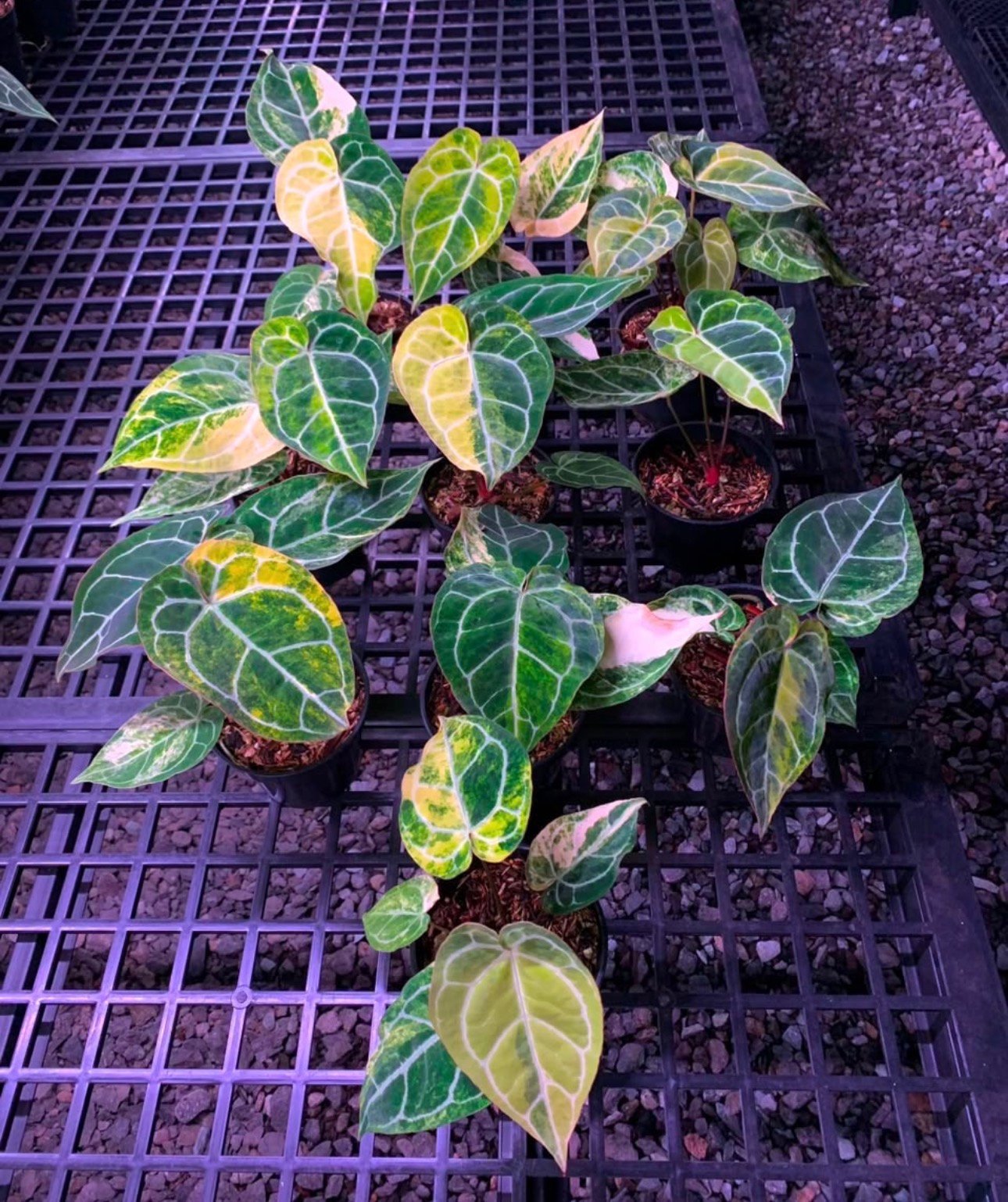
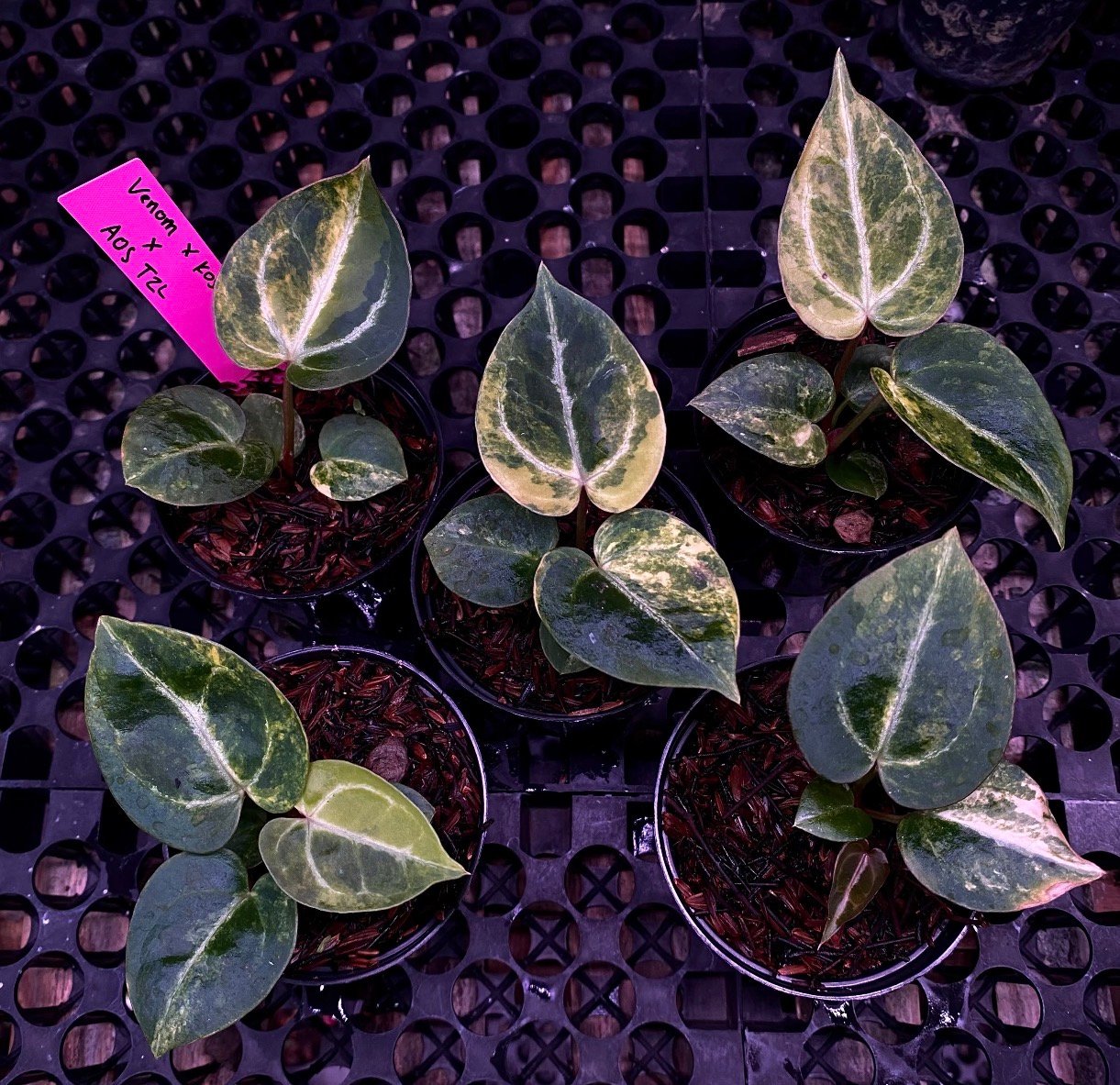
The Anthurium Pedatoradiatum Aurea x Crystallinum is a deliberate hybrid cross between two of the most visually compelling Anthurium species in cultivation, elevated further by the addition of aurea variegation — one of the rarest and most sought-after color expressions in the collector aroid world.
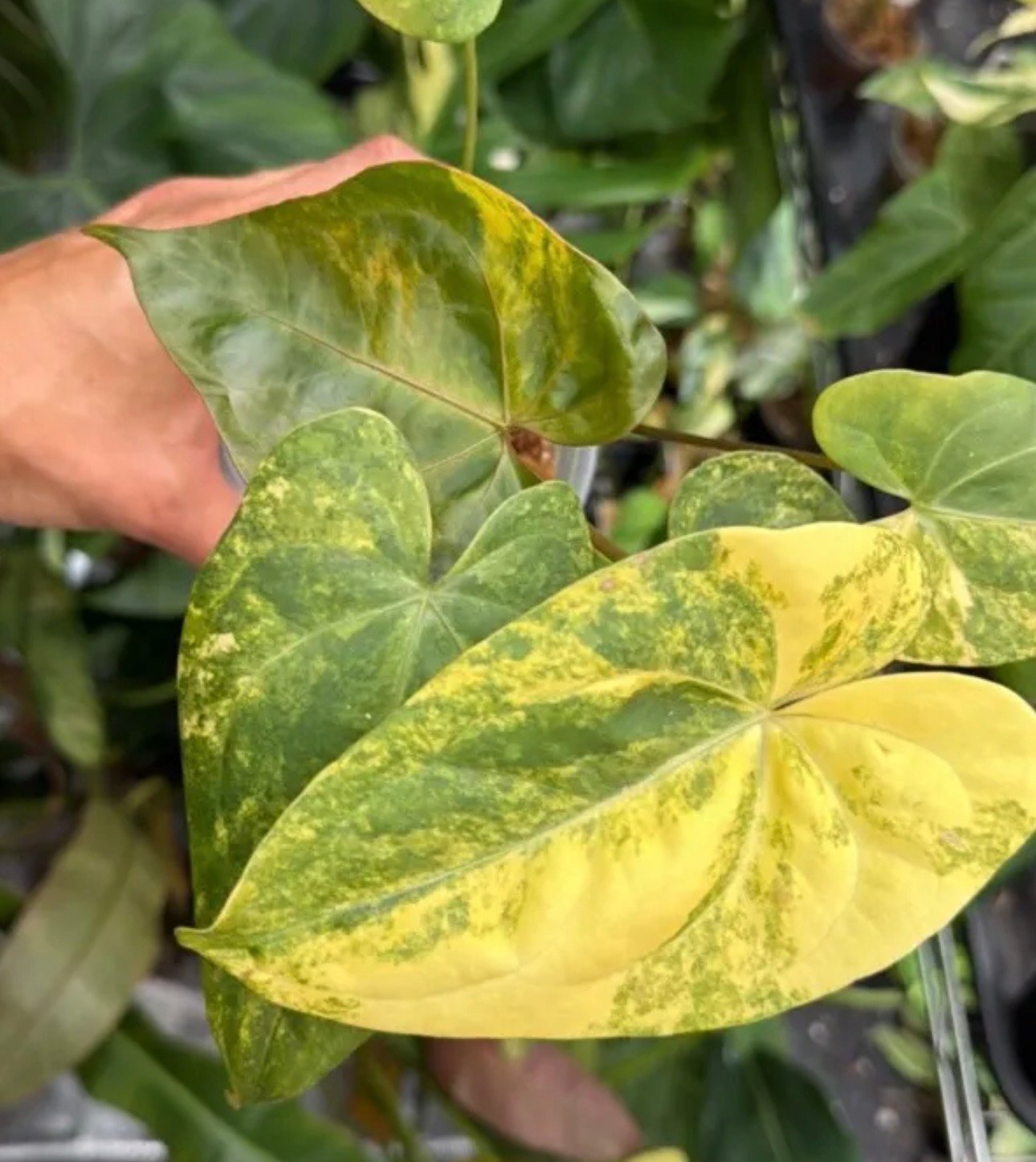
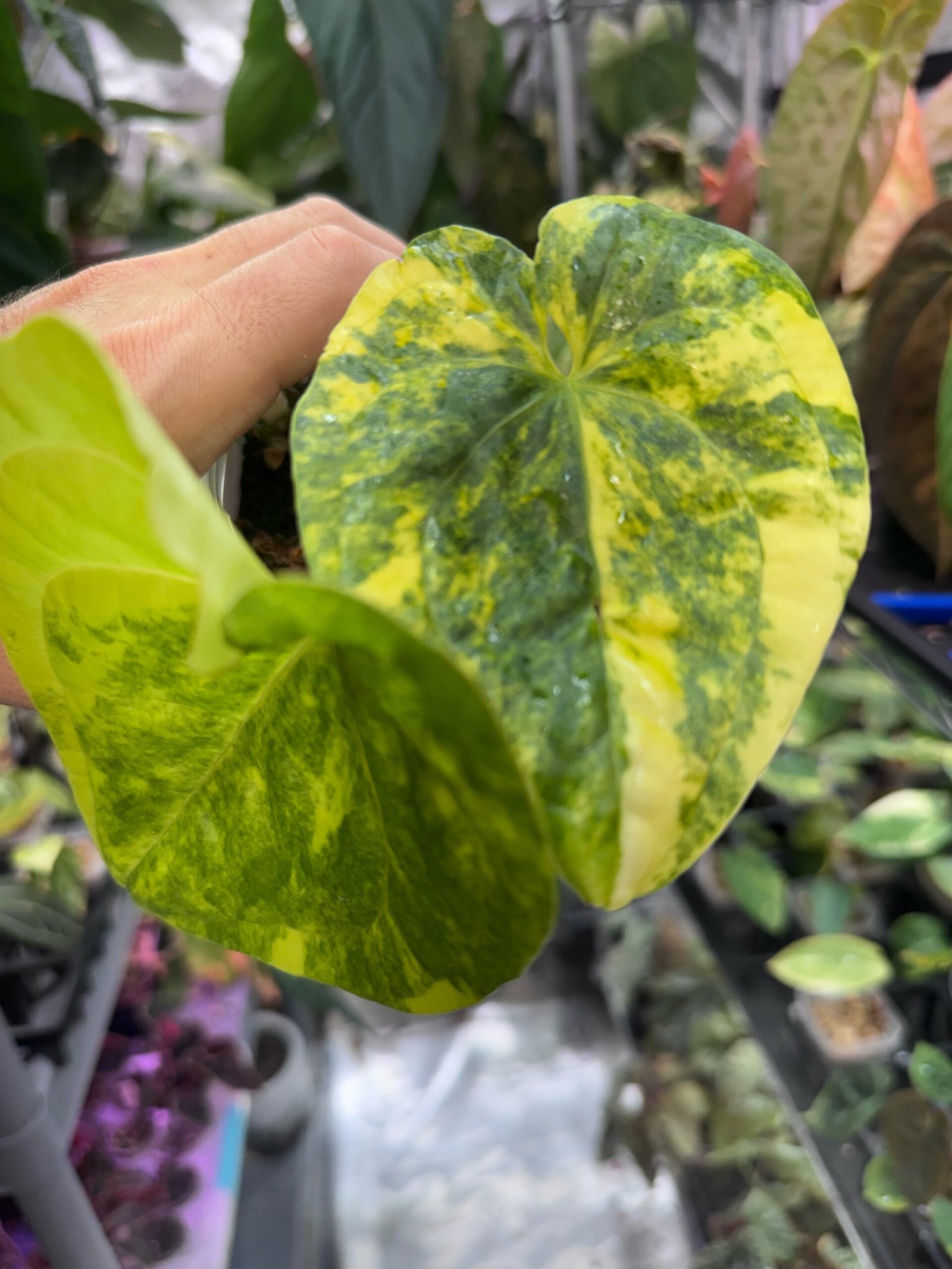
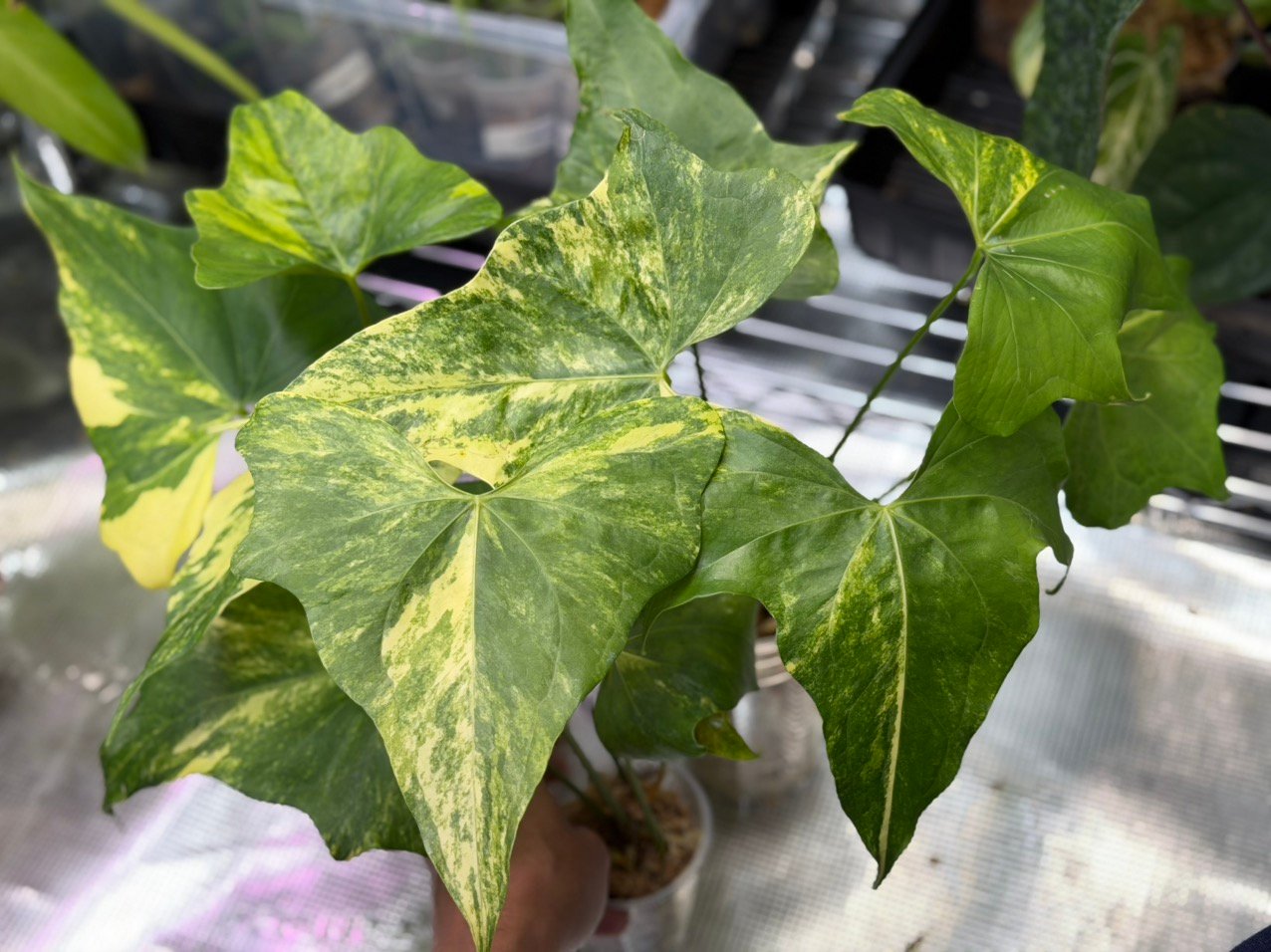
Anthurium pedatoradiatum is a terrestrial species native to the humid forests of southern Mexico — Veracruz, Chiapas, and Tabasco — and is immediately recognizable for its deeply lobed, hand-like foliage that radiates outward in a wide, open fan. Common name: Anthurium Fingers. The aurea variegated form of this species expresses a vivid chartreuse to neon yellow-green coloration in the reduced-chlorophyll areas of the leaf — a warm, electric tone that reads almost luminescent against darker foliage.
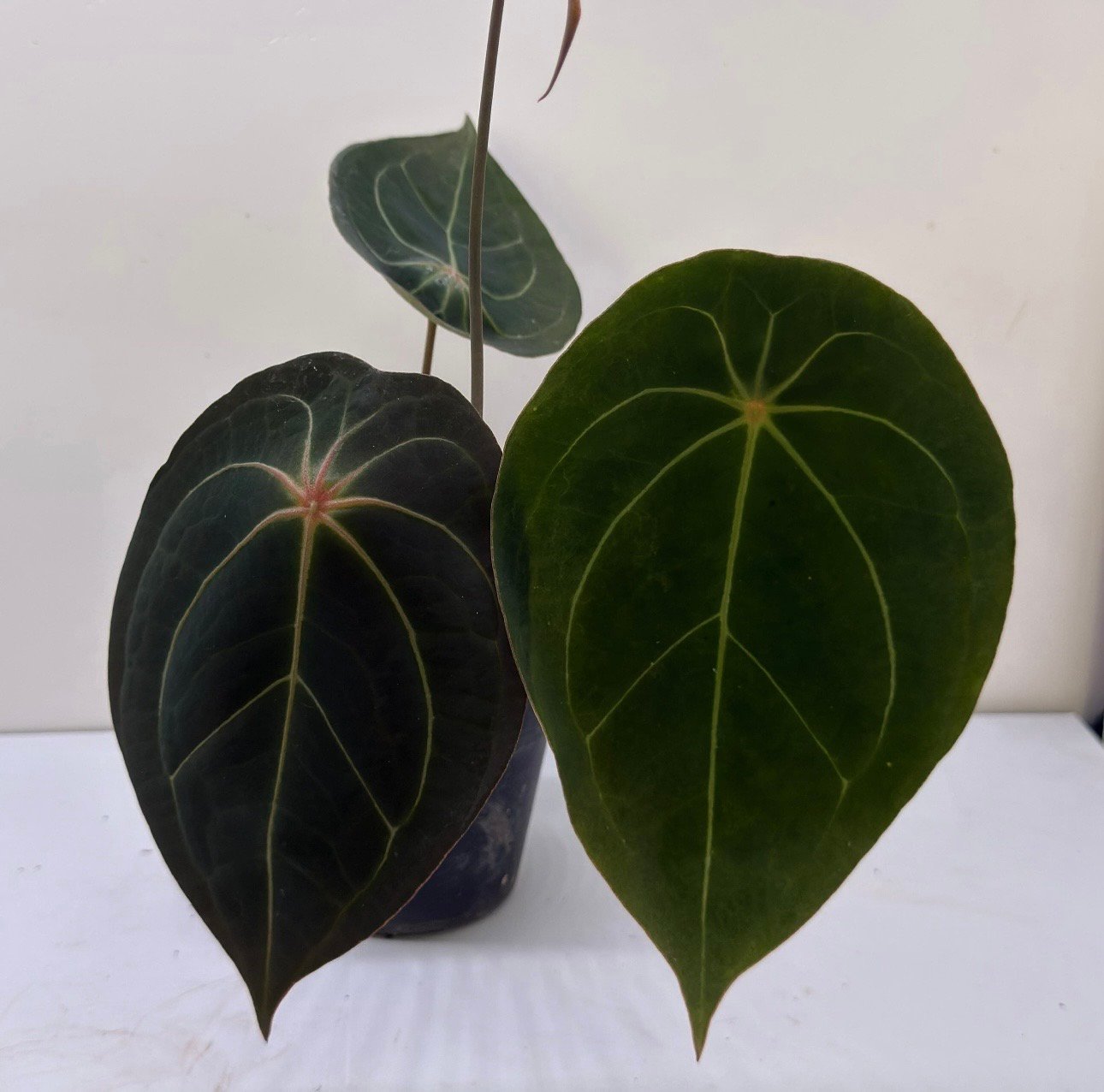
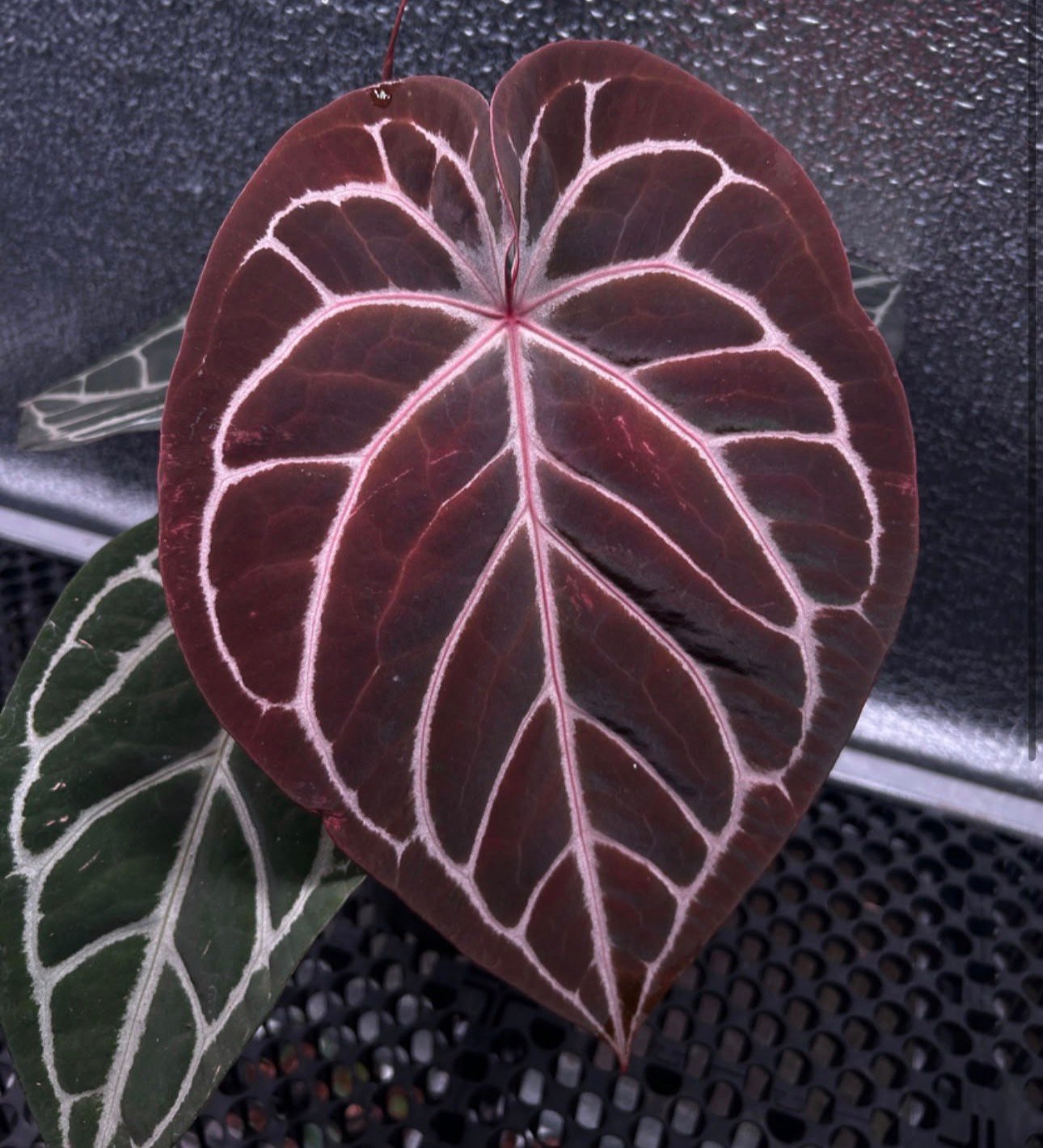
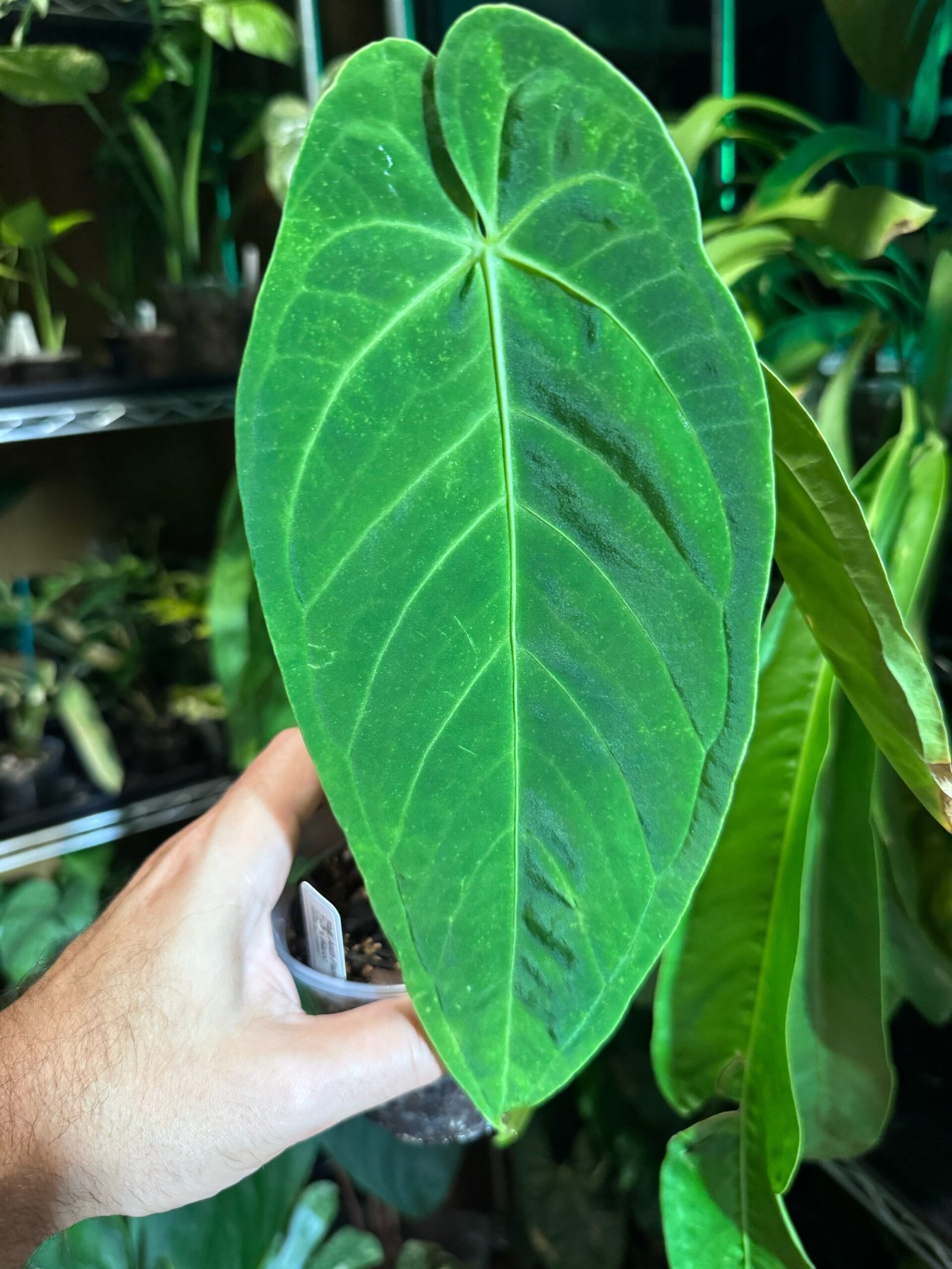
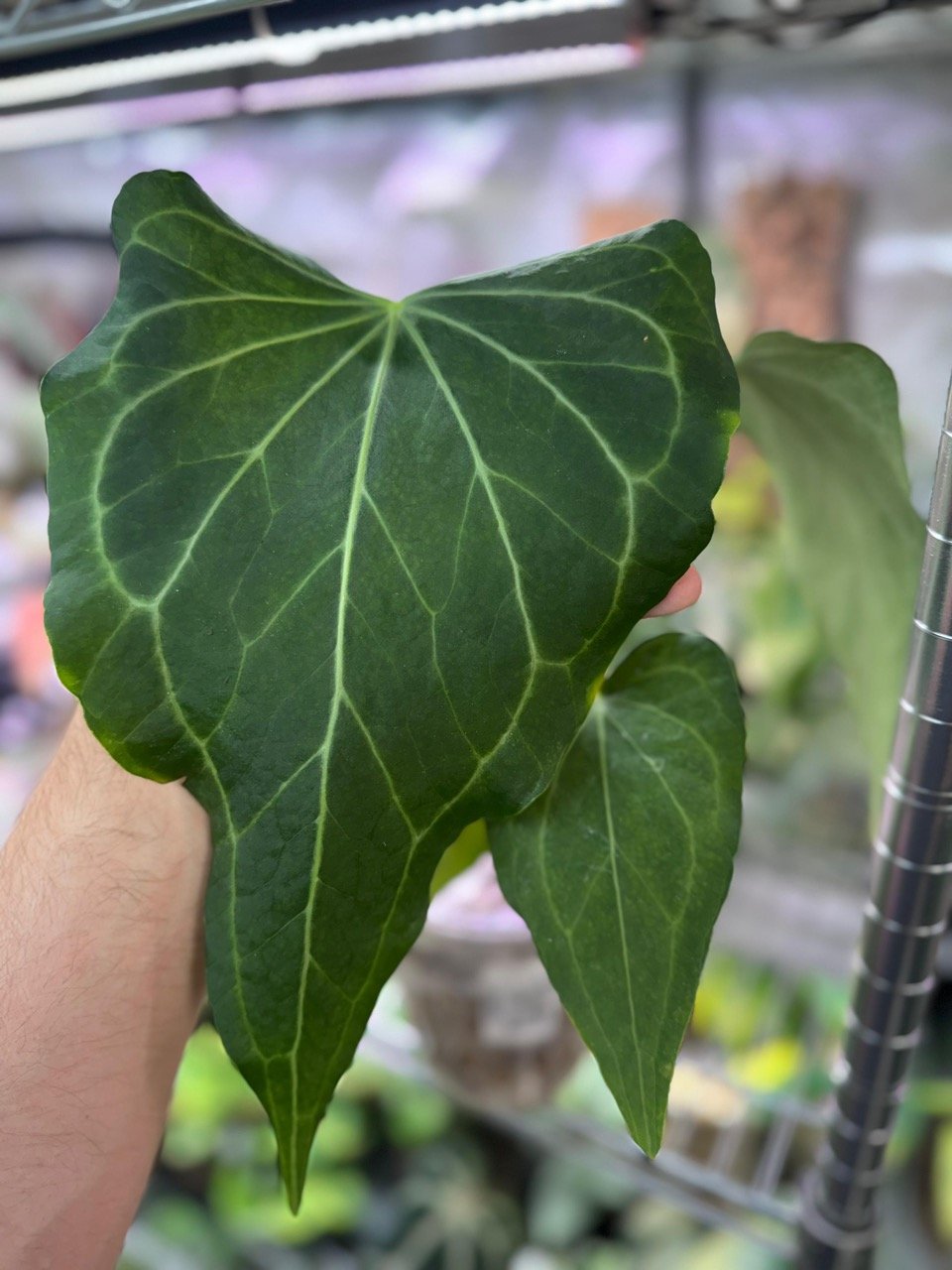
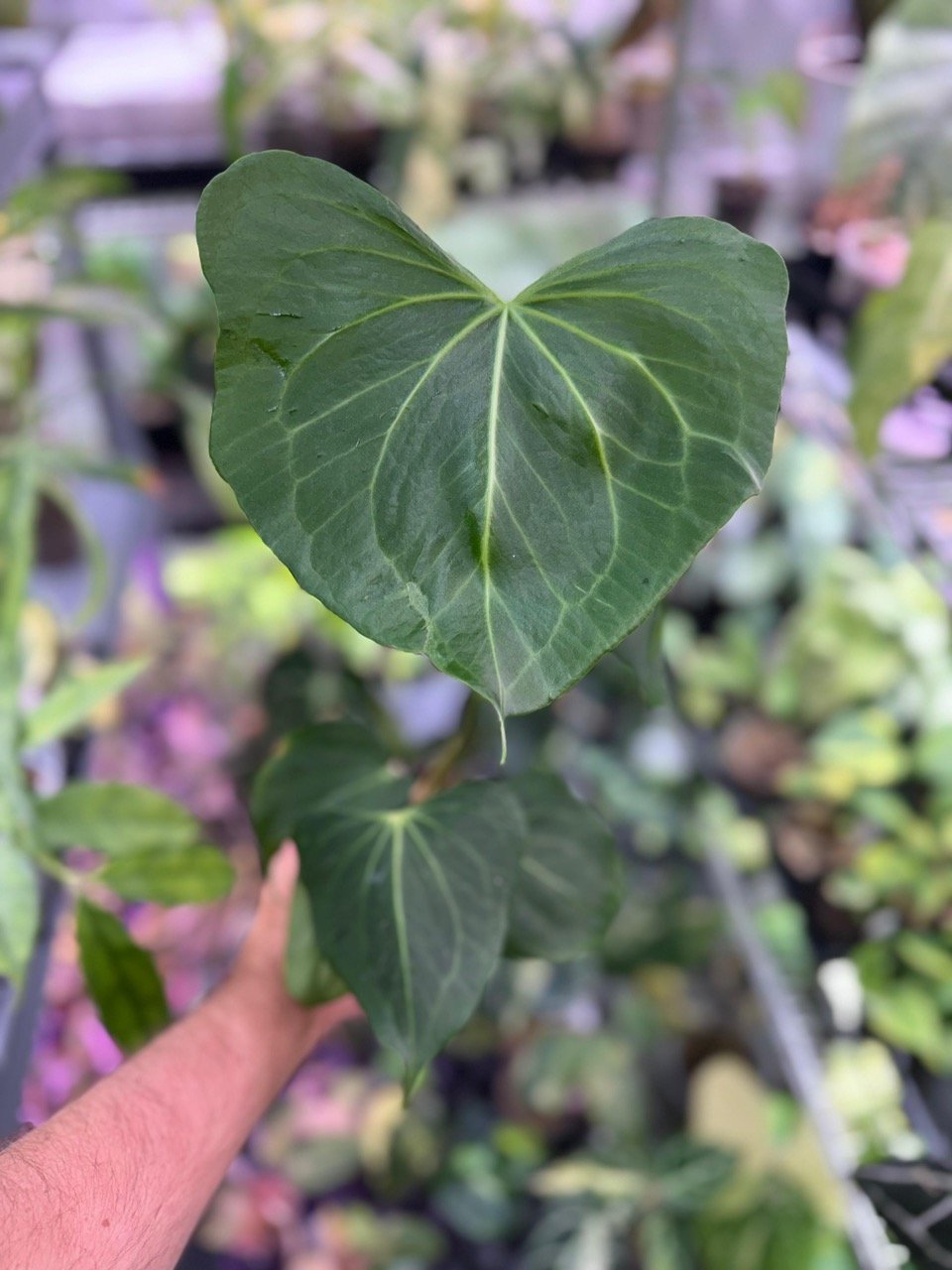
Anthurium crystallinum is the other parent — the velvet standard of the collector Anthurium world. Broad, heart-shaped, dark green leaves with a matte velvety surface and luminous silver-white venation that appears almost hand-drawn. It is the species that introduced generations of collectors to velvet aroids, and its genetics here contribute the leaf shape, the venation quality, and the dark, rich base coloration that makes the aurea contrast so dramatic on this hybrid.
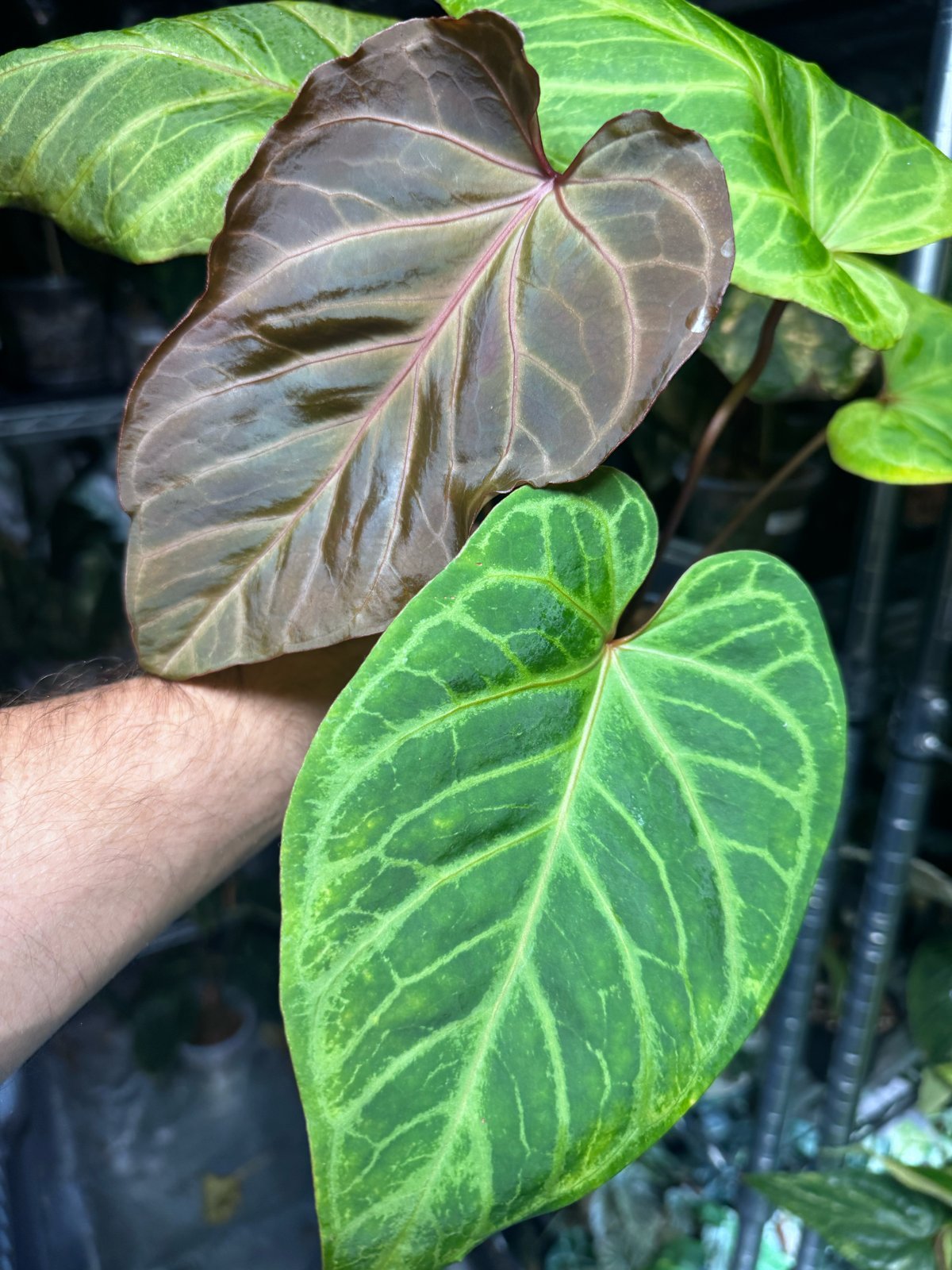
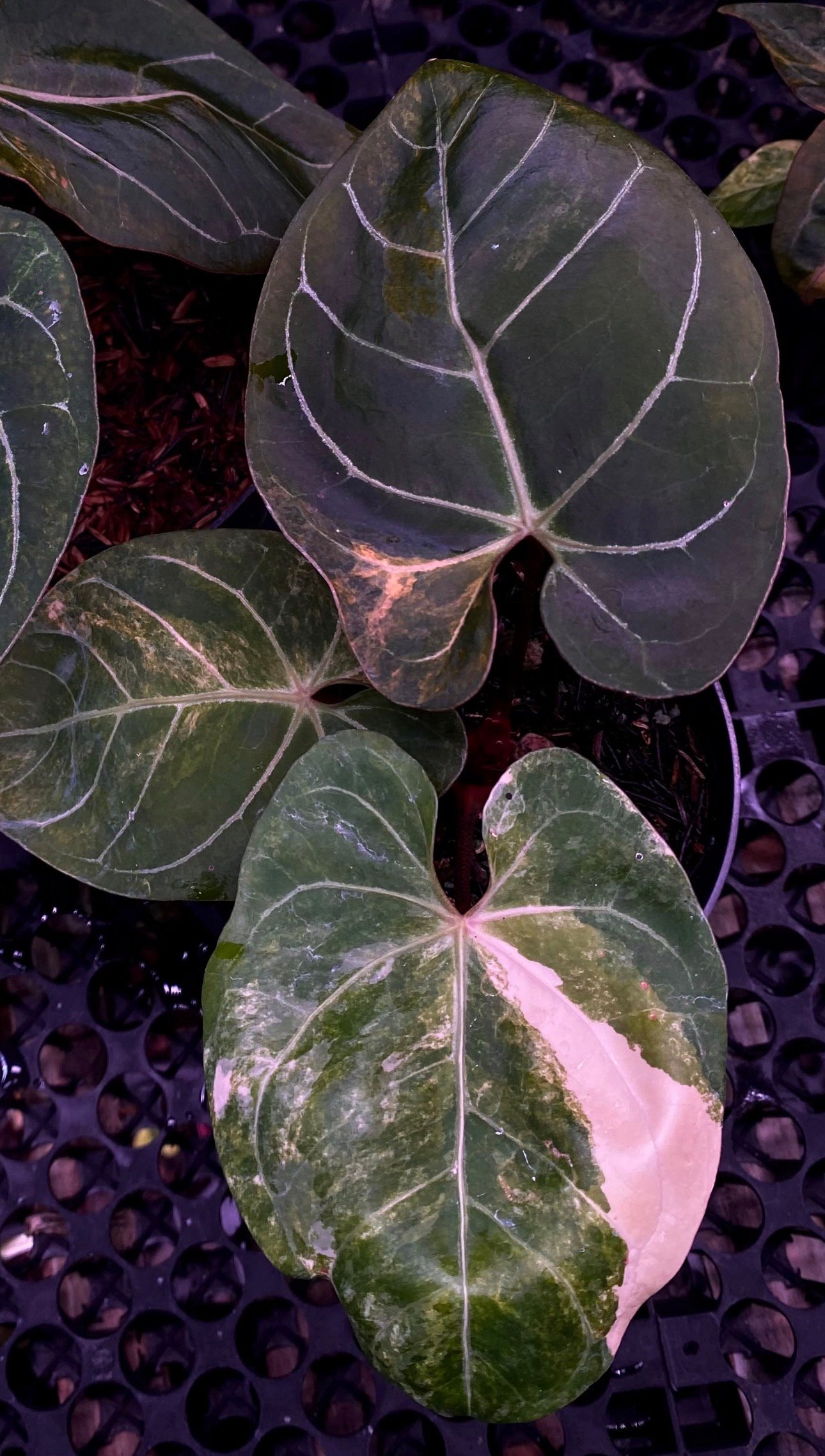
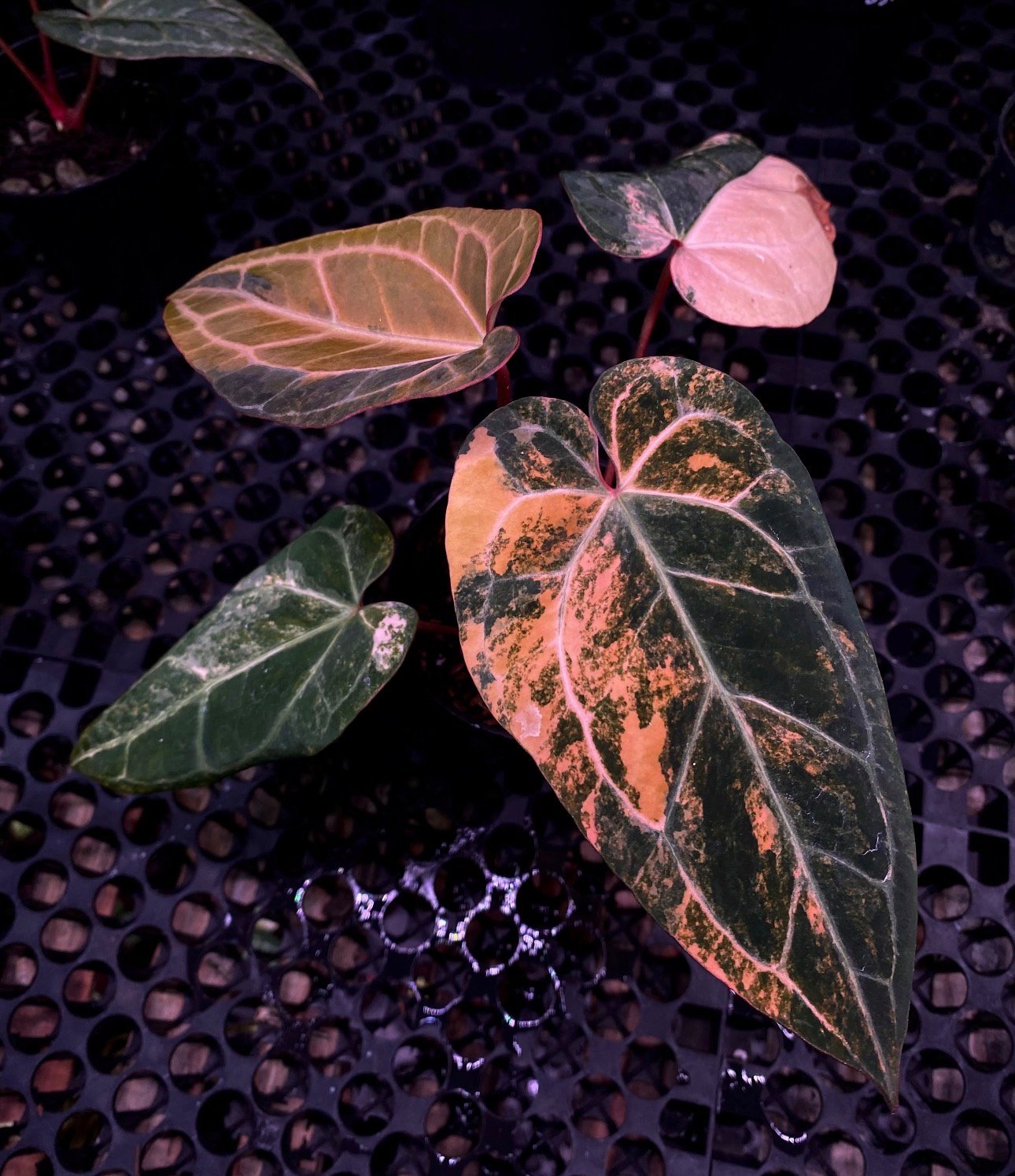
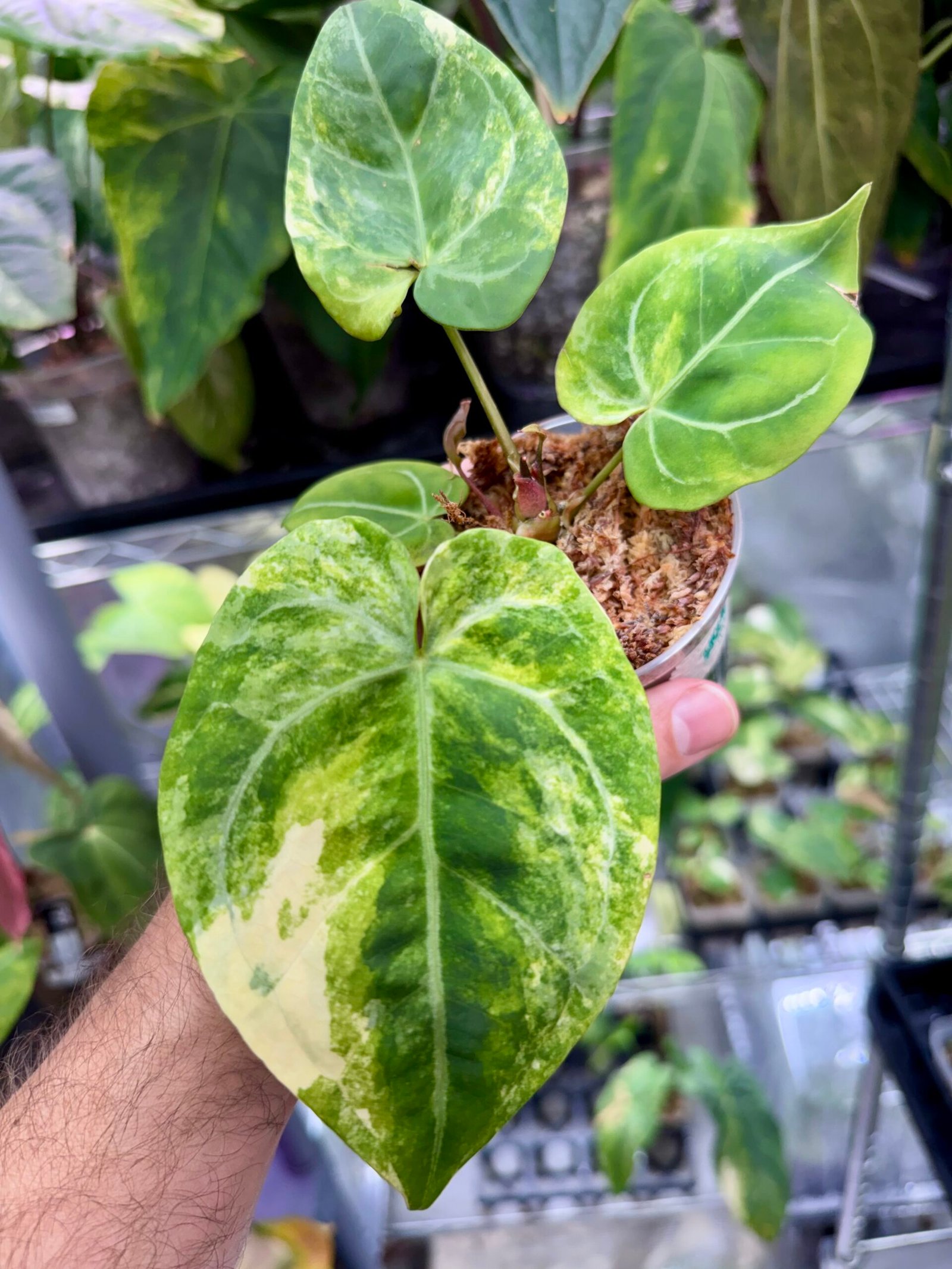
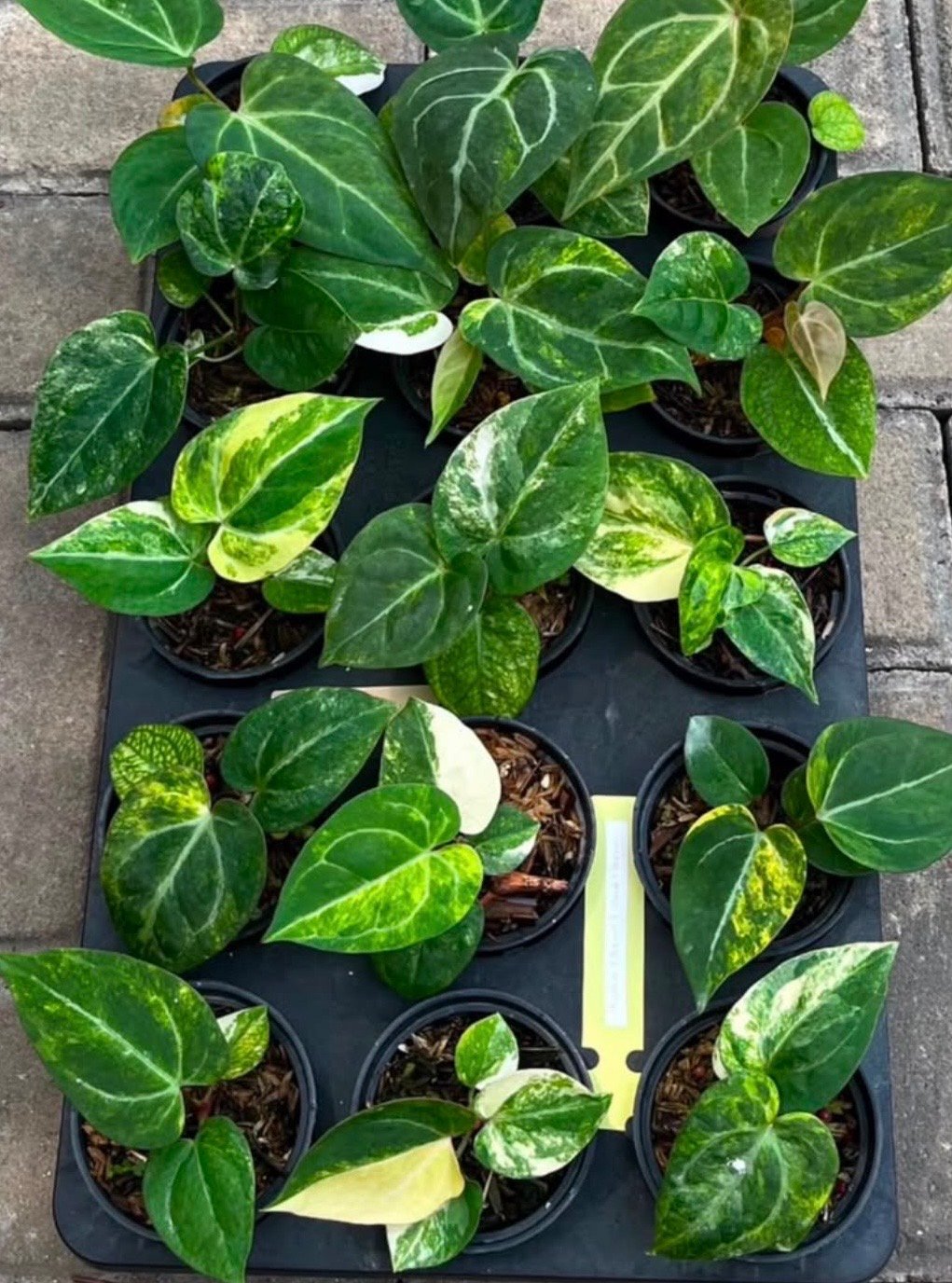
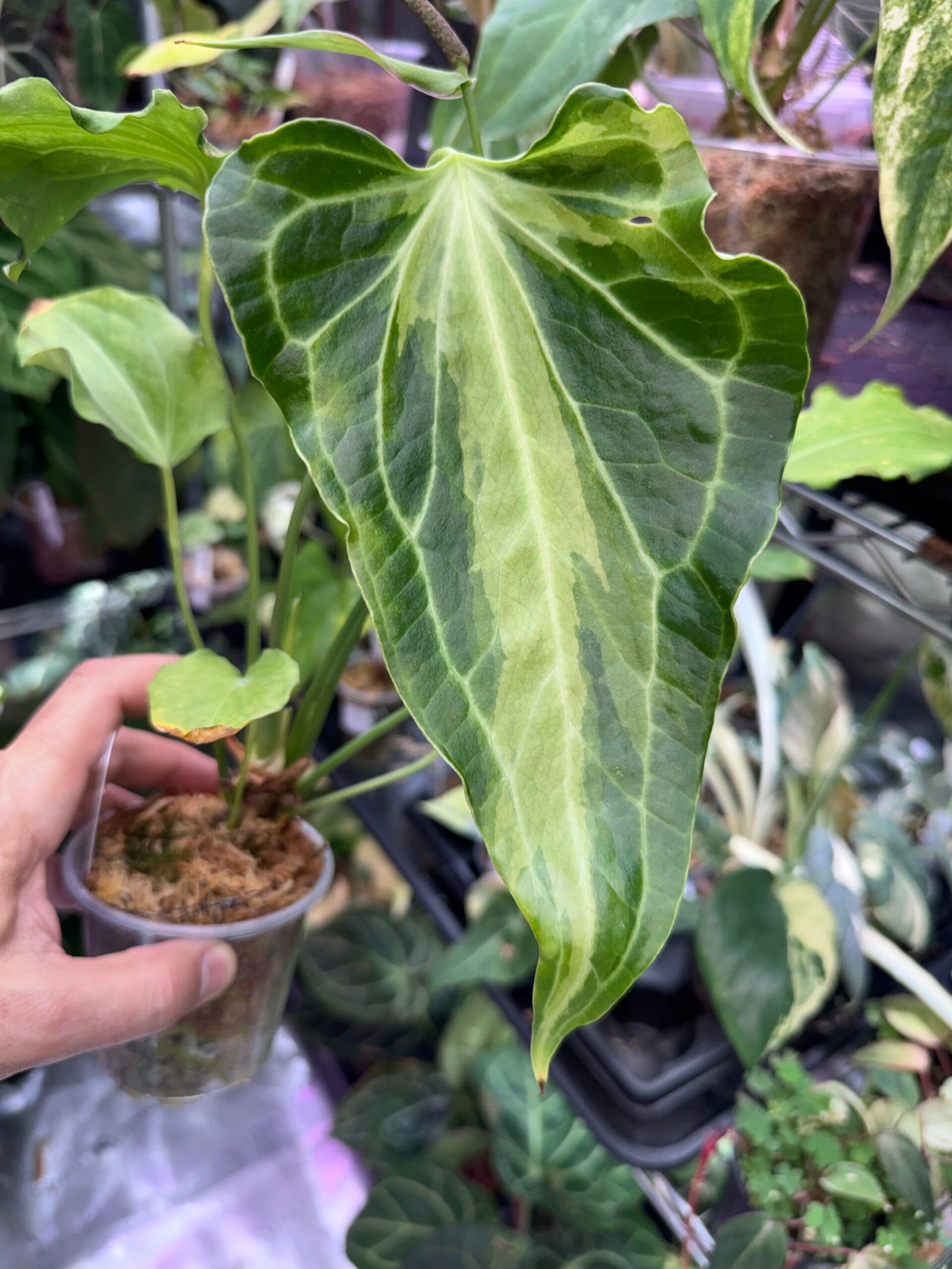
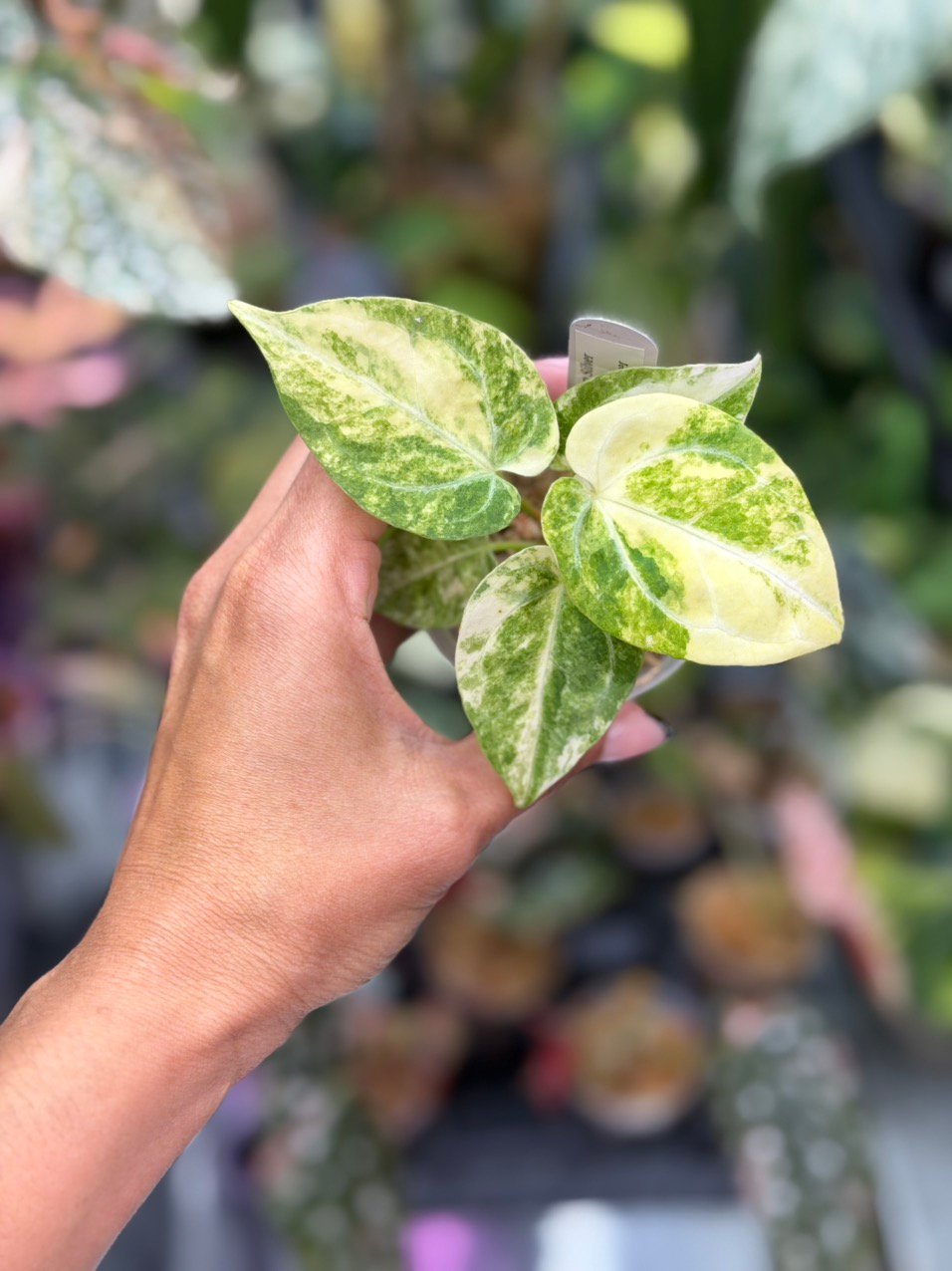
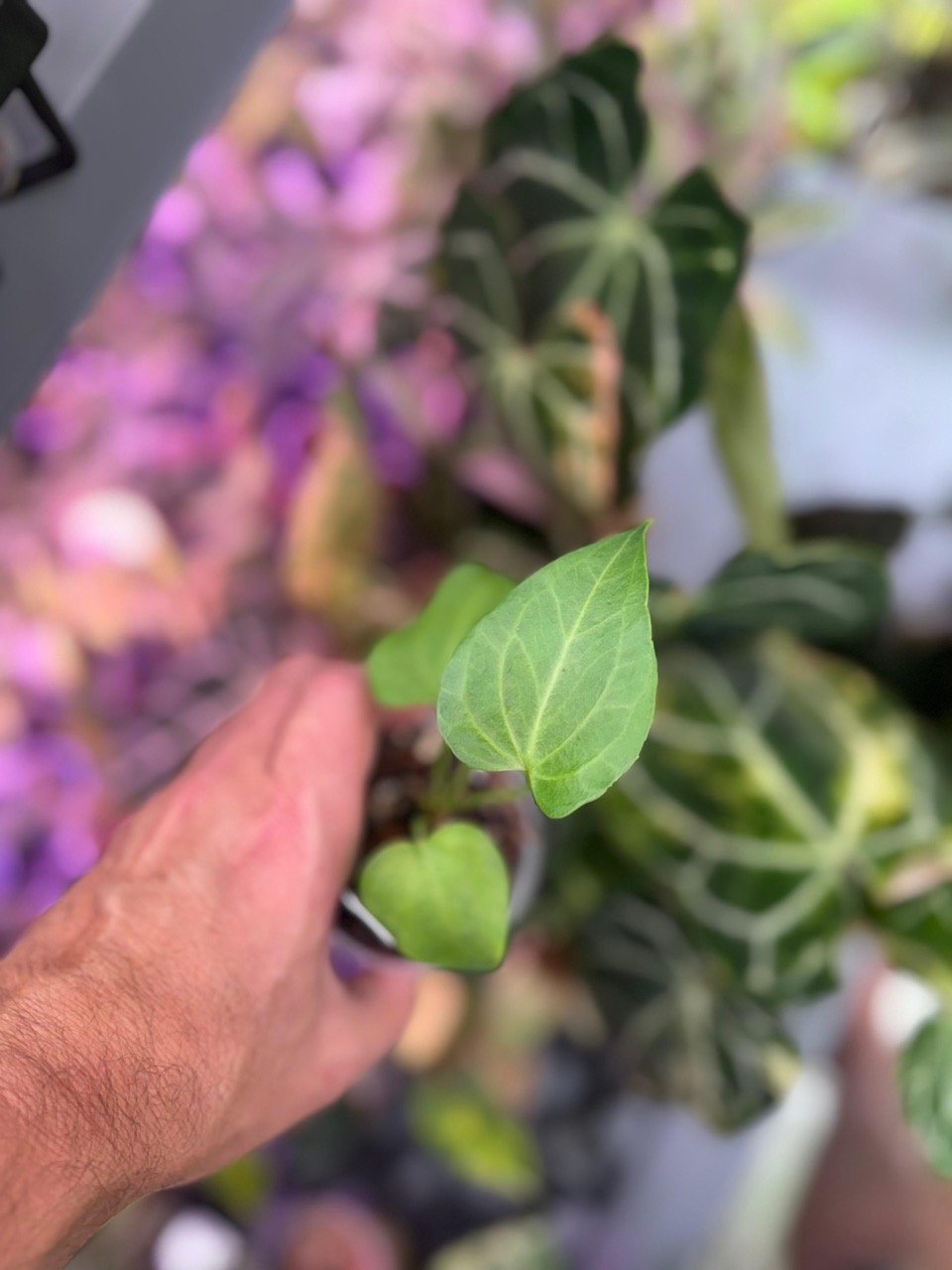
The result of crossing these two? A plant with a broadly heart-shaped to slightly lobed leaf form, velvety surface texture, defined silver venation, and the Pedatoradiatum Aurea's electric chartreuse-to-neon-green coloration distributed across the leaf in a way that varies uniquely from specimen to specimen.
What Made This Specific Plant Different
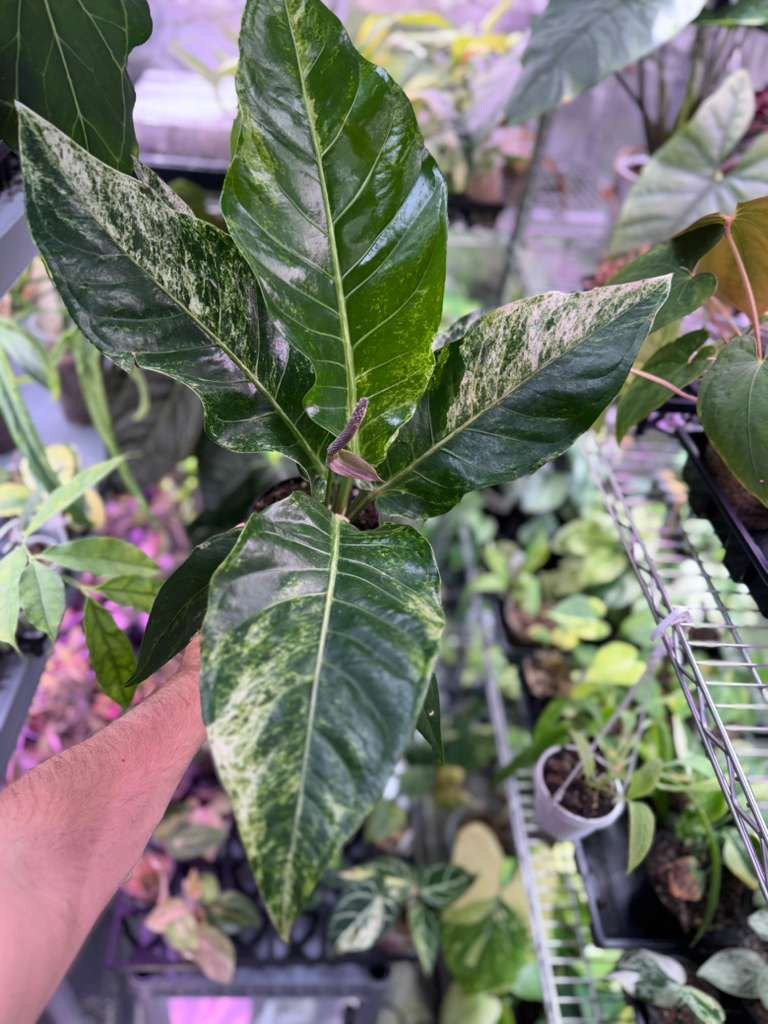
Not every aurea hybrid expresses its variegation in the same way. On most specimens, the neon green tones appear as irregular streaks, sectors, or marbling distributed somewhat randomly across the leaf surface. Beautiful — but not like this one.
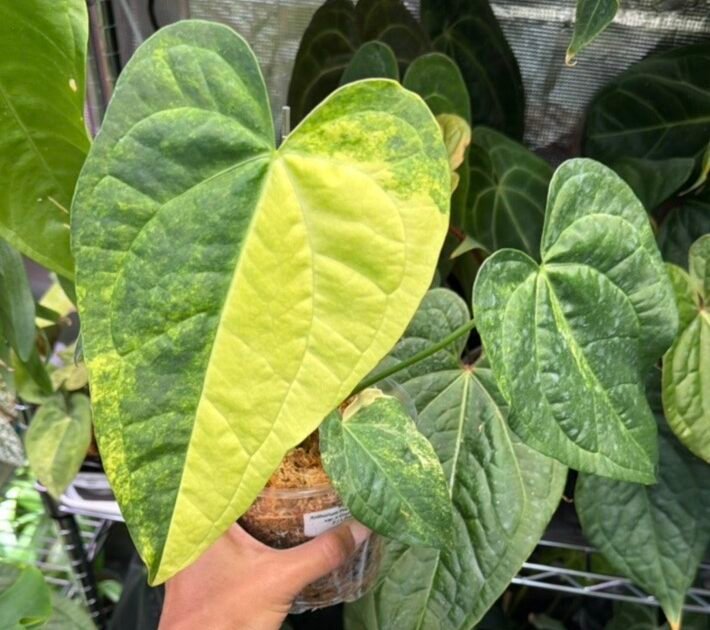
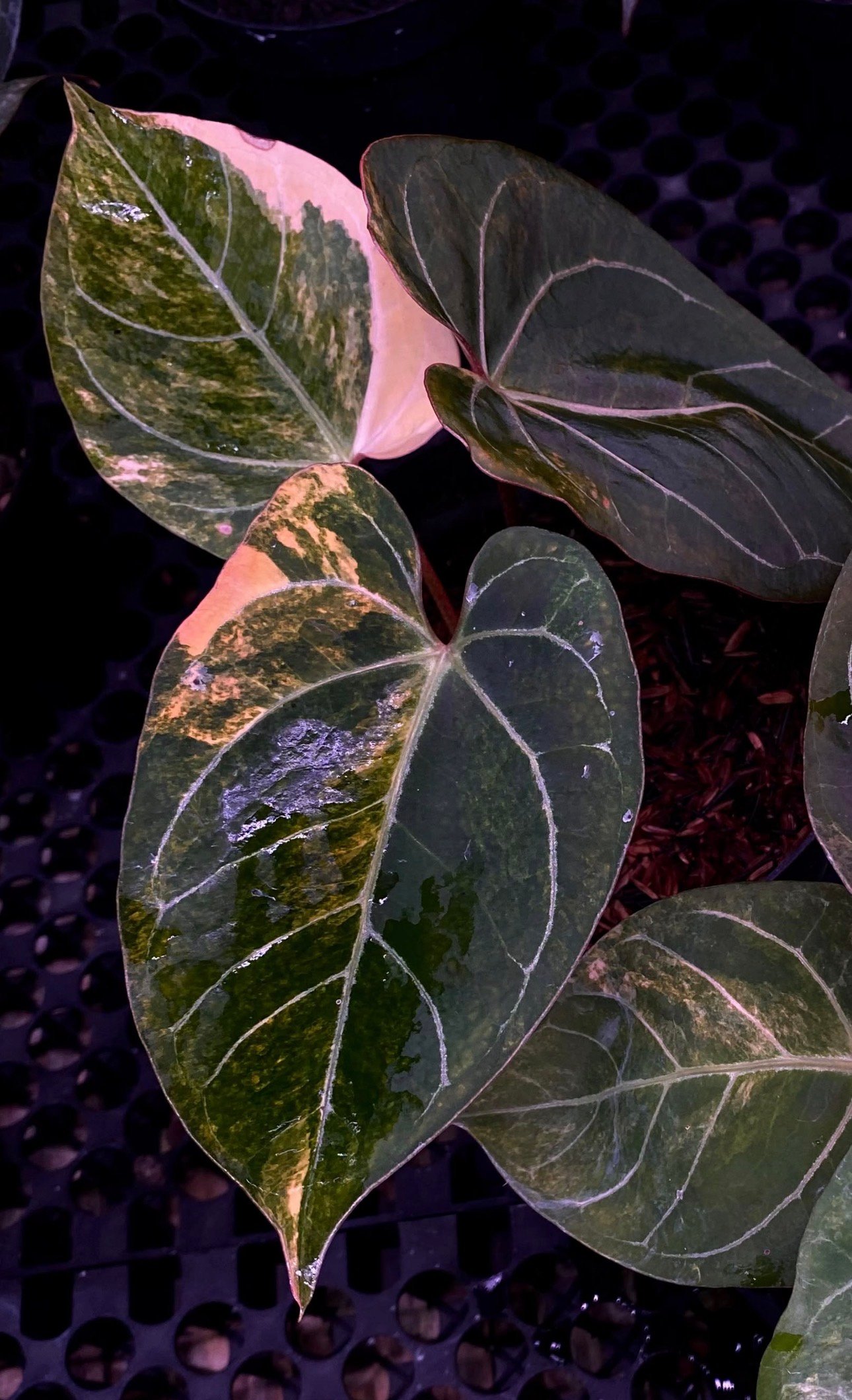
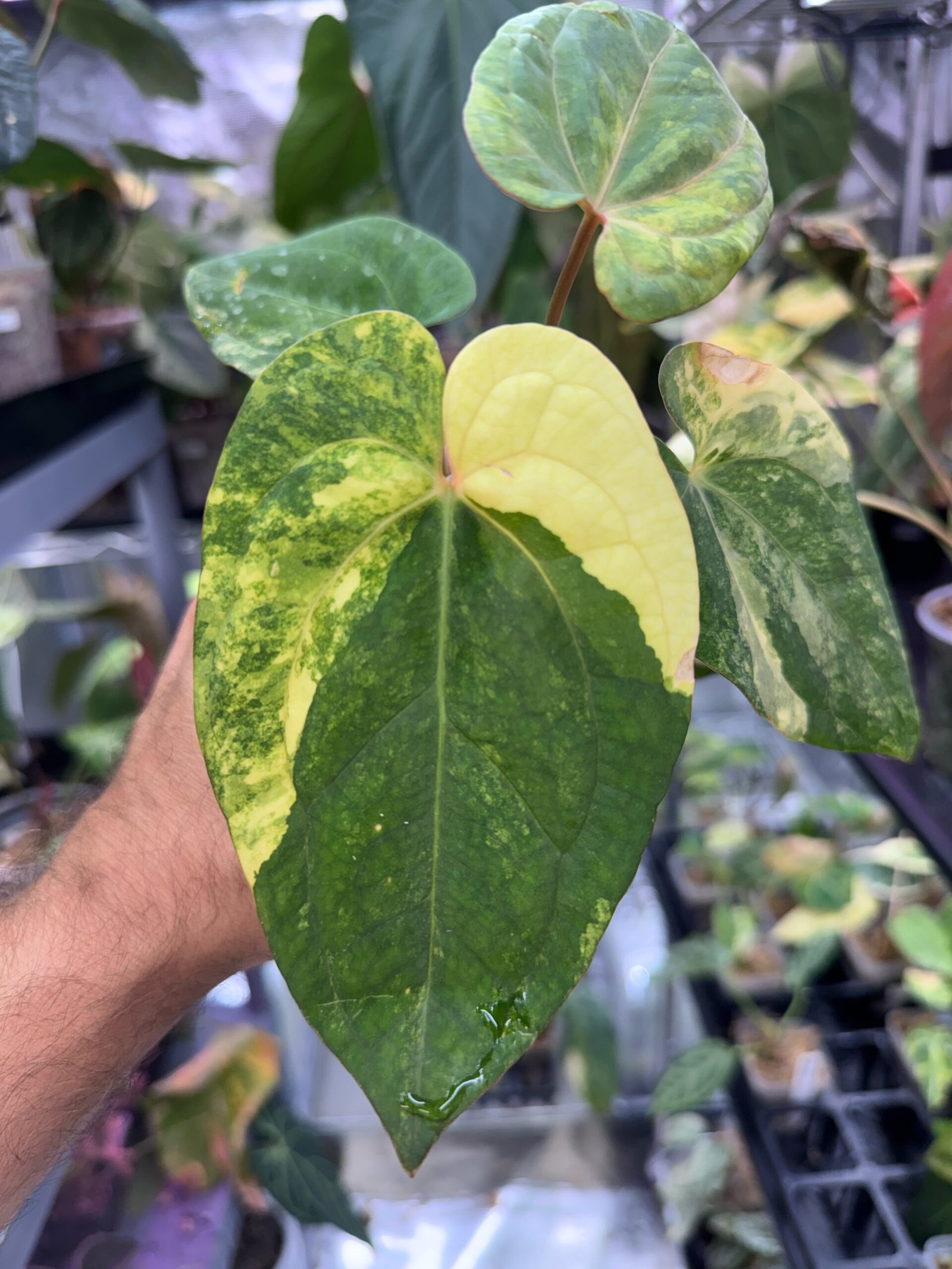
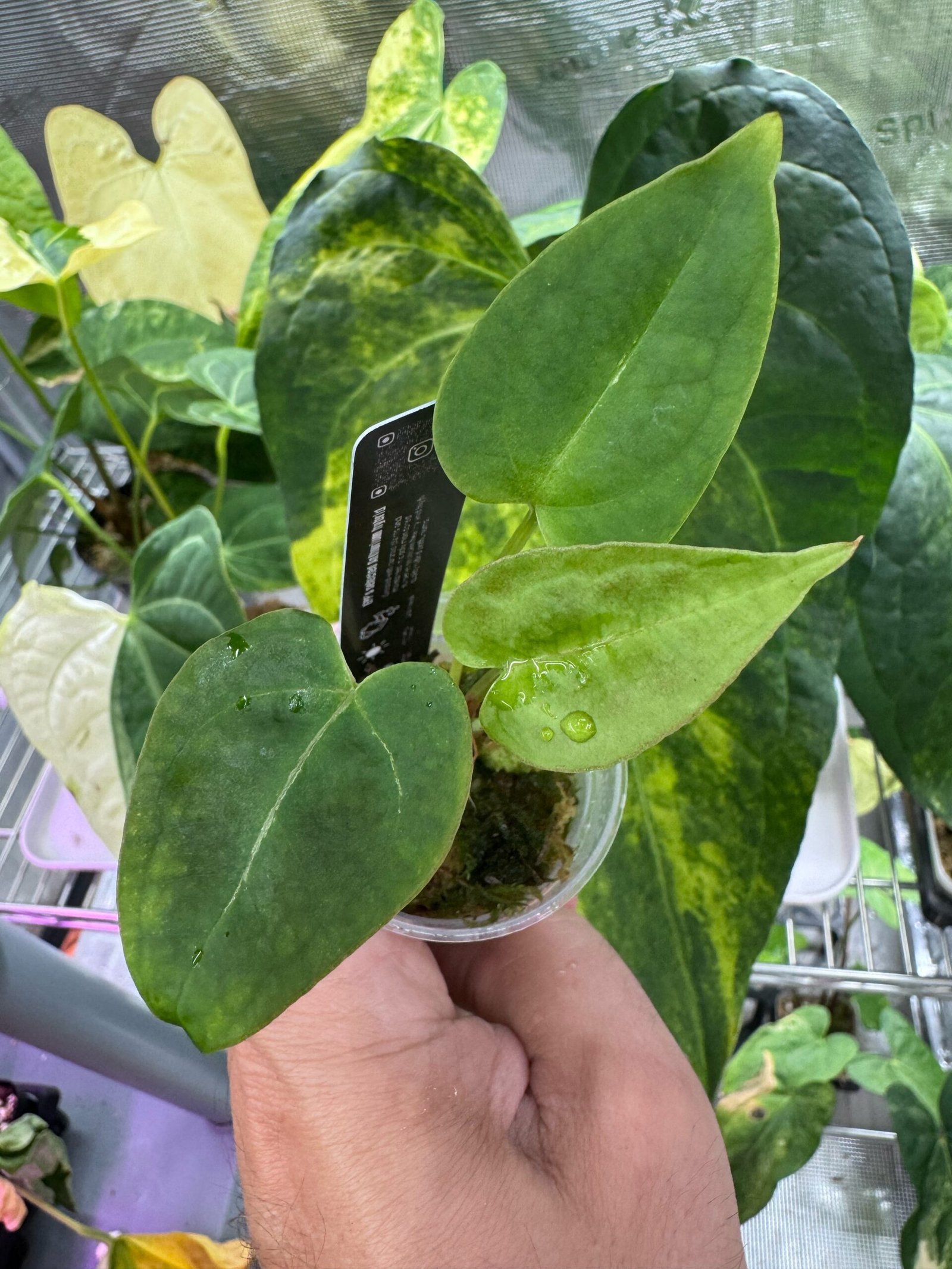
This particular plant expressed what collectors call a half-moon split — one of the most dramatic and symmetrically striking variegation patterns possible on any plant. The leaf was divided cleanly down the center: the left half a deep, saturated forest green carrying the full velvet and silver venation of the Crystallinum parent, and the right half an electric, neon chartreuse-to-lime that seemed to almost glow from the inside out. The split was not gradual or blended. It was decisive.
That kind of expression happens when a variegation sector covers exactly half the apical meristem as the leaf develops — it is a genetic moment of perfect timing that cannot be engineered or predicted. You just have to be watching for it when it happens. We were watching.
Why We Selected It
At PlantNookShop, we do not list plants because they are available. We list plants because they are worth listing. Every specimen that goes up on our site has passed through the greenhouse with eyes on it — evaluated for health, root development, foliage quality, and that harder-to-define quality that makes a collector plant genuinely extraordinary rather than just technically rare.
This plant checked every single box and then added one we were not expecting. The half-moon split on a heart-shaped leaf in this color combination — deep forest green and neon aurea, side by side, on the same naturally elegant Crystallinum-influenced blade — is the kind of thing you see in collector forums tagged with long strings of superlatives. We see a lot of plants. This one was different.
- Perfect half-moon sectoral split — deep forest green and electric neon aurea, divided cleanly down the center
- Heart-shaped leaf form with slight lobing — the Crystallinum shape influence fully expressed
- Velvety matte surface texture with defined silver venation from the Crystallinum parent
- Strong, healthy rooting and robust overall plant health
- A coloration contrast that photographed beautifully and was even more striking in person
The reaction from our customers told the rest of the story. Multiple people reached out about this plant within a short window of each other. It was a good problem to have.
The PlantNookShop Standard — Why Our Reviews Say What They Say
We get asked a lot about our reviews. People want to know why so many customers come back, why the five-star ratings consistently mention that the plant exceeded their expectations, why collectors who have bought from dozens of shops keep coming back to us specifically.
The honest answer is that we are collectors first and a shop second. Every plant that ships from our greenhouse is a plant we would be proud to have in our own collection. We grow in a humidity-controlled greenhouse environment. We monitor individual plants. We catch problems early. And we only list what we genuinely believe deserves to be listed — because if a plant is just okay, it stays in the greenhouse until it is not just okay anymore.
The Pedatoradiatum Aurea x Crystallinum half-moon is a perfect expression of that philosophy. It was not the largest plant we had. It was the most interesting one. And the collector who got it knew exactly what they were receiving the moment the box was opened.
Care Basics for This Hybrid
If you are newer to the Pedatoradiatum x Crystallinum lineage, here is what you need to know to keep plants like this one thriving.
- Light: Bright indirect light is essential — and particularly important for aurea variegation, which requires good light to maintain its electric neon intensity. A grow light at 12 to 18 inches is ideal. No direct sun on the aurea portions of the leaf.
- Watering: Allow the top one to two inches of growing medium to approach dryness before watering thoroughly. Never soggy — both parent species are sensitive to overwatering.
- Humidity: 65 to 80 percent or above. The Crystallinum parent's contribution to the velvet surface makes low humidity the number one cause of tip browning and stunted growth on plants in this lineage.
- Soil: Chunky, fast-draining aroid mix — orchid bark, perlite, coconut coir. No dense potting mixes that hold moisture against the root zone.
- Temperature: Stable and warm between 65 and 82 degrees Fahrenheit. No cold drafts, no AC vent exposure.
- Important note on aurea variegation: The neon coloration in aurea variegated plants is not albinism — these cells still contain chlorophyll, just at reduced levels. That means aurea plants are significantly more stable and vigorous than white or cream variegated plants, and the neon tones will maintain their intensity with adequate light.
This Plant Found Its Home — But These Are Still Available
The half-moon is gone. But the standard that found it is still very much here. Below are some of the other rare and extraordinary plants currently available at PlantNookShop — each one hand-selected from our greenhouse with the same eye that found this one.
Other Unique Plants That Might Catch Your Interest
- Anthurium Pedatoradiatum x Crystallinum Aura – Exact Plant #459 — Same prestigious hybrid lineage as today's plant, with the Aura designation marking heightened venation luminosity. A stunning collector specimen at a strong price point.
- Anthurium Clarinervium Variegated – Exact Plant #363 — The rare variegated Velvet Cardboard Anthurium. Deep velvety heart-shaped leaves, bold silver-white venation, and chimeric cream variegation. One of the most beloved jewel Anthurium available anywhere.
- Anthurium Veitchii x Warocqueanum — The King meets Queen hybrid. Elongated, velvety, deeply ribbed foliage with extraordinary scale potential. The most prestigious Anthurium cross in the collector world.
- Variegated Alocasia Azlanii — Near-black metallic foliage with vivid pink-to-magenta venation and striking variegation. One of the rarest jewel aroids in cultivation.
- Anthurium Luxurians Selfing – Exact Plant #0493 — Pure-species Colombian aroid with extraordinary bullate blistered texture and near-black foliage depth. Rare find at an accessible price.
- Alocasia Balloon Heart Pink Variegated – Exact Plant #97 — Soft, rounded heart-shaped leaves with high-contrast pink variegation against deep velvety green. A collector cultivar that consistently turns heads.
Every plant above ships from our greenhouse with the same care and attention that made the half-moon Pedatoradiatum Aurea x Crystallinum so special. Browse the full collection at PlantNookShop and find your next extraordinary plant.