
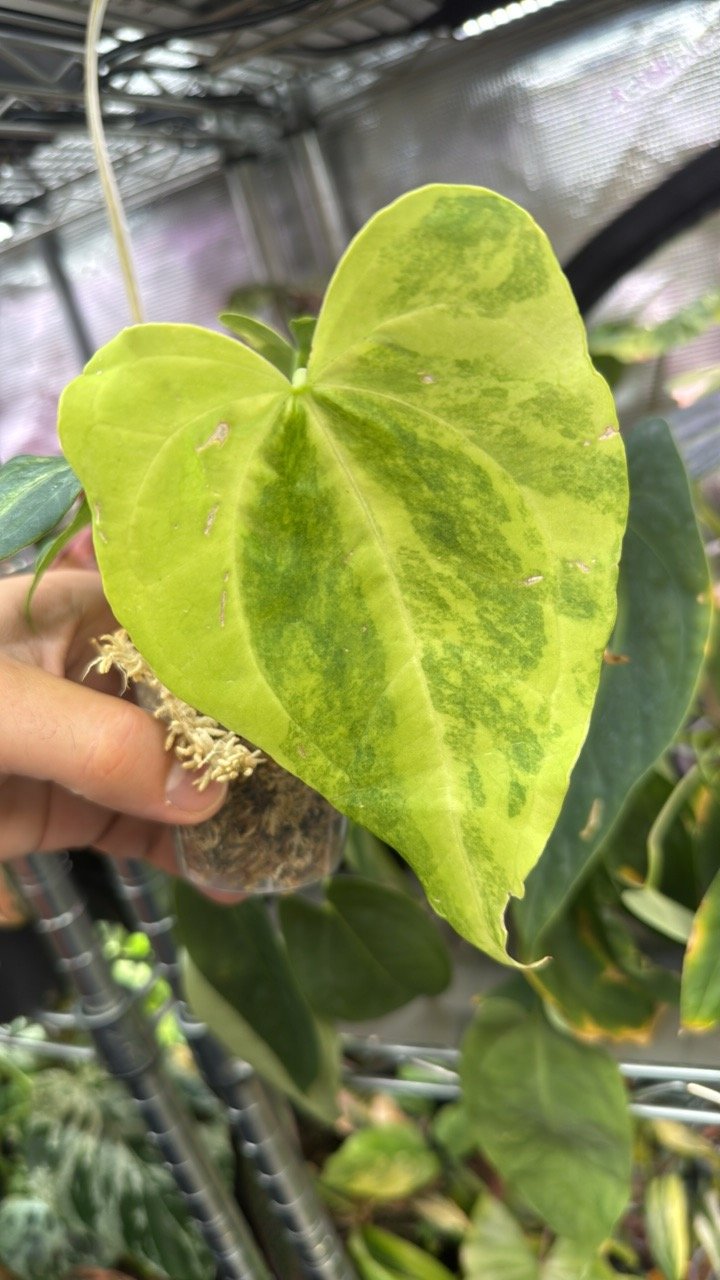
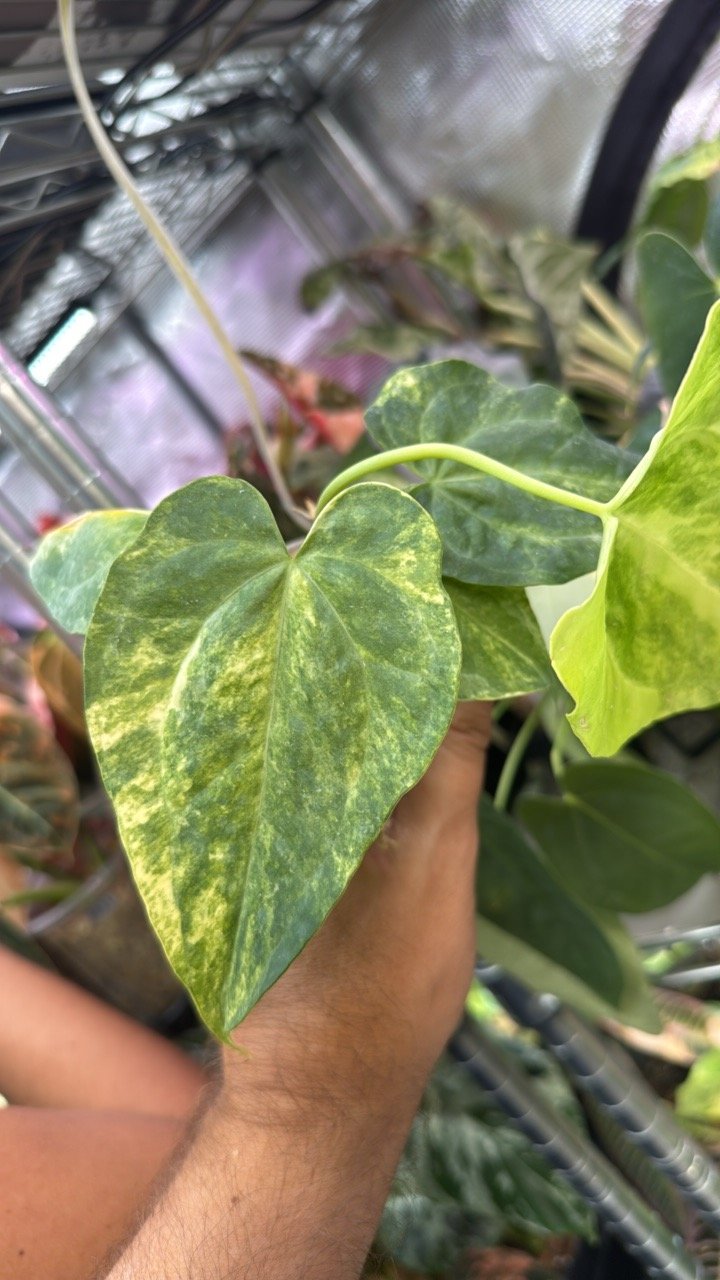
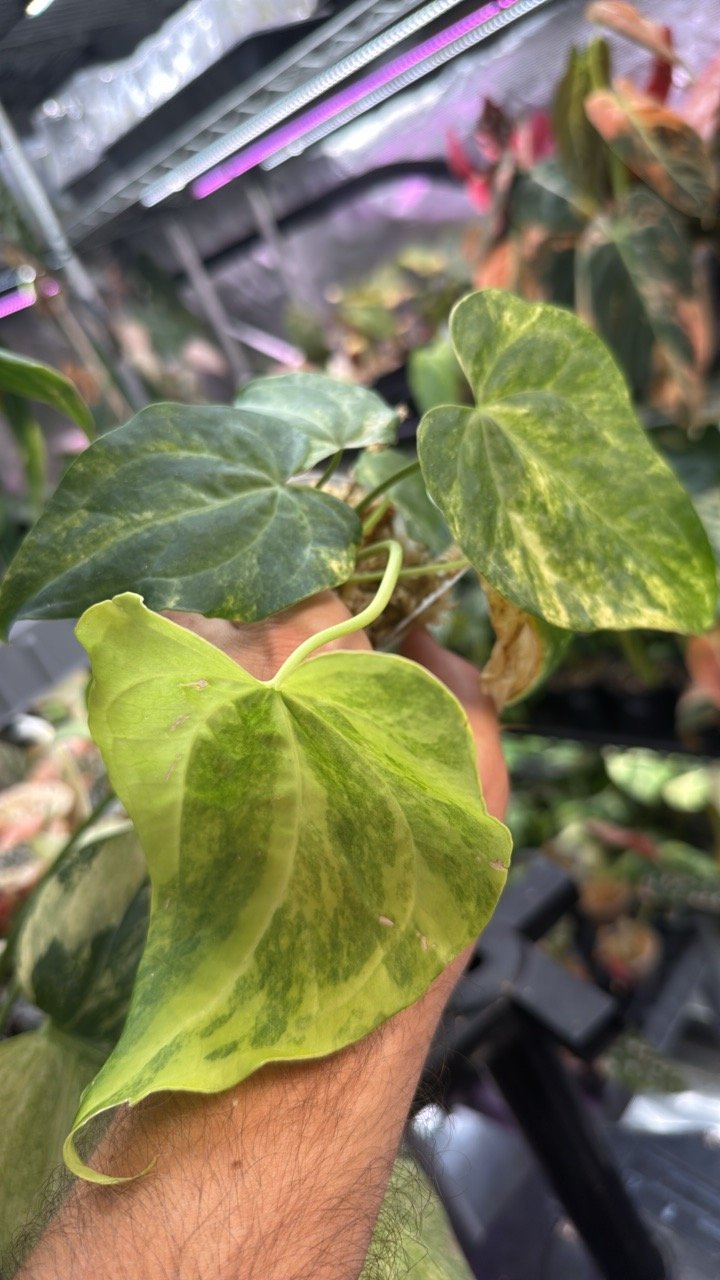
Anthurium Pedatoraditum x Crystallinum Aura #459
$250.00
In stock
Exact Plant #459
Anthurium Pedatoradiatum x Crystallinum Aura – Exact Plant #459
Some hybrids exist simply because two plants were crossed and seeds were collected. And then there are the ones that feel inevitable — the ones where two exceptional parent plants come together and produce something that surpasses both of them. Exact Plant #459, the Anthurium Pedatoradiatum x Crystallinum "Aura", is one of the latter. This is a hand-crafted collector hybrid that fuses two of the most visually compelling Anthurium species in cultivation, and the result is a plant that carries the architectural drama of one parent and the velvety, luminous presence of the other into a single, singular specimen. Anthurium pedatoradiatum, the first parent, is a terrestrial species native to the humid lowland and foothill forests of southern Mexico — southern Veracruz, Chiapas, and Tabasco — where it grows as a broad-spreading ground plant with leaves that are unmistakable in the Anthurium genus. Rather than the typical heart or shield shape, the Pedatoradiatum produces deeply divided, broadly ovate foliage that radiates outward from a central point in up to 13 distinct lobes — a form so distinctive it earned the common name "Anthurium Fingers," and a Latin name that translates to "radiating like a foot." The leaf surface is semi-glossy to matte with a slightly rippled texture, and mature leaves can reach 38 to 60 centimeters across, giving the plant a sculptural, almost prehistoric quality that nothing else in the genus replicates. Anthurium crystallinum, the second parent, needs little introduction to serious collectors. It is the velvet standard of the Cardiolonchium section — native to the humid montane forests of Panama, Colombia, and Peru — and represents the foundational species against which nearly every other velvet aroid is measured. Its broad, elliptic to ovate dark green leaves carry a surface of deep, matte velvet that feels as tactile as it looks, and across that surface runs the venation that gave the species its name: pale silver-white primary veins that radiate from the midrib with a clarity and contrast that appears almost hand-drawn. The crystallinum is the plant that made entire generations of collectors fall in love with velvet Anthuriums, and its genetics here are fully expressed. The "Aura" designation marks this as a collector-selected form — a seedling selected for heightened luminosity and venation expression over standard hybrid seedlings. It is the word used when the silvery-white venation has a quality that goes beyond typical — when the veins appear to glow against the leaf surface rather than simply contrast with it. In this hybrid, that quality manifests across a leaf form that no pure species produces: the broad, lobed, architectural silhouette of the Pedatoradiatum, rendered in the velvety dark green and luminous silver of the Crystallinum lineage. This is an exact plant listing. The specific specimen photographed — Plant #459 — is precisely what ships.What to Expect From This Hybrid
Hybrid Anthurium from deliberate crosses within the Cardiolonchium and closely related sections typically express a blend of parental traits that shifts and develops as the plant matures and produces new leaves. In the Pedatoradiatum x Crystallinum cross, collectors can generally expect lobed to deeply divided leaves that retain some of the open, radiating architecture of the Pedatoradiatum while carrying the velvet surface texture, increased leaf mass, and luminous silver venation of the Crystallinum parent. The degree of lobing, venation contrast, and overall leaf character tends to intensify and become more defined as the plant settles into its new environment and produces successive new growth. Patience with a hybrid like this is genuinely rewarded — the third and fourth leaves after acclimation are often dramatically more impressive than the first.Care Guide
Light should be bright and indirect at all times. Both parent species thrive in dappled forest understory conditions — the kind of filtered, consistent brightness that illuminates without burning. A grow light placed 12 to 18 inches above the canopy is the preferred setup for serious collectors and will yield the best results in terms of leaf size, venation clarity, and overall vitality. Avoid direct sun entirely; the velvet surface of the Crystallinum parent's contribution to this hybrid is particularly susceptible to bleaching and scorch under direct exposure. Watering requires a light touch and consistent attention. Allow the top one to two inches of the growing medium to approach dryness before watering thoroughly, then allow full drainage. Neither parent species tolerates soggy roots — the Pedatoradiatum in particular is prone to root issues in poorly draining media. A chunky, highly airy aroid mix is non-negotiable. Water quality matters too: room-temperature water, ideally filtered or left overnight to off-gas chlorine, will be kinder to the root system than cold tap water applied directly. Humidity is the single most impactful environmental variable for this hybrid. Both parent species are native to humid tropical environments and perform best with ambient humidity between 65 and 85 percent. The Crystallinum parent's velvet surface is especially sensitive to low humidity — leaf tip and margin browning isEvery Leaf Tells a Story in our collection. Hand-selected, carefully shipped, and trusted by plant lovers nationwide. Get first access to limited genetics and healthy, acclimated plants.
u00a9 2026 The Plant Nook Shop
Powered by SmallBiz.Reviews