
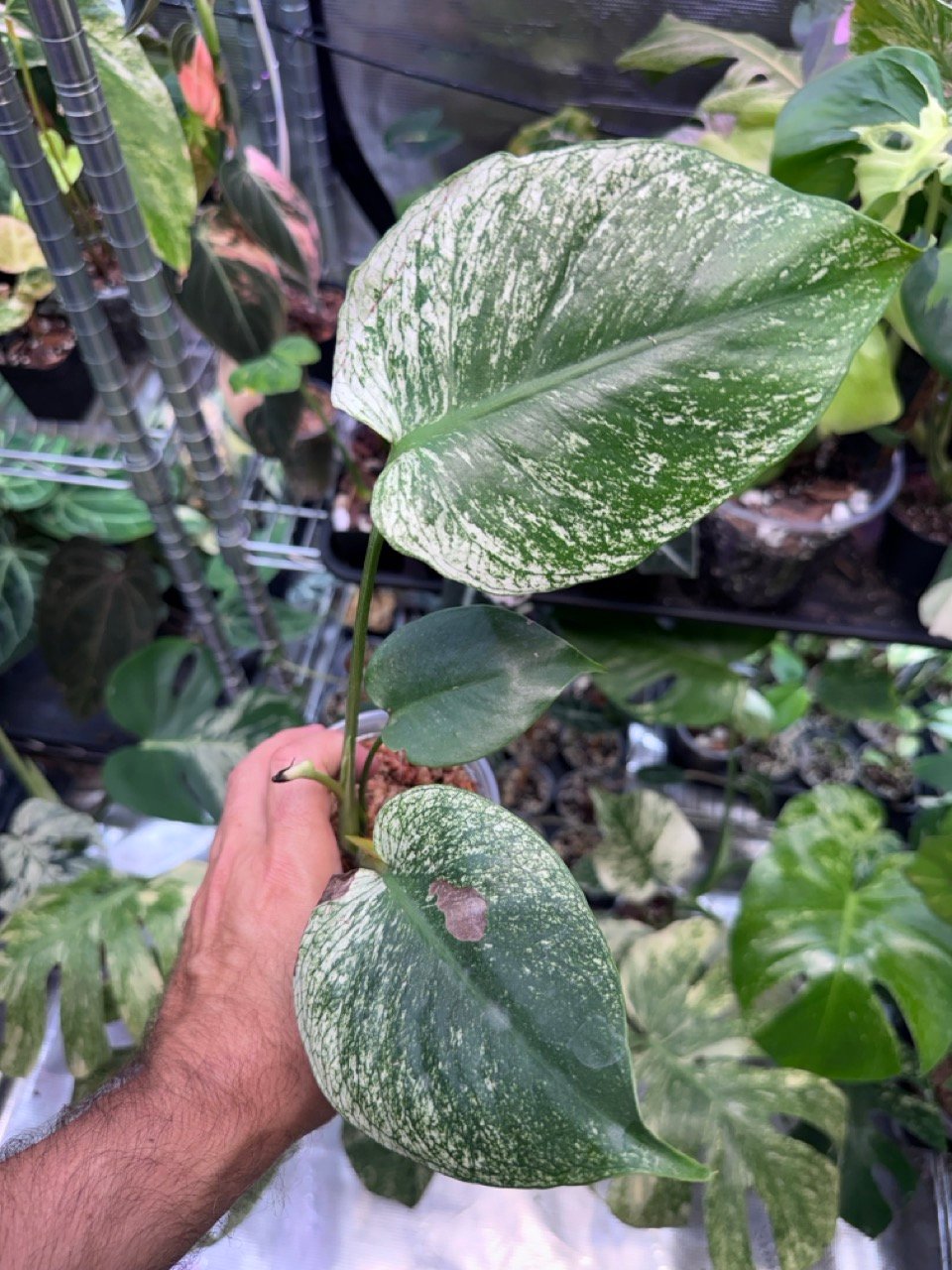
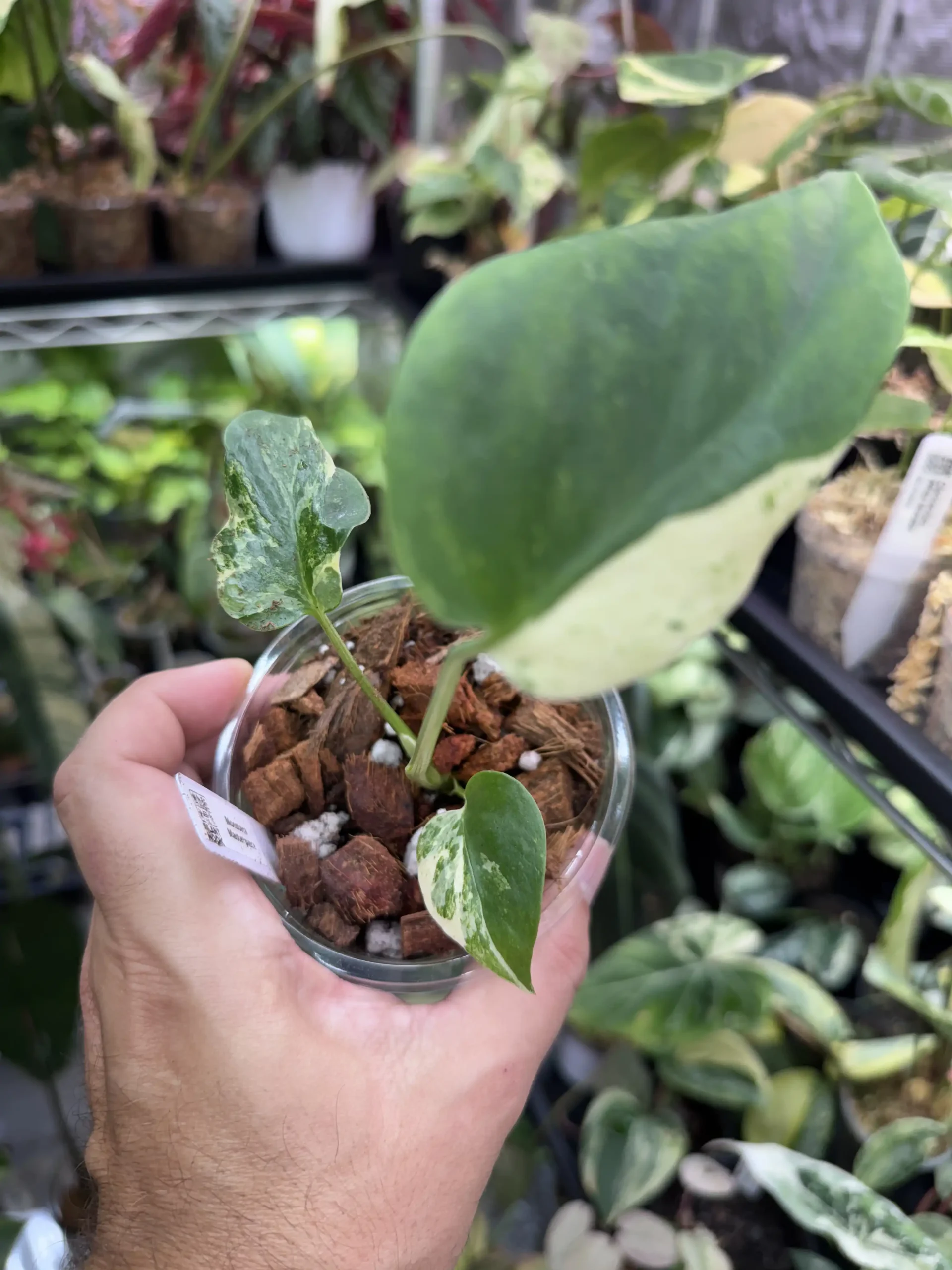
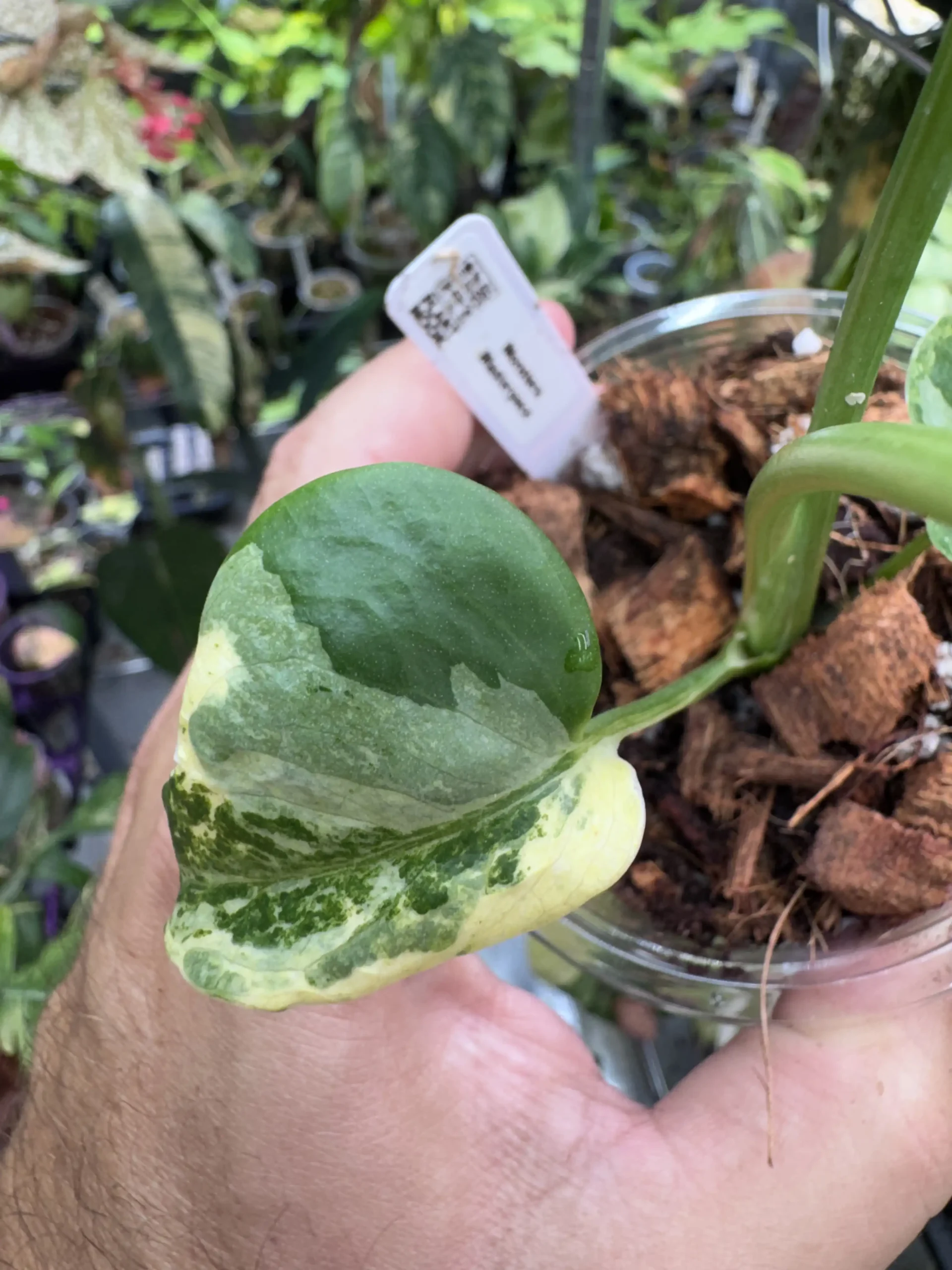
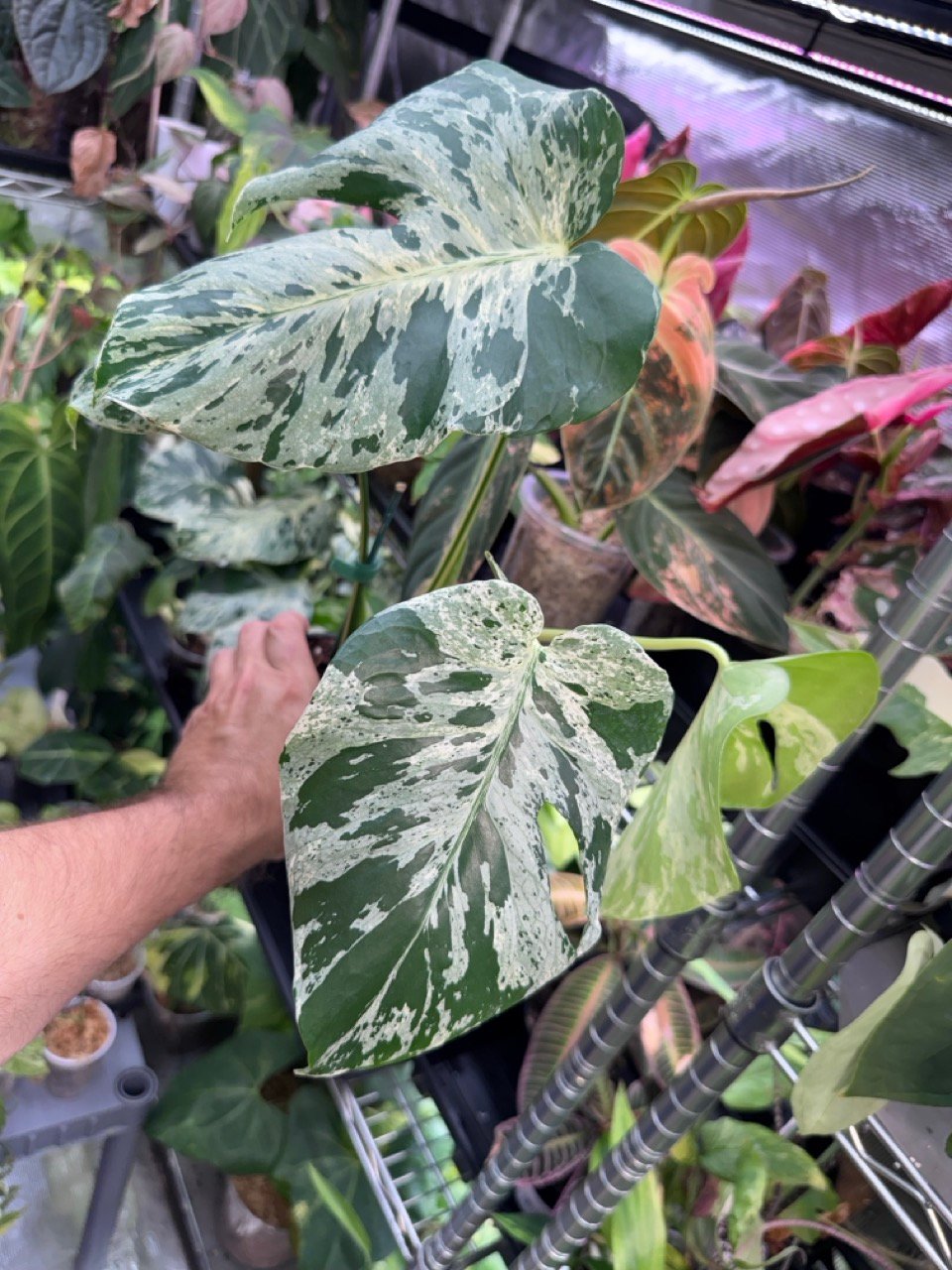
📦 Unboxing & The Critical 14-Day Acclimation
Your Monstera traveled in a dark, sealed box for several days. This limits photosynthesis and exposes the plant to temperature swings. Use the timeline below to help your rare Monstera adjust smoothly after shipping.
The First 48 Hours: Stabilization
- Unpack immediately: Open your box in a well-ventilated area away from drafts.
- Temperature adjustment: Let the plant sit in its nursery pot for 1–2 days before moving it to its final spot.
- Hold off on repotting: Wait 2–4 weeks so the roots can recover before being disturbed.
Days 1–10: The Humidity Bridge
- Microclimate support: Start with 60–80% humidity using a clear bin or humidifier nearby.
- Gradual exposure: Slowly reduce humidity over 10 days to toughen the leaf cuticle for normal home air.
- Gentle light: Use bright, indirect light. Avoid direct sun for week 1 because freshly shipped leaves scorch easier.
🪴 The Plant Nook Chunky Aroid Mix
Monsteras are epiphytic climbers that need oxygen around the roots. Standard potting soil is often too dense and can increase the risk of root rot. A chunky, well-draining aroid mix supports strong root growth and healthier foliage.
| Component | Ratio | Benefit |
|---|---|---|
| Pine Bark | 40% | Mimics a climbing environment and boosts root aeration. |
| Peat or Coco Coir | 30% | Retains moisture without becoming soggy. |
| Perlite or Orchid Bark | 20% | Creates air pockets to prevent compaction. |
| Worm Castings / Charcoal | 10% | Adds gentle nutrients and helps pull impurities. |
Pro tip: This mix is airy. When watering, soak thoroughly with a slow pour or bottom watering so the bark and coir fully absorb moisture.
✨ Rare & Variegated Monstera Care
- Light intensity: Aim for 8–12 hours of bright, indirect light. Variegated Monstera leaves need stronger light to stay healthy.
- Silica for white patches: Silica can help strengthen cell walls and reduce browning or melting on white variegated sections.
- Water quality: White variegated patches show mineral burn first, so distilled or RO water can help prevent crispy browning.
Rare Monstera Care
Variegated Monstera
Monstera Fenestration
Chunky Aroid Mix
Monstera Acclimation