
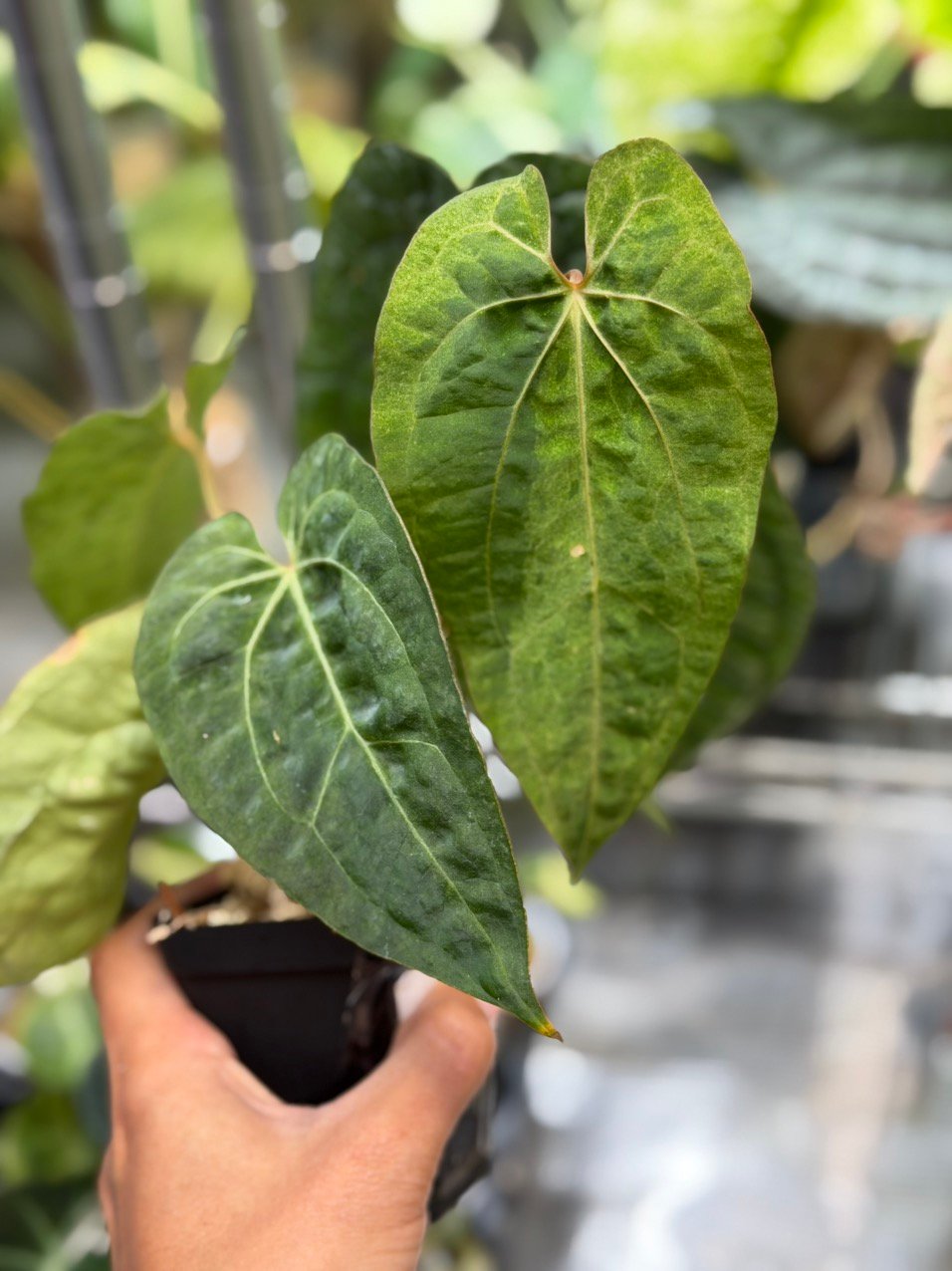
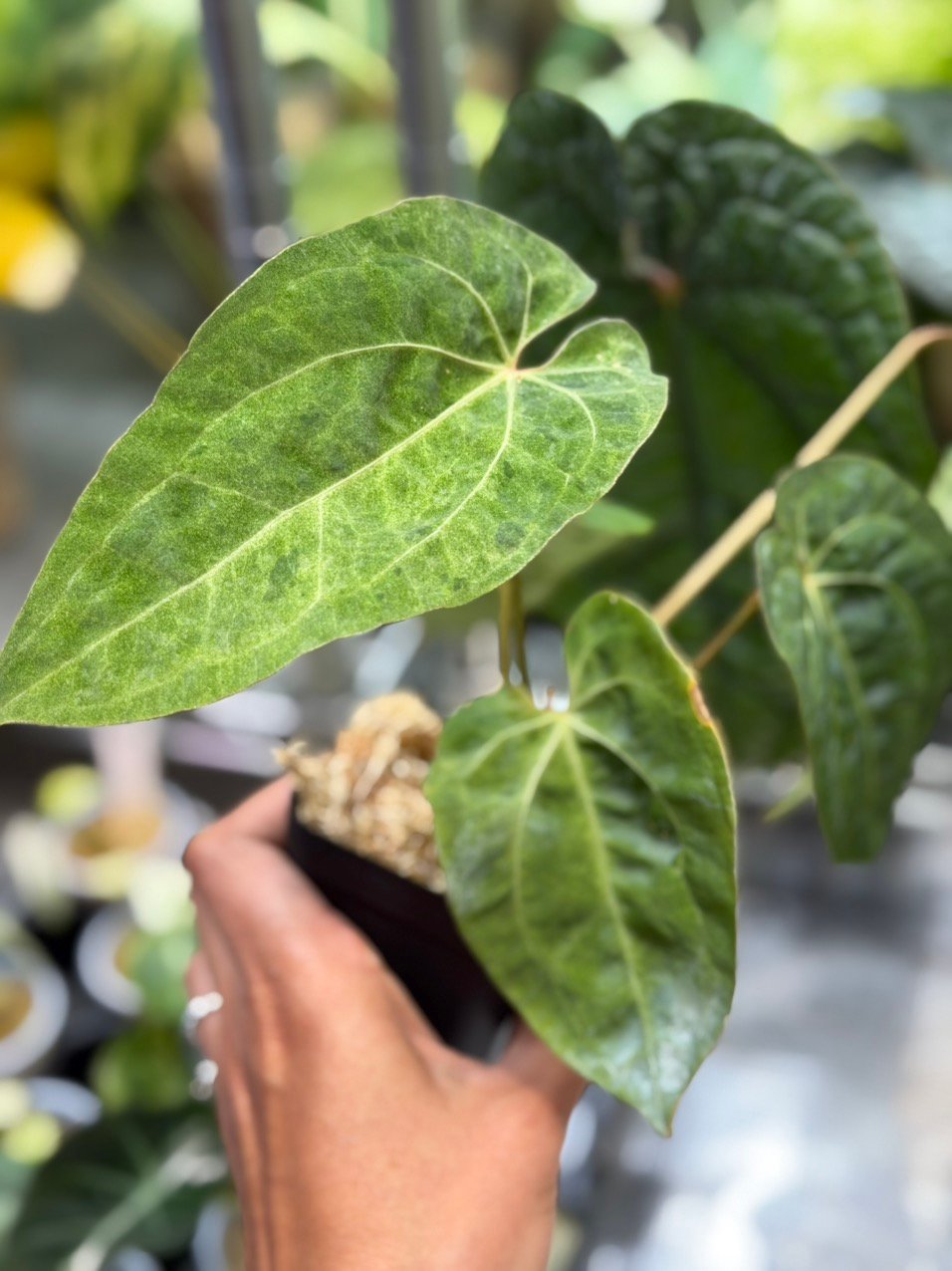
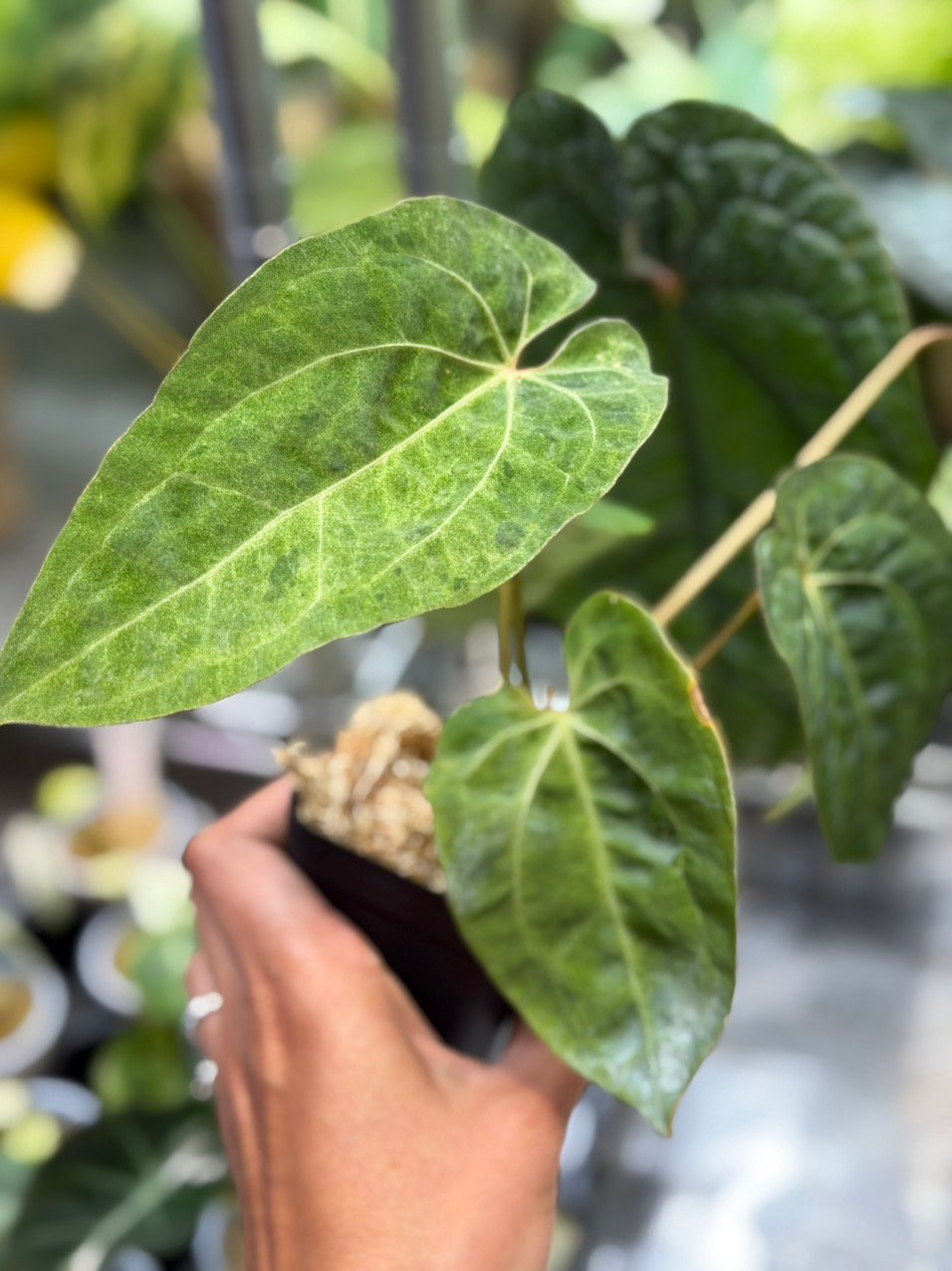
Anthurium Supermassive x Warocqueanum X Papillilaminum X-1 Variegated #672
$250.00
In stock
Exact Plant #672
Photo taken 5/13/26
Anthurium Supermassive x Warocqueanum x Papillilaminum X-1 Variegated – Exact Plant #0672
There is no casual way to describe what Exact Plant #0672 is. This is a deliberate, multi-generation collector hybrid that represents some of the most prestigious genetics in the entire Anthurium world, brought together in a single plant with variegation layered on top. The full cross — Anthurium Supermassive x Warocqueanum x Papillilaminum X-1 Variegated — reads like a breeding program's most ambitious ambition realized. And it is exactly that. Start with Anthurium warocqueanum, the parent that most serious collectors encounter first and never fully recover from. Known universally as the Queen Anthurium, the Warocqueanum is native to the rainforests of Colombia, where it grows as an epiphyte clinging to trees in humid mountain valleys and wet lowland forest. In cultivation, it produces elongated, pendulous, deeply velvety dark green leaves that can reach six feet in length on a healthy established plant — the silvery-white venation becoming progressively more pronounced and dramatic as the plant matures. It is slow-growing, high-maintenance, and unforgettable. A healthy Warocqueanum that holds six leaves simultaneously is considered an achievement. A leaf over two feet long in an indoor collection is a milestone. The plant's reputation as a demanding diva is earned, but collectors keep growing it because there is simply nothing else that looks like it. Then comes Anthurium papillilaminum, a jewel species from Panama that holds a different kind of reverence in collector circles. Where the Warocqueanum is celebrated for scale and elongation, the Papillilaminum is prized for texture and density — its broad, ovate to cordate leaves are covered in a surface so deeply velvet and richly dark that it has become a benchmark species for what velvet foliage in the Anthurium genus can be. The Papillilaminum brings structural broadness, deep velvet quality, and a leaf presence that is more compact and architectural than the Warocqueanum's pendulous form. When these two are crossed, the offspring inherit the velvet depth and venation drama of both parents in a form that is neither fully elongated nor fully broad — a genuinely hybrid expression that collectors find extraordinarily compelling. The Supermassive parent adds a third dimension to this equation. Anthurium Supermassive is a named collector hybrid known for its intensely veiny, large-format foliage and robust growth contribution — it is a plant bred for impact, used by serious breeders to push scale, venation density, and overall visual weight into the next generation. In this cross, the Supermassive genetics push the Warocqueanum-Papillilaminum foundation toward even greater foliar ambition. The result is a seedling with three distinct lineages contributing to its leaf size potential, velvet quality, venation drama, and structural form. And then there is the variegation. The X-1 Variegated designation marks this as an individually selected specimen expressing variegation — a quality that, in a triple-cross hybrid at this level, is not guaranteed in seedling populations and makes this particular plant a genuinely singular find. Variegation in velvet Anthurium hybrids at this complexity typically expresses in soft, irregular tones against the dark, velvety backdrop — subtle enough to feel refined rather than garish, but distinct enough to make every leaf different from the last. Plant #0672 is the only one of its kind. What you see in the photos is precisely what ships.What to Expect as This Plant Grows
Triple-cross Anthurium hybrids at this genetic level are among the most exciting plants to grow because the full expression of the cross develops and intensifies over successive leaves. The first few leaves after acclimation give you a preview; the third, fourth, and fifth leaves begin to show you what the genetics are truly building toward. Collectors who grow Warocqueanum x Papillilaminum crosses and Supermassive influence hybrids consistently report that the plants become more impressive with each new leaf — the velvet deepens, the venation brightens, the leaf scale increases, and the overall character of the cross announces itself more confidently with every growth cycle. Patience with this plant is not merely rewarded. It is essential.Care Guide
Light should be bright and indirect with good consistency. The Warocqueanum parent contributes some sensitivity to light extremes — direct sun will scorch the velvety foliage, while true low light will slow growth significantly and suppress the venation development that makes this hybrid worth growing. A quality grow light placed 12 to 18 inches above the canopy, or a position near a bright east or north-facing window, provides the steady bright indirect light this plant needs without the risk of scorch. Aim for 6 to 8 hours of quality indirect light per day. Consistency is more important than intensity — stable, predictable light produces better growth than variable conditions. Watering requires attention and some restraint. Both the Warocqueanum and Papillilaminum parents are epiphytic in nature — they evolved growing on trees rather than in soil, with root systems that experience alternating wet and dry cycles. Allow the growing medium to approach dryness in the top inch or two before watering thoroughly, then allow full drainage. The substrate must never be allowed to remain soggy. The Warocqueanum parent in particular is unforgiving of consistently wet roots, and root rot is the most common cause of loss in Queen Anthurium lineage plants. Use room-temperature water, ideally filtered or left overnight, and water at the base rather than over the foliage. Humidity should be high — ideally between 70 and 85 percent — and this is non-negotiable with this genetic lineage. The Warocqueanum is one of the most humidity-dependent plants in cultivation, and the Papillilaminum parent reinforces that demand. Below 60 percent humidity, you will see leaf tip browning, slowed growth, and eventual decline in the vibrancy of the velvet surface. A dedicated grow cabinet or room humidifier is the preferred setup. Airflow is equally important — stagnant high humidity creates fungal pressure, so a gentle fan circulating air around the plant will protect the foliage while maintaining the moisture level the roots and leaves need. Do not mist the leaves directly. Temperature should be warm and completely stable — between 65 and 85 degrees Fahrenheit (18 to 29 degrees Celsius) at all times. Seventy-five to eighty-five degrees is the sweet spot where this genetic lineage grows most actively and produces its best foliage. Keep the plant away from air conditioning vents, cold windows in winter, and any source of cold drafts. Sudden temperature drops are one of the fastest ways to stress a Warocqueanum-lineage plant and can trigger leaf drop that takes months to recover from. Soil must be highly airy and fast-draining. A mix of fifty percent pumice or perlite with orchid bark, sphagnum moss, and aEvery Leaf Tells a Story in our collection. Hand-selected, carefully shipped, and trusted by plant lovers nationwide. Get first access to limited genetics and healthy, acclimated plants.
© 2026 The Plant Nook Shop
Powered by SmallBiz.Reviews