
Alocasia Stingray Albo Variegated #594
$165.00
In stock
Exact plant
image taken 5-19-26
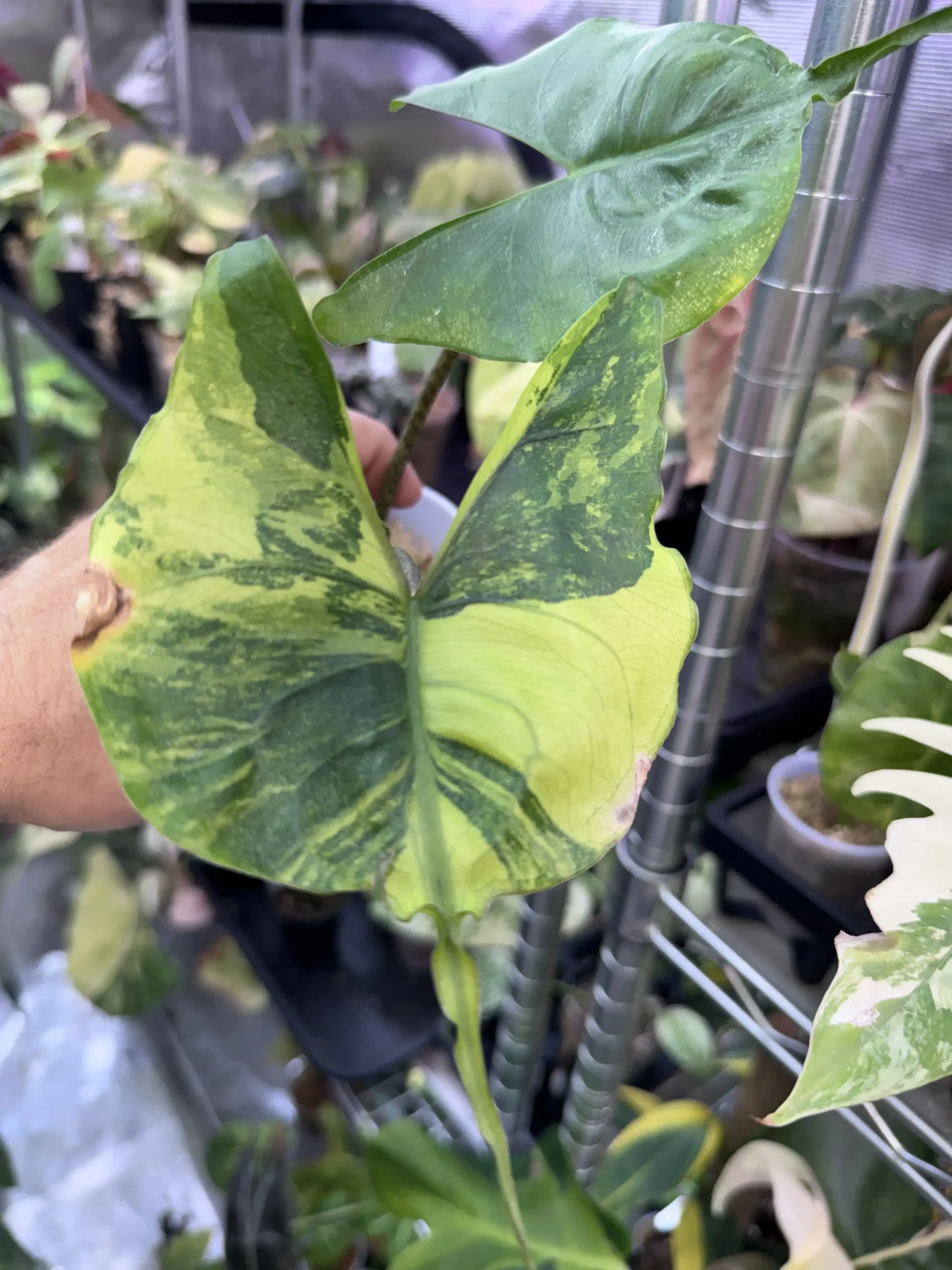
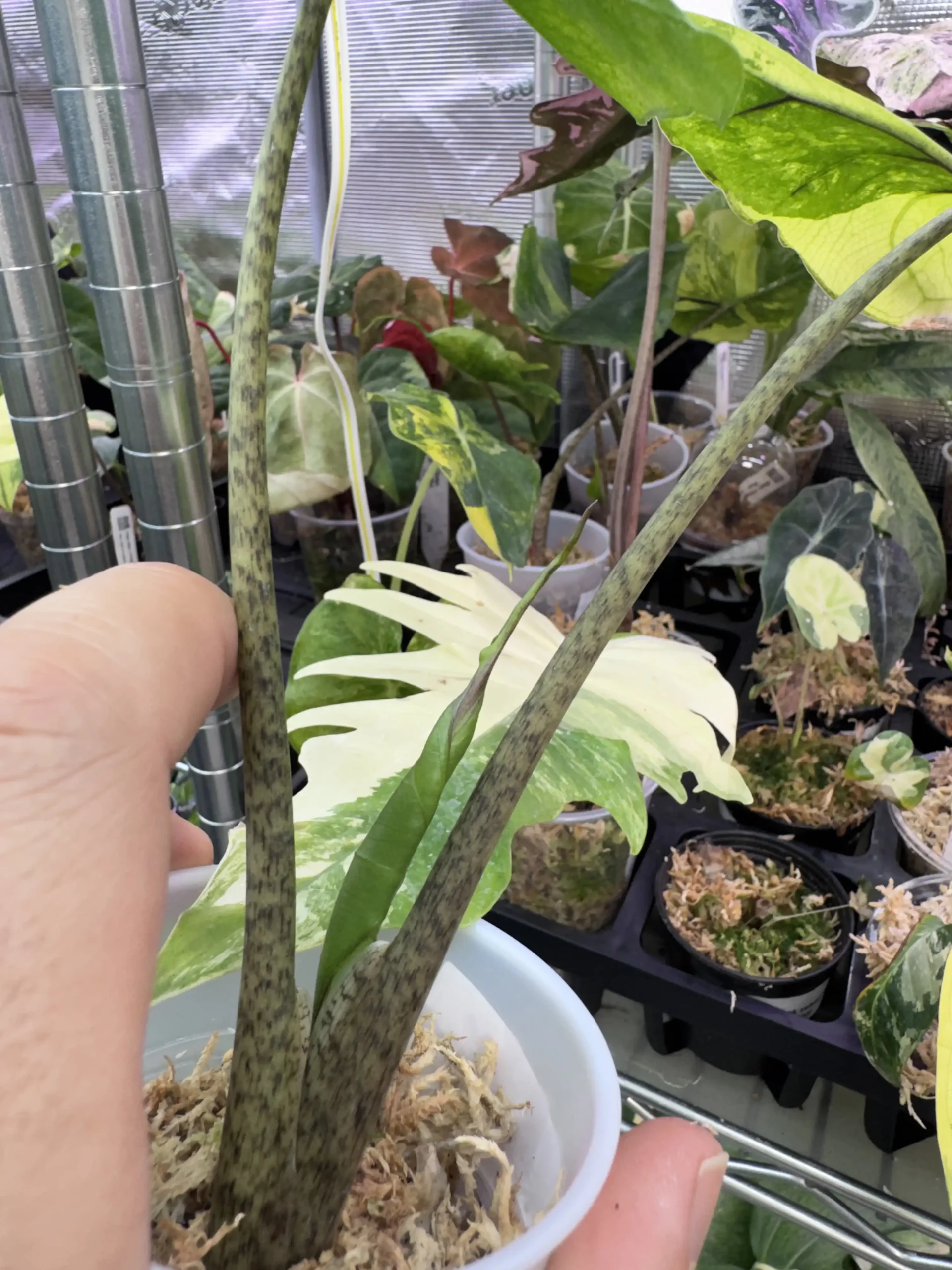
Alocasia Stingray Albo Variegated – Exact Plant #594
If there is one Alocasia that consistently stops people in their tracks, this is it. Exact Plant #594, the Alocasia Stingray Albo Variegated, is one of the most visually arresting houseplants you can own – a plant with a leaf shape so distinctive it earned a common name based entirely on what it looks like, elevated further by albo variegation that makes an already extraordinary plant genuinely rare. As of May 19, 2026, a new shoot was actively sprouting when photographed. This plant is ready to grow. What you see in the photos is exactly what ships to you.The Leaf That Gave This Plant Its Name
The Alocasia Stingray is a cultivar of Alocasia macrorrhiza, a species native to the tropical forests of Southeast Asia including the Philippines, Malaysia, and Sri Lanka. The standard macrorrhiza grows large, upright elephant ear leaves. The Stingray cultivar took that template and rewrote it entirely. The leaf shape is genuinely unlike anything else in the plant kingdom. The broad base forms the body of the ray, with the leaf expanding outward in two rounded lobes that taper dramatically toward the midrib. Then the central vein extends far beyond the leaf blade itself, forming a long, narrow, pointed tail that can reach several inches past where the leaf ends. The overall silhouette is unmistakably aquatic – a stingray gliding upward on a sturdy upright petiole, frozen mid-motion. It is the kind of leaf shape that makes non-plant-people ask questions, and that makes collectors immediately want one.Why the Albo Form Is Different
The standard Stingray is already a collector plant. The albo variegated form is in a different category entirely, for one specific reason: it is not available in tissue culture. Most popular variegated Alocasia forms eventually make their way into TC production, which increases supply and gradually brings prices down. The Stingray Albo has not followed that path. Every albo variegated specimen in cultivation has been grown from corms propagated from existing mother plants, which keeps supply genuinely and persistently limited. You cannot mass-produce this plant, and that constraint is not going away anytime soon. The albo variegation itself presents as bright creamy white to near-white marbling, sectoral patches, and irregular splash patterns across the deep green stingray-shaped leaf surface. The contrast between the clean white variegation and the glossy deep green base is visually striking in a way that feels intentional – as if the plant was designed by someone who wanted maximum visual impact from minimum complexity. The tail extends below whatever variegation pattern the leaf expresses, carrying the line of the midrib into that signature narrow point.What to Expect
- Unique stingray-shaped leaf with elongated tail tip – instantly recognizable and unlike any other Alocasia
- Bright creamy white albo variegation – irregular pattern unique to each leaf
- Upright, sculptural growth habit – this plant does not trail or climb, it stands
- Active new shoot sprouting as of May 19, 2026 – this plant is already in growth mode
- Not available in tissue culture – every specimen propagated from corm, keeping supply genuinely limited
- Fast growing under the right tropical conditions – rewards consistent care with frequent new leaves
Care Guide
Light: Bright indirect light is the sweet spot. The Stingray needs more light than many Alocasia to maintain its upright habit and active growth rate – position it near an east or west-facing window, or use a grow light at moderate intensity. Avoid direct sun, which will scorch the leaves and bleach the albo variegated areas permanently. If the plant becomes leggy or the new leaves are smaller than expected, more light is almost always the answer. Watering: Keep the soil consistently moist but never waterlogged. Water when the top 1 to 2 inches of soil feel dry, then water thoroughly and let it drain fully. The Stingray is more sensitive to both overwatering and underwatering than some of the tougher aroids – root rot from soggy conditions is the most common issue, and prolonged dryness will cause the leaves to droop and the petioles to soften. Filtered or distilled water is recommended if possible, as this plant can be sensitive to the fluoride and chlorine in tap water. If you are using tap water, let it sit overnight before watering. Humidity: High humidity is non-negotiable for the Stingray Albo to perform at its best. Aim for 60 to 80 percent. The albo variegated areas of the leaf are particularly susceptible to browning at the tips and margins when ambient humidity drops too low. A dedicated humidifier is the most effective and consistent solution. Daily misting can provide a temporary boost but is not a substitute for sustained elevated humidity – and avoid getting standing water on the leaf surface, particularly on the albo areas, as it can promote spotting. Temperature: Keep it warm and stable between 65 and 85 degrees Fahrenheit (18 to 29 degrees Celsius). The Stingray is a tropical Southeast Asian cultivar and does not tolerate cold. Temperatures below 60 degrees Fahrenheit will stall growth and stress the plant quickly. No cold drafts, no air conditioning vents, no outdoor exposure in cooler months. Soil: A chunky, well-aerated aroid mix is essential. A blend of peat-based potting soil, perlite, orchid bark, and coco chips works well. The Stingray's root system needs both moisture retention and drainage – it wants to stay evenly moist without sitting in water. Some collectors grow Stingray Alocasia in semi-hydro setups with excellent results. Whatever medium you choose, ensure the pot drains freely and the roots are never sitting in standing water at the base. Potting: Keep this plant slightly root-bound rather than overpotting. Alocasia in general prefer their roots to have some compression – too large a pot leads to excess moisture retention in the unused soil, which dramatically increases the risk of root rot. Repot every 1 to 2 years in spring, moving up only one pot size at a time. Fertilizing: Feed every 4 to 6 weeks during the growing season with a balanced liquid fertilizer diluted to half strength. The Stingray is a fast grower under good conditions and responds visibly to consistent nutrition. Pause feeding in fall and winter when growth naturally slows. Dormancy: Like all Alocasia, the Stingray may go through a period of dormancy in fall and winter, dropping some or all of its leaves. This is normal and not a sign of a dying plant – the corm is healthy and will push new growth again in spring when conditions warm. Reduce watering and hold off on fertilizer during this period. Toxicity: Alocasia Stingray Albo Variegated is toxic to cats, dogs, and humans if ingested. Contains calcium oxalate crystals which cause oral irritation, swelling, and gastrointestinal distress. Keep away from pets and children at all times.Shipping
This is an exact plant listing – Plant #594 ships precisely as shown in the product photos, new shoot and all. We ship Monday through Wednesday to avoid weekend transit delays. Every plant is carefully packaged to protect the foliage, petioles, and active growth during transit. If you have any questions about this specific plant before purchasing, please reach out before placing your order.Every Leaf Tells a Story in our collection. Hand-selected, carefully shipped, and trusted by plant lovers nationwide. Get first access to limited genetics and healthy, acclimated plants.
© 2026 The Plant Nook Shop
Powered by SmallBiz.Reviews