
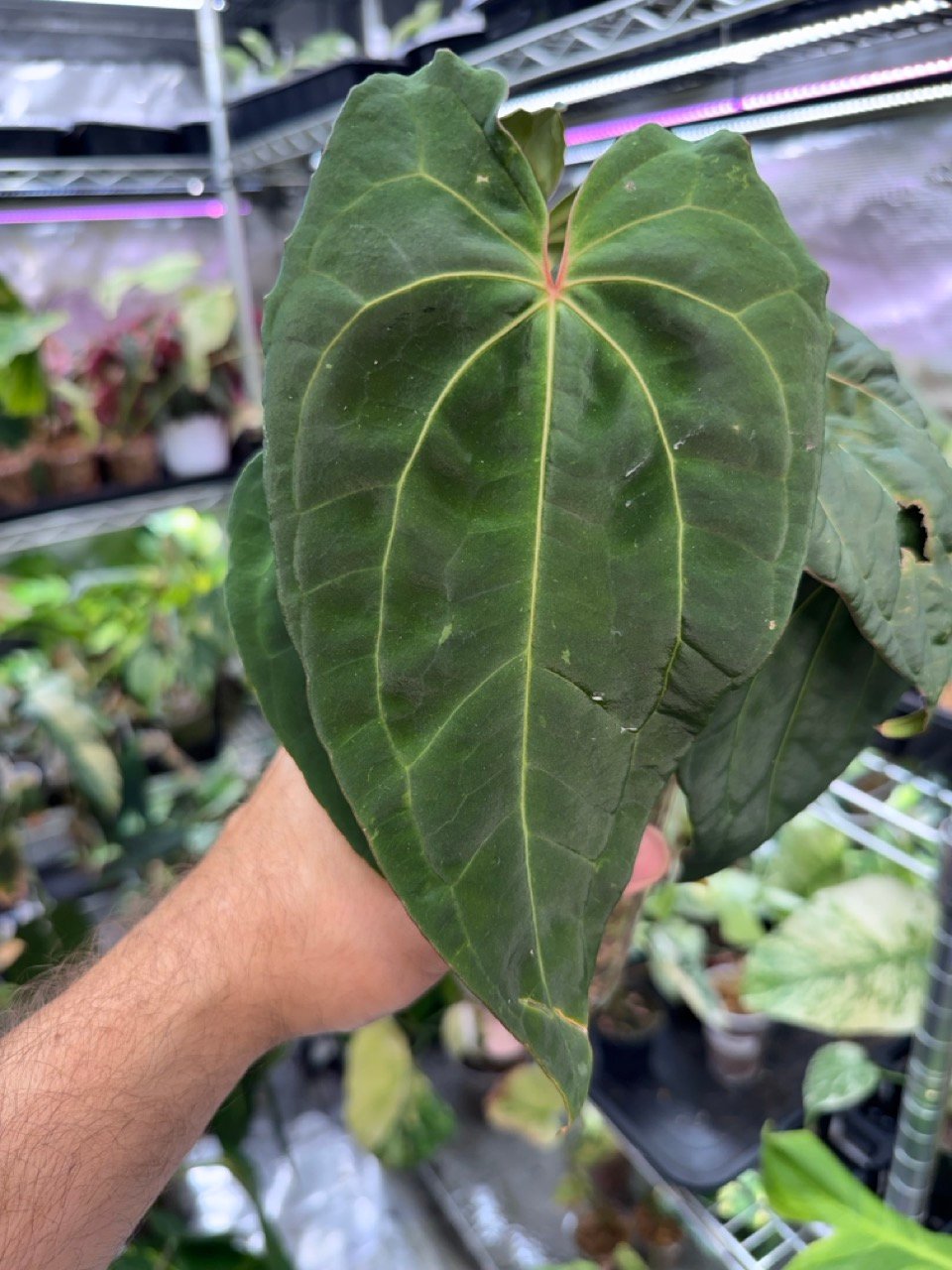
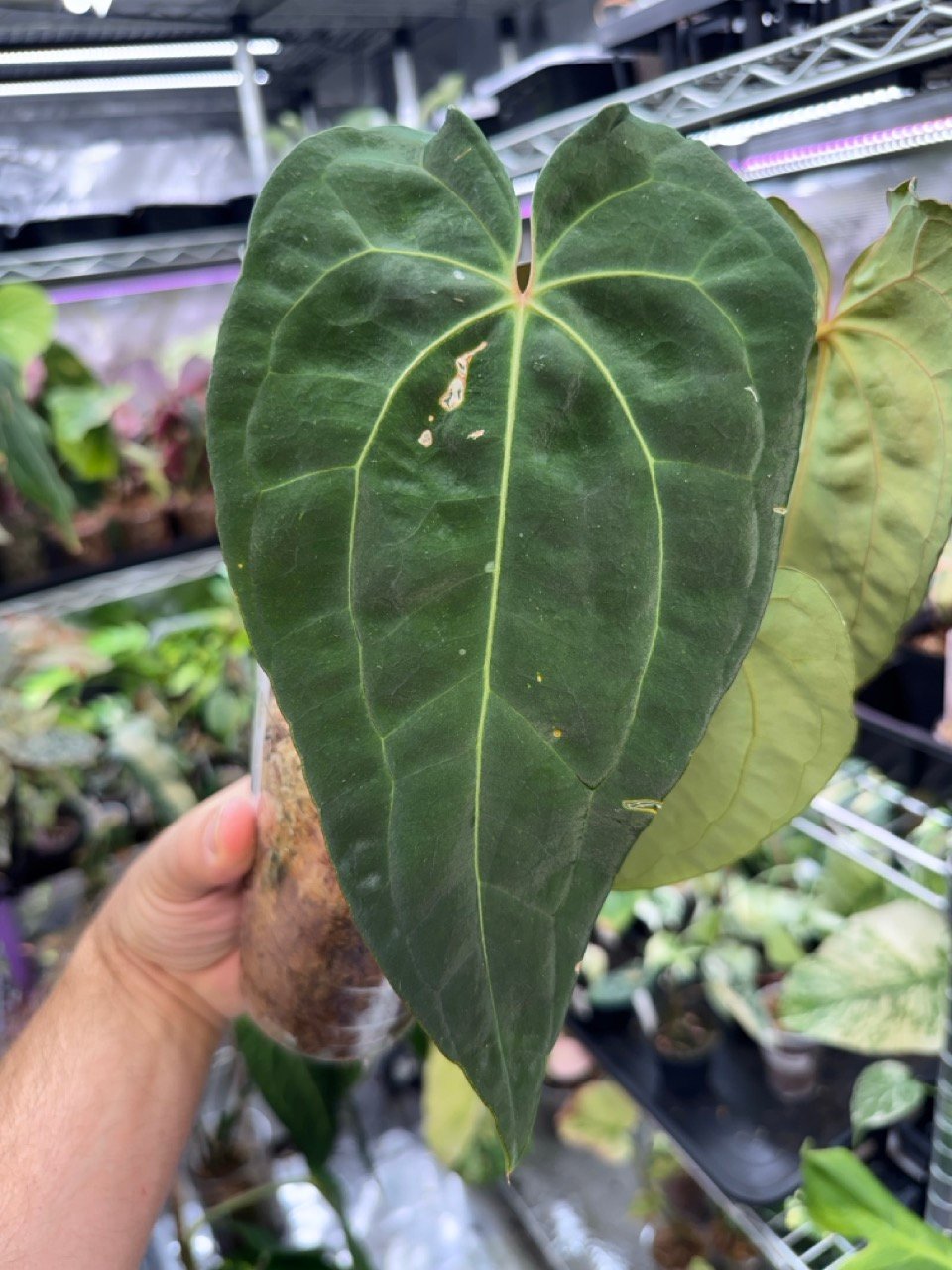
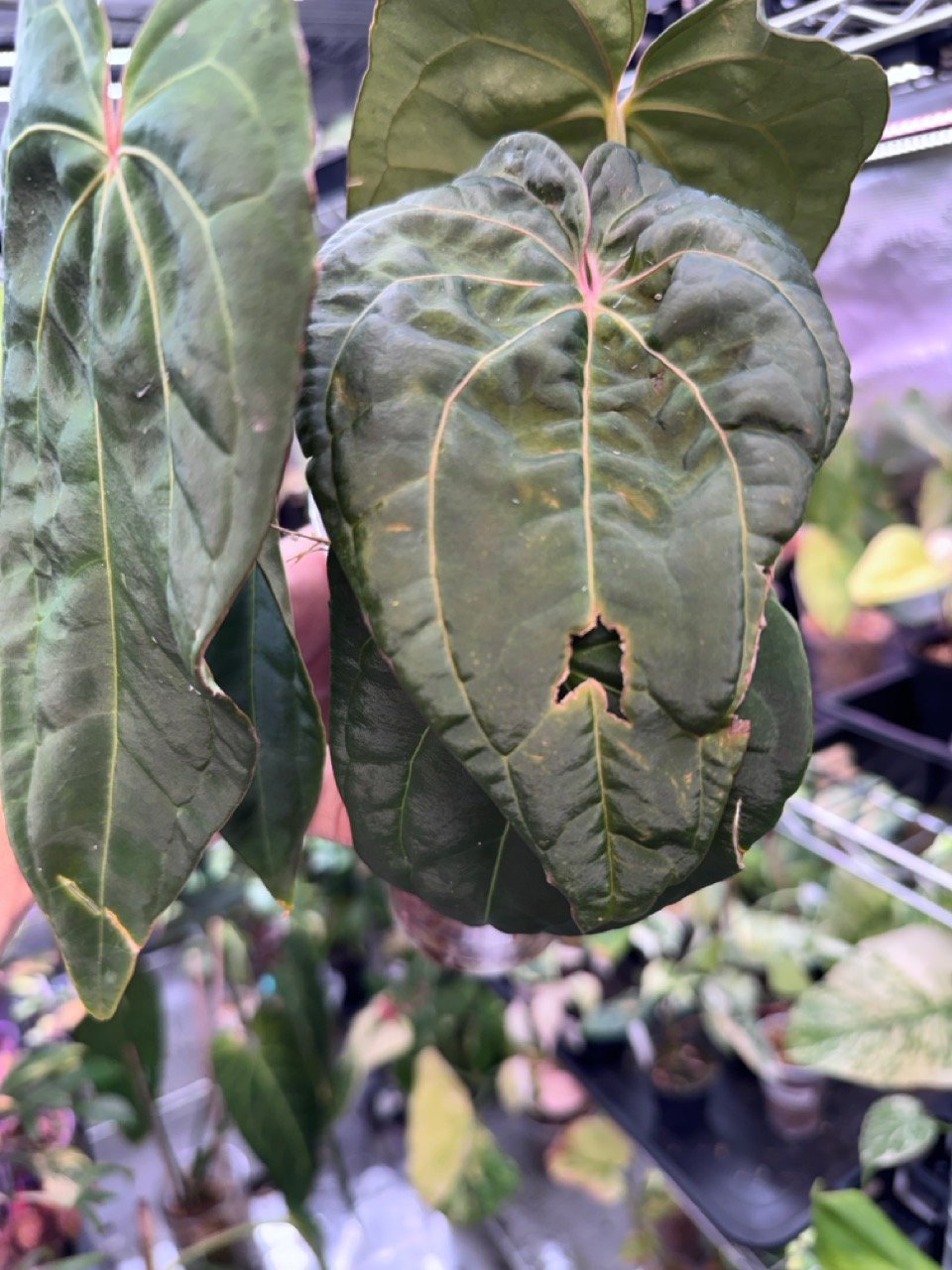
Anthurium Red Crystallinum (RC) x Red Vein Dark Phoenix (RVDP) #487
$55.00
In stock
Exact Plant #487
Images taken 5-18-26
Anthurium Red Crystallinum x Red Vein Dark Phoenix – Exact Plant
Some hybrids are impressive. Some are extraordinary. And then there are the ones where both parent plants are already legends in their own right, and crossing them feels almost obvious in hindsight. The Anthurium Red Crystallinum x Red Vein Dark Phoenix is one of those crosses. Two of the most red-dominant, deeply veined, dramatically colored Anthurium lines in the collector world brought together in a single exact plant specimen. What you see in the photos is exactly what ships to you.Meet the Parents
Anthurium Red Crystallinum originates from the breeding program of Tim Anderson in South Florida, involving complex genetics that likely include crystallinum, magnificum, and dressleri. The result is one of the fastest-growing collector Anthurium in cultivation — plants that push new leaves with impressive frequency and reward patience with one of the most visually dynamic color journeys in the hobby. New leaves emerge in vivid shades of red, shifting through burgundy and purple before deepening to rich, glossy dark green at maturity. Every new leaf is its own slow color reveal. Anthurium Red Vein Dark Phoenix (RVDP) was created in 2019 by Mr. Jeera Jugmongkol of Siam Flora in Thailand — a highly respected breeder known for producing some of the most sought-after Anthurium hybrids in the global collector community. The RVDP was bred from Anthurium papillilaminum variegated as the mother plant and Anthurium Ace of Spades as the pollen donor. The Papillilaminum contributes its distinctive leaf shape and intricate patterning, while the Ace of Spades infuses the foliage with deep, velvety darkness and the striking burgundy-to-red central venation the RVDP is famous for. It is a plant that collectors describe consistently with one word: dramatic. Cross these two and what emerges is a hybrid that stacks red. Red emergent leaves from the Red Crystallinum lineage, red veins from the RVDP lineage, dark velvety depth from the Ace of Spades genetics, and the complex leaf patterning and broad heart-shaped form from the papillilaminum influence. This is not a subtle plant. It is meant to be noticed.What to Expect
- Vivid red to burgundy emergent new leaves that mature through purple tones to deep dark green
- Striking red to burgundy central venation carried from the RVDP parent
- Deep, dark, velvety leaf surface with a light-absorbing quality
- Broad, elongated heart-shaped leaf form from the papillilaminum RVDP influence
- Fast growth rate inherited from the Red Crystallinum lineage
- Every leaf a slightly different expression as the hybrid develops through successive growth cycles
Care Guide
Light: Bright indirect light is ideal for this hybrid. Both parent lines are adapted to filtered tropical forest light, and quality light is especially important for maintaining the red and burgundy color expression in new leaves and the venation vibrancy in mature foliage. A grow light at 12 to 18 inches above the canopy or a bright spot near an east or west-facing window works well. Avoid direct sun entirely. Interestingly, slightly lower light can sometimes deepen the red tones in the Red Crystallinum lineage, while brighter light tends to accelerate growth — find the balance that works best in your specific setup. Watering: Water when the top 1 to 2 inches of the growing medium approach dryness. Water thoroughly and let it drain fully. The Red Crystallinum lineage is a fast grower that appreciates consistent moisture but absolutely will not tolerate soggy roots. The RVDP parent also strongly prefers slightly dry over wet between waterings. Keep it consistently moist but never waterlogged and you will see this plant grow at a pace that surprises most collectors. Humidity: 65 to 85 percent is the sweet spot for both parent lines. High humidity is non-negotiable for bringing out the best of the velvet surface quality and the deep color expression that makes both the Red Crystallinum and RVDP lineages so striking. A humidifier is the most effective solution. A grow cabinet or greenhouse setup will produce noticeably larger leaves and more vivid coloration than ambient household conditions alone. Do not mist the leaves directly. Temperature: Keep it warm and stable between 65 and 80 degrees Fahrenheit (18 to 27 degrees Celsius). Both parent lines are tropical plants that want consistent warmth. No cold drafts, no air conditioning vents, no windowsill exposure in cooler months. Soil: A chunky, fast-draining aroid mix is essential. Orchid bark, perlite, and a small amount of sphagnum moss or coconut coir performs well. Some collectors grow Red Crystallinum lineage plants in pure sphagnum moss with excellent results — the moisture retention keeps the roots consistently moist without waterlogging. A 1:1:1 blend of Happy Frog potting soil, orchid bark, and perlite is another popular option that works well for this lineage. Fertilizing: Light and consistent beats heavy and infrequent with this hybrid. A calcium and magnesium rich balanced liquid fertilizer at half strength every 4 to 6 weeks during the growing season supports the active growth. The Red Crystallinum lineage is a fast grower and responds visibly to regular feeding — you will notice the difference in leaf size and color quality with consistent nutrition. Toxicity: Toxic to cats, dogs, and humans if ingested. Contains calcium oxalate crystals which cause oral irritation, swelling, and digestive upset. Keep away from pets and children at all times.Shipping
This is an exact plant listing — the specific specimen photographed is exactly what ships to you. We ship Monday through Wednesday to avoid weekend transit delays and ensure your plant arrives in peak condition. Every plant is carefully packaged to protect the foliage and root system during transit. Reach out before ordering if you have any questions about this plant's current stage or condition.Every Leaf Tells a Story in our collection. Hand-selected, carefully shipped, and trusted by plant lovers nationwide. Get first access to limited genetics and healthy, acclimated plants.
u00a9 2026 The Plant Nook Shop
Powered by SmallBiz.Reviews