
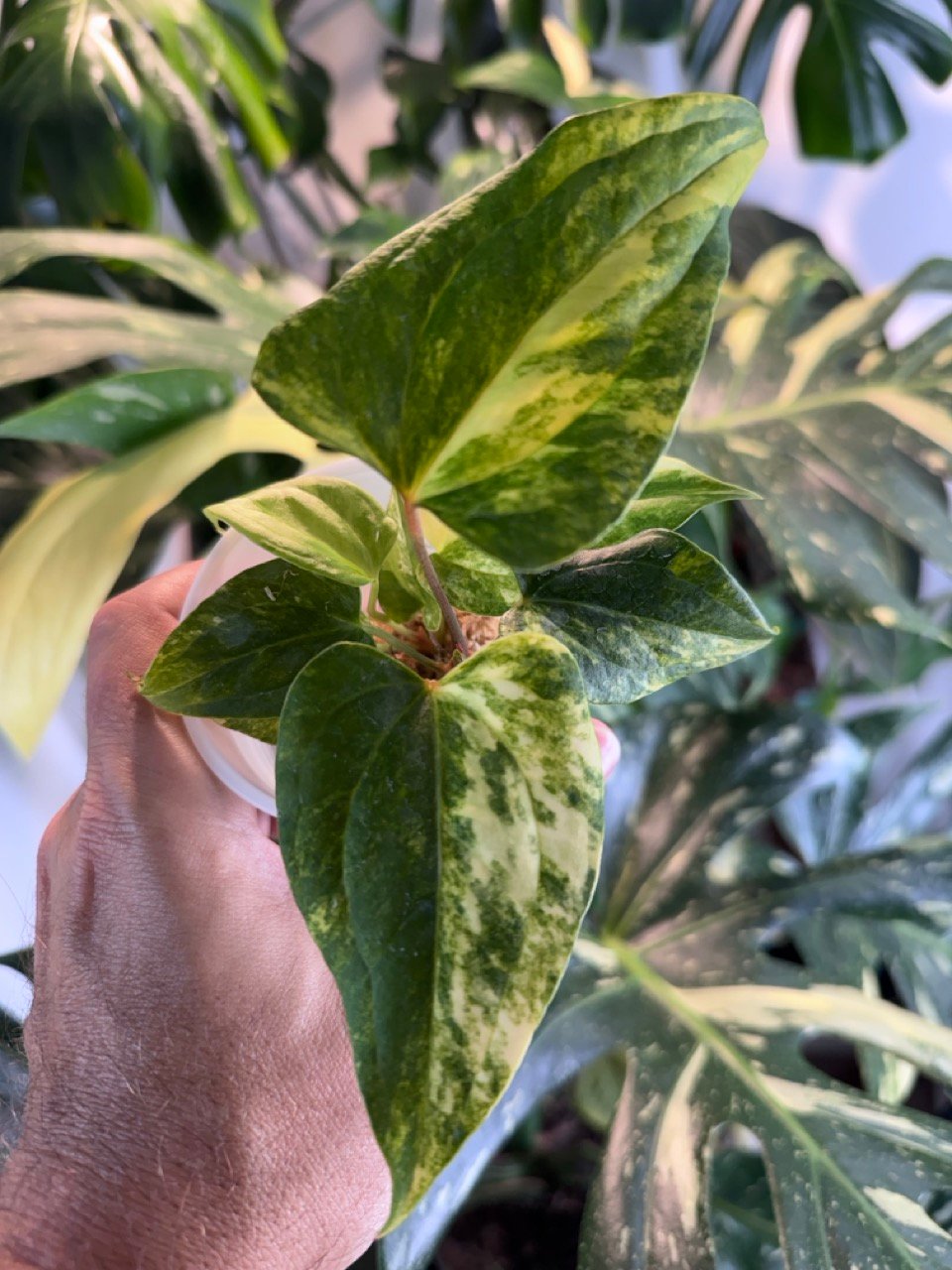
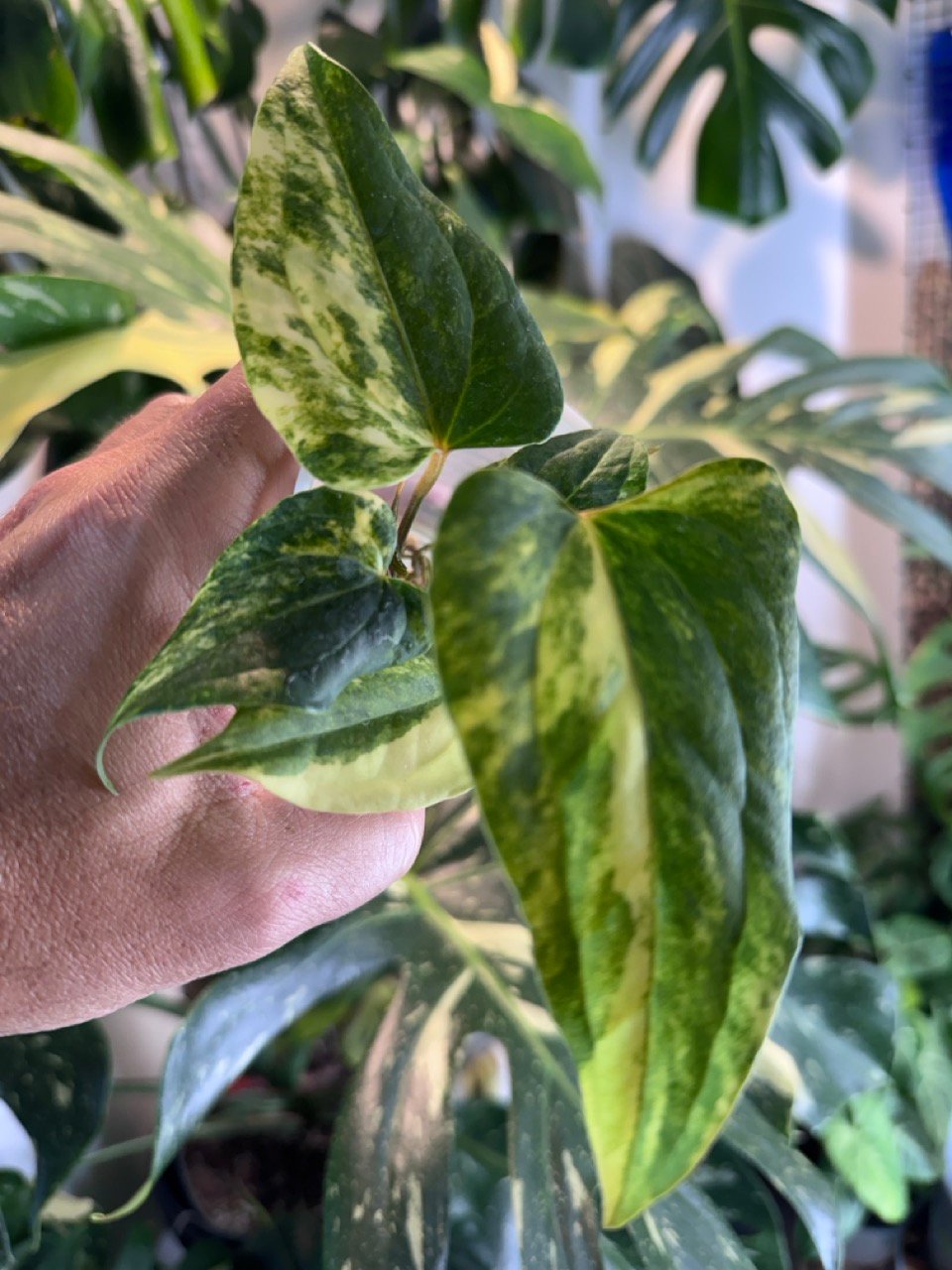
Anthurium Nigrolaminum Hybrid Variegated #537
$200.00
In stock
Exact Plant #537
Image taken 5-16-26
Anthurium Nigrolaminum Hybrid Variegated For Sale – Exact Plant #537
In the collector Anthurium world, the name nigrolaminum carries serious weight. It is a species that serious hybrid breeders seek out deliberately — not just for how it looks as a pure species, but for what it passes on to every cross it is part of. Dark genetics. Exceptional texture. Vein definition that reads with an almost graphic precision against a deep, sub-velvety backdrop. Exact Plant #537, the Anthurium Nigrolaminum Hybrid Variegated, brings all of that into a single specimen — and then layers variegation on top of it. The result is a plant that earns its price point the moment you see it in person.
This is an exact plant listing. The specific specimen photographed is precisely what ships to you — no substitutions, no surprises, no grower's choice uncertainty. At this level of the collector market, that matters, and we take it seriously.
About Anthurium Nigrolaminum
Anthurium nigrolaminum is native to the humid forests of Ecuador and Colombia, where it grows in the warm, moisture-rich understory conditions that produce the extraordinary foliage characteristics the species is known for. The name itself signals what you are getting — nigro meaning black, laminum referring to the leaf blade. Dark-leafed, firm, sub-velvety, with vein definition that emerges strongly as each leaf matures. It is a species that sits at the top of serious breeders' wishlists globally, and for good reason: its dark genetics carry cleanly and powerfully into hybrid crosses, producing offspring that inherit that depth of color, that surface quality, and that bold venation regardless of the other parent's contribution.
The hybrid form here takes the nigrolaminum foundation and introduces complementary genetics that shape the leaf form, expand the venation expression, and in the case of this specific specimen, layer in the extraordinary addition of variegation across the already dramatically dark foliage. The combination of near-black base coloration and variegation — whether expressed as sectors, streaks, or marbling — creates a contrast that is genuinely unlike anything a non-variegated plant of this lineage can produce.
What Makes Plant #537 Special
Variegated Nigrolaminum hybrids are rare enough that finding one at all is an event. Finding one with the kind of variegation expression, leaf health, and overall quality that warrants an exact plant listing at this level is rarer still. Plant #537 was hand-selected from our greenhouse because it passed every standard we hold our plants to — and then exceeded them in the category that matters most to collectors: visual impact.
The foliage carries the dark, sub-velvety base color and strong vein definition that define the nigrolaminum lineage. The variegation adds a layer of contrast and unpredictability that makes each leaf genuinely one of a kind. This is not a plant that photographs the same way twice — the light interacts with the dark surface and the variegated areas differently depending on angle, time of day, and the quality of the light source. In person it is even better than the photos suggest.
Care Guide
Light should be bright and consistently indirect. The dark foliage of the nigrolaminum lineage is highly efficient at absorbing available light — these plants perform well in conditions that would challenge other collector aroids, and they respond visibly and positively to quality grow light setups. A grow light placed 12 to 18 inches above the canopy is ideal and will produce the most impressive leaf development and the most vivid venation contrast. Direct sun should be avoided entirely — it will bleach and permanently damage both the dark base coloration and the lighter variegated areas of the leaf.
Watering follows the standard approach for dark-foliage collector Anthurium — allow the top one to two inches of the growing medium to approach dryness before watering thoroughly and allowing full drainage. The nigrolaminum lineage is sensitive to overwatering and root rot in soggy conditions. Use room-temperature water, ensure the pot drains freely every time, and never allow the plant to sit in standing water at the base of the pot.
Humidity should be maintained between 65 and 80 percent for optimal health and growth. The sub-velvety surface texture that makes this lineage so visually compelling is also a reliable indicator of a plant that needs elevated humidity to perform at its best. In ambient humidity below 50 percent, you will see leaf tip browning and slower, smaller new growth over time. A dedicated humidifier, grow cabinet, or greenhouse setup will make a visible and meaningful difference in leaf quality and overall plant vigor. Do not mist the leaves directly — the sub-velvety surface can hold moisture and become susceptible to fungal issues if left wet.
Temperature should stay warm and stable between 65 and 82 degrees Fahrenheit (18 to 28 degrees Celsius). The Ecuadorian and Colombian lineage of nigrolaminum means this plant appreciates consistent tropical warmth and will show stress relatively quickly if exposed to cold drafts, temperature swings, or air conditioning output. Stability is the goal — a consistent warm environment outperforms a variable one every time with plants of this lineage.
Soil should be a highly airy, fast-draining aroid mix. Orchid bark, perlite, charcoal, and a small amount of coconut coir or sphagnum moss performs well. Avoid dense, moisture-retaining potting mixes that hold water against the root zone — the nigrolaminum hybrid root system wants airflow and drainage, not sustained moisture.
Fertilizing should be light and consistent during the growing season. A balanced liquid fertilizer at quarter to half strength every four to six weeks in spring and summer is sufficient. The dark foliage lineage responds well to modest, regular nutrition — avoid heavy applications that can cause fertilizer buildup and a dulling of the dramatic leaf surface that makes this plant so special.
Toxicity: Anthurium nigrolaminum hybrid is toxic to cats, dogs, and humans if ingested. It contains calcium oxalate crystals, which cause oral pain, swelling, and gastrointestinal discomfort. Keep out of reach of pets and children at all times.
Shipping
This is an exact plant listing — Plant #537 ships precisely as shown in the product photos. We ship Monday through Wednesday to prevent weekend transit delays and ensure your plant arrives in peak condition. Every plant is carefully packaged to protect the foliage and root system during transit. If you would like additional photos of this specific plant before purchasing, or have any questions about its current growth stage, please reach out before placing your order — we are happy to help.
Every Leaf Tells a Story in our collection. Hand-selected, carefully shipped, and trusted by plant lovers nationwide. Get first access to limited genetics and healthy, acclimated plants.
© 2026 The Plant Nook Shop
Powered by SmallBiz.Reviews