
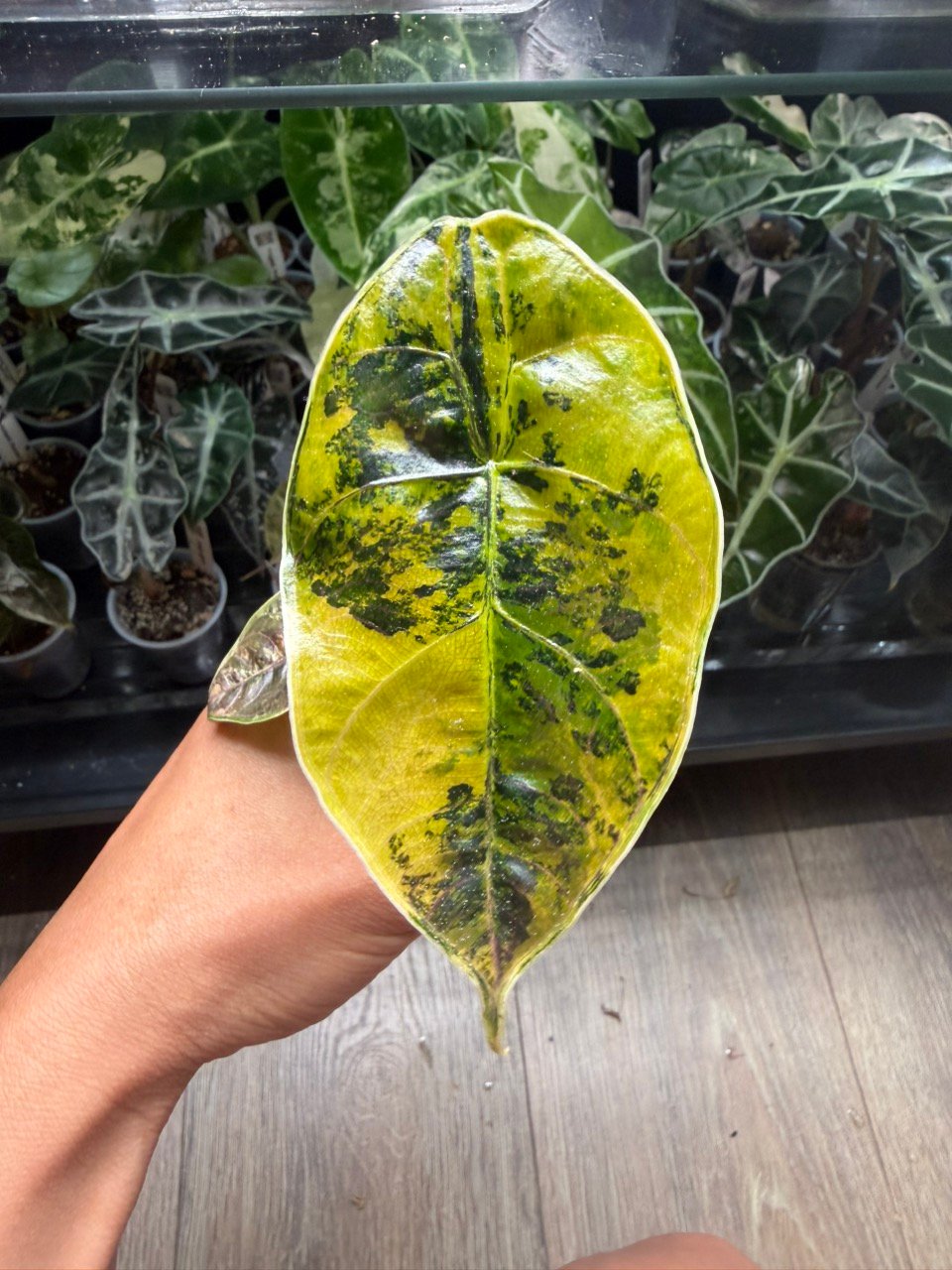
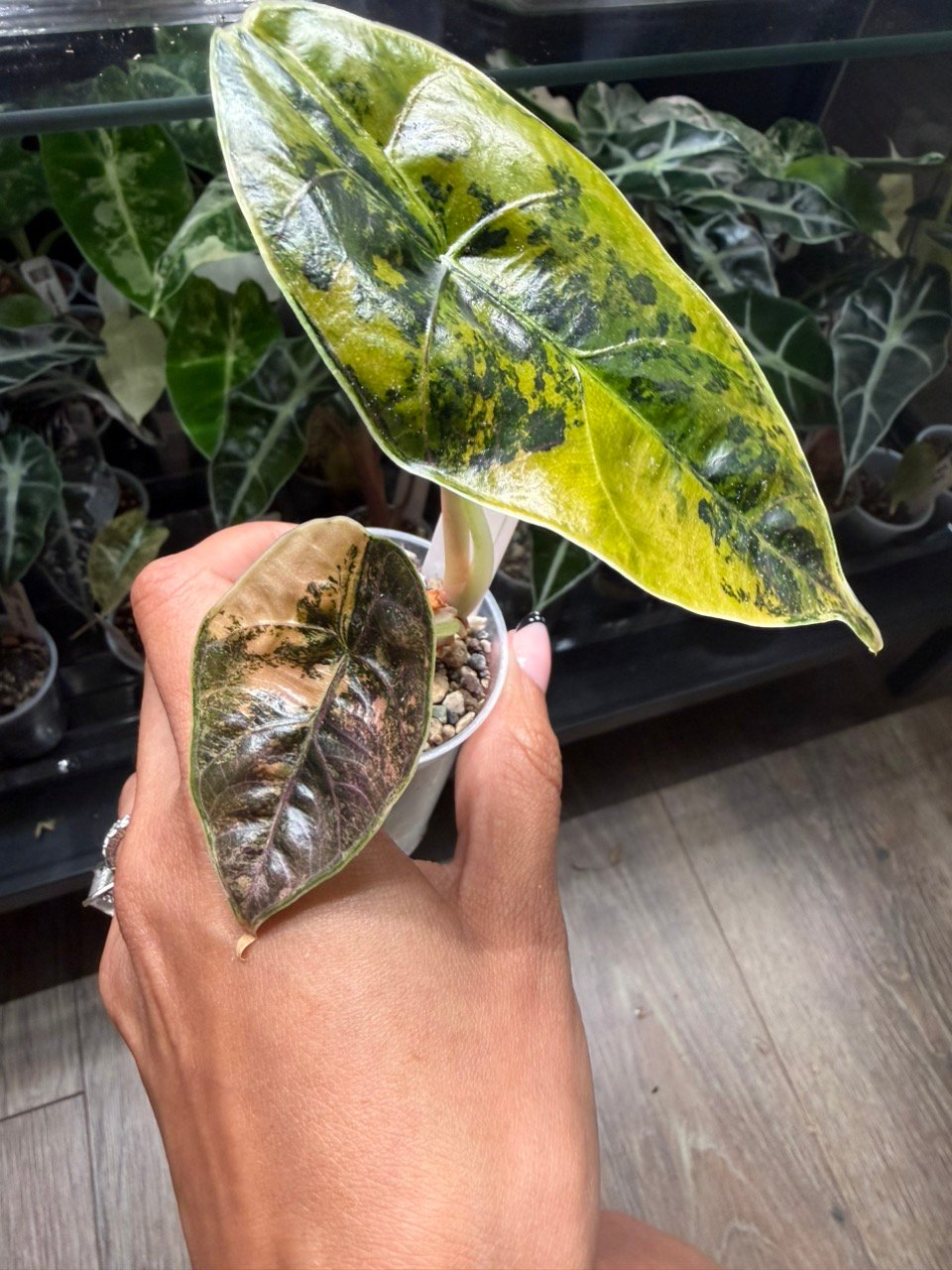
Alocasia Azlanii Variegated – Exact Plant
$165.00
In stock
Alocasia Azlanii Variegated – Exact Plant
Picture taken 5/13/26
Variegated Alocasia Azlanii – Exact Plant
There are rare plants, and then there is Alocasia azlanii. Formally described just in 2016 by botanists K.M. Wong and P.C. Boyce, this jewel aroid is native to the lowland alluvial forests of the Tutong District in Brunei, Borneo — growing in a small geographic range near the Benutan Dam catchment forest before it was ever known to collectors. It belongs to the Cuprea Group of Alocasia, the same elite botanical grouping as Alocasia cuprea, which means it shares that same compact jewel habit, thick leathery foliage, and extraordinary metallic iridescence that no other genus of tropical plant can replicate. The species name honours Azlan Pandai of the Brunei National Herbarium, one of the botanists responsible for its formal description. The standard Alocasia azlanii is already a top-tier collector plant in its own right. Its leaves carry a deep, glossy near-black or dark purple-green base surface with a metallic sheen that shifts under light, while the venation glows in vivid pink to magenta — a combination so visually intense that the plant earned the common name "Red Mambo" in early collector circles. This Variegated form layers an additional dimension onto all of that: irregular variegation in soft tones that contrast dramatically against the naturally jewel-dark backdrop, producing a specimen that is as close to living fine art as the plant world offers. This is an exact plant listing — what you see in the photos is precisely what you receive.What Makes This Plant Special
The Alocasia azlanii is widely regarded as one of the most visually complex jewel aroids in cultivation. The combination of a near-black metallic surface, hot pink to magenta venation, and now irregular variegation creates a three-tone interplay that is genuinely without parallel in the aroid family. Under bright indirect light or a grow light, the metallic sheen becomes almost iridescent — the leaf surface appearing to shift between deep green, purple, and black depending on the angle. The variegation adds a fourth visual element: unpredictable, unrepeatable, different on every new leaf. No two specimens ever look the same, and no two leaves on the same plant ever look the same. That is the nature of this plant, and it is why collectors across the world place it at the absolute top of their wishlists.Care Guide
Light is the single most important factor for keeping this plant happy and maintaining the intensity of its metallic iridescence and variegation expression. Bright, indirect light is ideal — the kind of light that would be comfortable to read in but not direct sun. A quality grow light placed 10 to 18 inches above the canopy works extremely well, particularly for bringing out the magenta venation and keeping variegation vivid. Avoid low-light placements; while the plant will survive, it will not thrive and the metallic quality of the foliage will dull significantly over time. Watering requires a careful hand. Allow the top one to two inches of the growing medium to dry slightly between waterings, then water thoroughly and allow free drainage. The Azlanii is not forgiving of soggy roots — its compact root system is susceptible to rot in poorly draining media, so the growing medium matters as much as the watering frequency. A chunky, airy aroid mix with excellent drainage is non-negotiable for long-term success. Humidity should be kept at 65 to 80 percent or above. This is a Borneo forest plant, and it performs at its best when the air around it approximates that environment. A dedicated grow cabinet, small greenhouse, humidifier, or even a pebble tray will make a meaningful difference in leaf quality, size, and the vibrancy of the venation. Consistent humidity also significantly reduces the risk of leaf browning, which is the most common issue collectors report with highly variegated Azlanii specimens. Temperature should stay stable and warm — between 65 and 85 degrees Fahrenheit (18 to 29 degrees Celsius) at all times. Cold drafts, air conditioning vents, and sudden temperature swings are the plant's primary enemies indoors. Keep it away from windowsills during winter and out of the path of any climate control airflow. Soil should be the most open, fast-draining medium you can provide. A blend of orchid bark, perlite, and a small amount of coconut coir or worm castings works beautifully. Avoid standard potting mixes on their own — they retain too much moisture for the Azlanii's root system and will cause problems over time. Fertilizing should be light and infrequent. A balanced liquid fertilizer at half strength every four to six weeks during the active growing season (spring through summer) is sufficient. Reduce or eliminate feeding in fall and winter when growth naturally slows. Toxicity: Alocasia azlanii is toxic to cats, dogs, and humans if any part of the plant is ingested. It contains calcium oxalate crystals, which cause oral pain, swelling, and gastrointestinal irritation. Keep out of reach of pets and children at all times.Shipping
This is an exact plant listing — the specific specimen shown in the product photos is what ships to you. We ship Monday through Wednesday to prevent weekend transit delays and ensure your plant arrives in the best possible condition. Highly variegated leaves can be more sensitive during transit, and we take every precaution in our packaging to protect the foliage and root system. If you have questions about this specific plant or would like additional photos before purchasing, please reach out — we are happy to help.Every Leaf Tells a Story in our collection. Hand-selected, carefully shipped, and trusted by plant lovers nationwide. Get first access to limited genetics and healthy, acclimated plants.
u00a9 2026 The Plant Nook Shop
Powered by SmallBiz.Reviews