
Philodendron Parolenense Mint Variegated – Exact Plant
$300.00
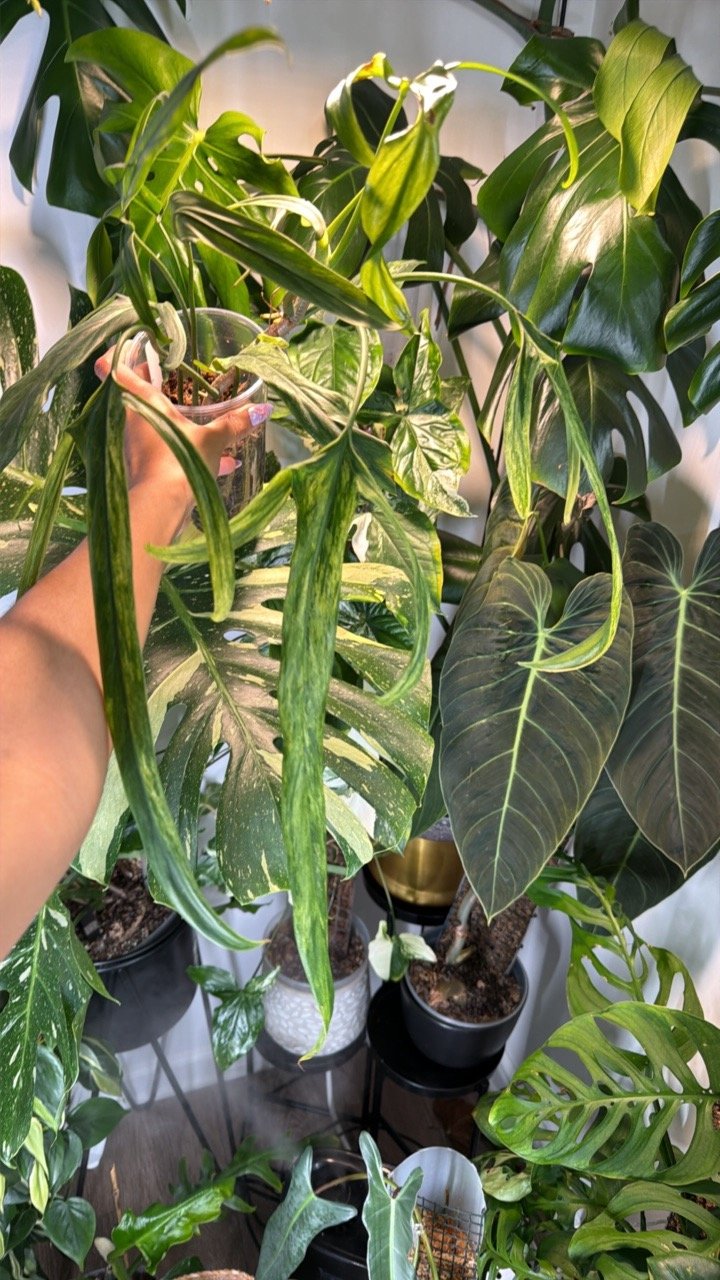
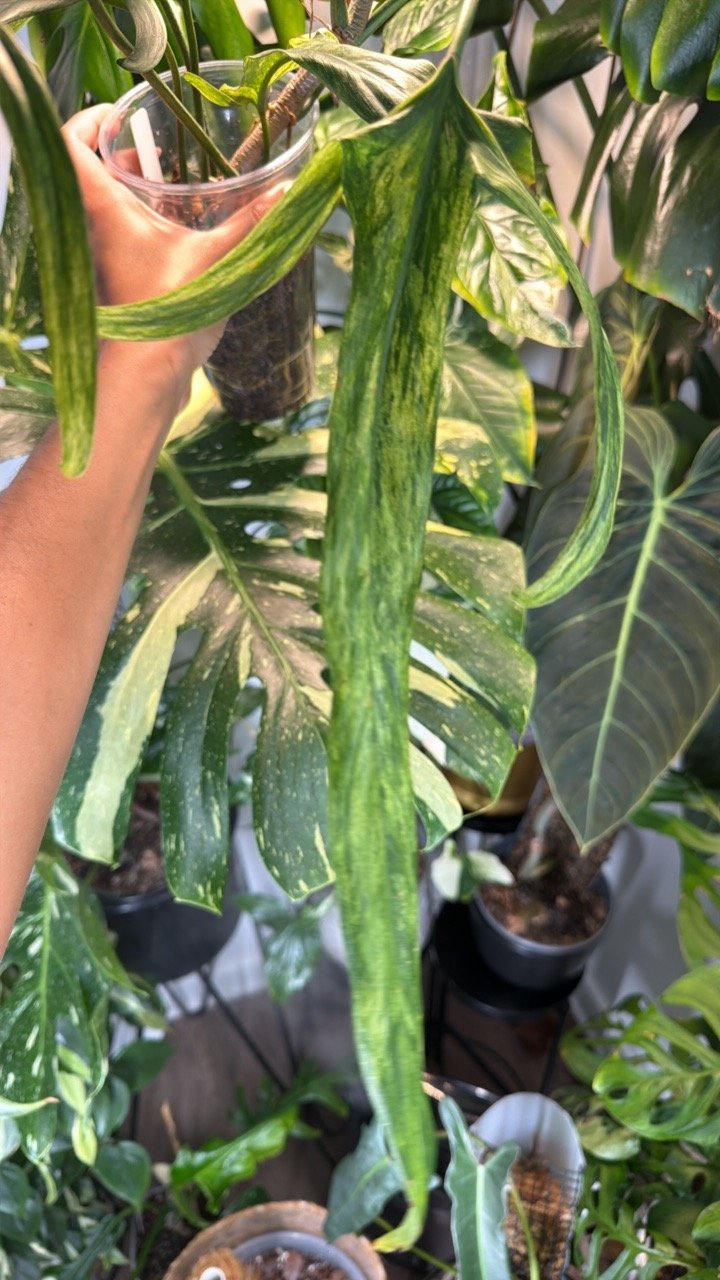
Exact Plant, image taken April 2026
Philodendron Paloraense Mint Variegated – Exact Plant #0417
Some plants stop you in your tracks. Exact Plant #0417 — the Philodendron Paloraense Mint Variegated — is one of them. Philodendron paloraense is a rare climbing aroid native to Ecuador, belonging to a genus that already commands global collector attention, but the Paloraense occupies a particularly coveted corner of it. The species produces elongated, tri-lobed leaves with a gently rippled texture and a naturally elegant silhouette — more architectural and refined than most Philodendron foliage, with a shape that draws the eye and holds it. The Mint Variegated form takes that already compelling canvas and layers on one of the most beautiful and nuanced variegation expressions in the collector aroid world: soft, icy mint-green tones that shift in the light alongside crisp, bright albo sectors that contrast cleanly against the deep green base. The effect is simultaneously delicate and dramatic. This is an exact plant listing. The specific plant shown in the product photos — Plant #0417 — is precisely what ships to you. No substitutions, no surprises. At this level of the collector market, that assurance is everything, and we take it seriously.About This Exact Plant
Plant #0417 is a rooted climbing specimen currently expressing mint and albo variegation across its foliage with the kind of soft, luminous quality that makes the Paloraense Mint so sought after in collector communities. The tri-lobed leaf shape is fully developed and characteristic of a mature Paloraense, and the variegation distribution is generous and well-spread rather than marginal. This is a plant that has earned its price point — and then some.What Makes the Paloraense Mint So Special
The standard Philodendron paloraense is already a relatively uncommon species in cultivation — it lacks the mass-market availability of Heartleaf or Brasil, and its tri-lobed, elongated leaf shape gives it a distinctly architectural quality that serious collectors prize. The Mint Variegated form is rarer still. The "mint" expression refers to a soft, pale green to icy celadon tone that develops in the chlorophyll-reduced areas of the leaf — distinct from the stark white of traditional albo variegation and visually much warmer and more nuanced. On this particular cultivar, the combination of mint and albo sectors on the same leaf produces a three-tone effect against the deep green base that is genuinely difficult to describe without seeing it in person. It photographs beautifully and looks even better in life. Collectors who have pursued this plant note that the Paloraense Mint sits at a crossroads of rarity, visual impact, and wearability — it is striking enough to anchor any collection but refined enough not to overwhelm a curated shelf or grow cabinet. At $300, exact plant specimens with strong mint expression represent a fair entry point into a plant that routinely commands significantly more at auction and through private sales.Care Guide
Light is the single most important variable for maintaining the vibrancy of the mint and albo variegation on this plant. Bright, indirect light — the equivalent of a well-lit room without direct sun exposure — is ideal. A quality grow light placed 12 to 18 inches above the canopy works exceptionally well and is the preferred setup for most serious collectors keeping this species. Avoid low-light conditions; while the plant will survive, the mint tones will fade and new growth will produce less expressive variegation over time. Direct sun should be avoided entirely, as the lighter variegated portions of the leaf are highly susceptible to bleaching and scorch. Watering should follow the standard aroid protocol — allow the top one to two inches of the growing medium to dry between waterings, then water thoroughly and allow full drainage. The Paloraense is a climber by nature and prefers a substrate that breathes rather than holds moisture. A chunky, well-draining aroid mix is strongly recommended. Do not allow the plant to sit in standing water or soggy media at any stage. Humidity should ideally be kept between 60 and 80 percent. As a native of Ecuador's humid tropical forests, this plant performs noticeably better in elevated humidity — you will see faster growth, larger leaves, and more vivid variegation expression when humidity is consistently maintained. A grow cabinet, room humidifier, or greenhouse setup is ideal. If kept in a standard indoor environment, a pebble tray with water beneath the pot will provide some benefit, though a humidifier will yield better results. Temperature should stay consistently warm — between 65 and 79 degrees Fahrenheit (18 to 26 degrees Celsius) is the sweet spot. As a tropical species, the Paloraense is sensitive to cold and will show stress quickly if exposed to temperatures below 60 degrees, cold drafts, or the direct output of air conditioning vents. Soil should be a highly airy, fast-draining aroid mix. A blend of pumice and sphagnum moss, or orchid bark with perlite and coconut coir, are excellent choices that the collector community has used successfully with this species. Avoid dense, moisture-retaining potting soils. Support is important for long-term growth. As a natural climber, the Paloraense will benefit from a moss pole, coco coir totem, or trellis as it matures. Providing a climbing structure encourages the plant to produce larger, more developed leaves and supports the architectural form that makes this species so visually compelling. Fertilizing should be light. A balanced liquid fertilizer at half strength every four to six weeks during the active growing season (spring through summer) is sufficient. Reduce or eliminate feeding in fall and winter. Toxicity: Philodendron paloraense is toxic to cats, dogs, and humans if ingested. It contains calcium oxalate crystals, which cause oral irritation, swelling, drooling, and gastrointestinal discomfort. Keep out of reach of pets and children at all times.Shipping
This is an exact plant listing — Plant #0417 ships precisely as shown in the product photos. We ship Monday through Wednesday to prevent weekend transit delays and ensure your plant arrives in peak condition. Every plant is carefully packaged to protect delicate foliage and root systems during shipping. If you would like additional photos of this specific plant before purchasing, or have any questions about its current condition, please reach out before placing your order.Every Leaf Tells a Story in our collection. Hand-selected, carefully shipped, and trusted by plant lovers nationwide. Get first access to limited genetics and healthy, acclimated plants.
u00a9 2026 The Plant Nook Shop
Powered by SmallBiz.Reviews