
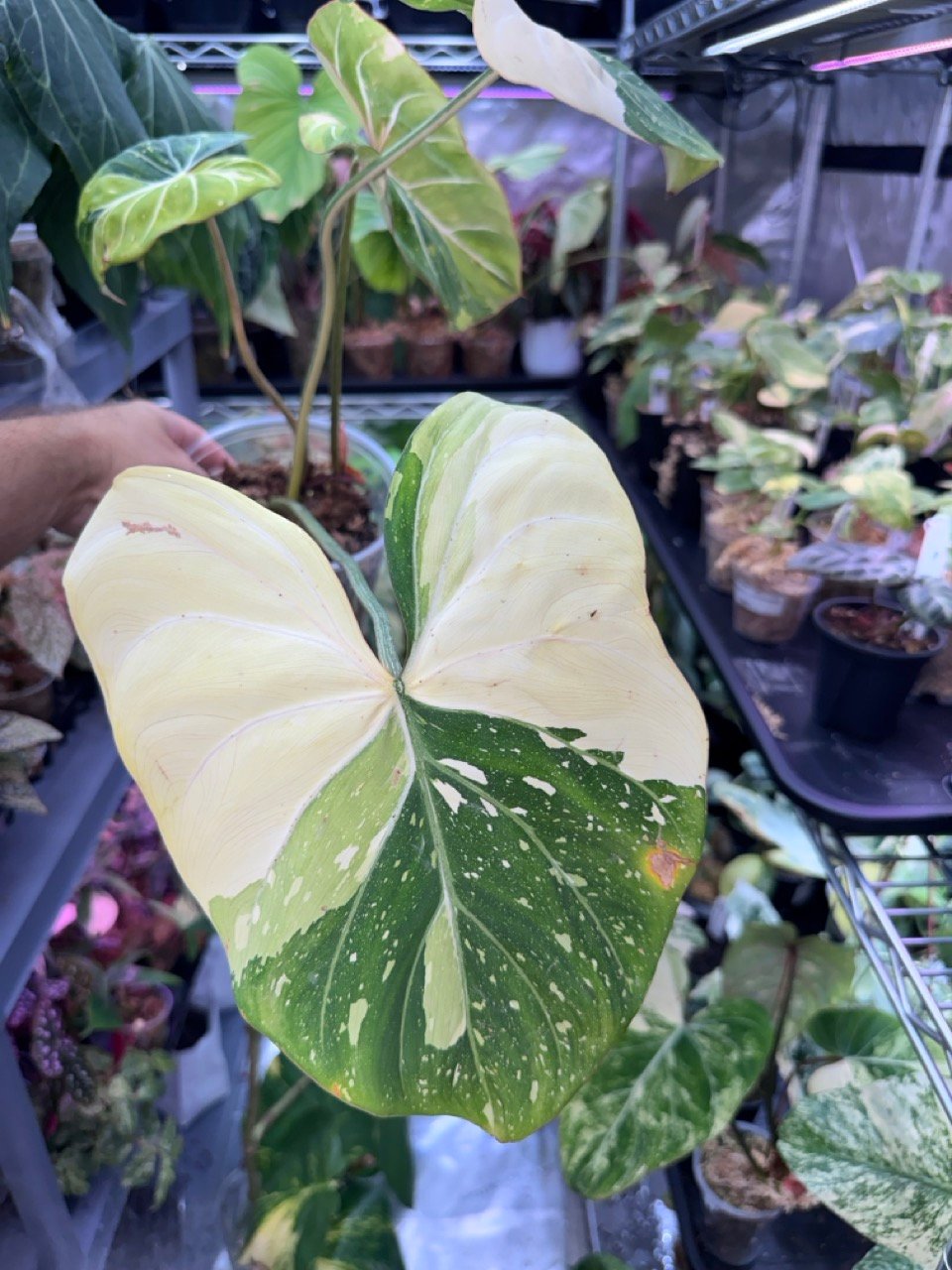
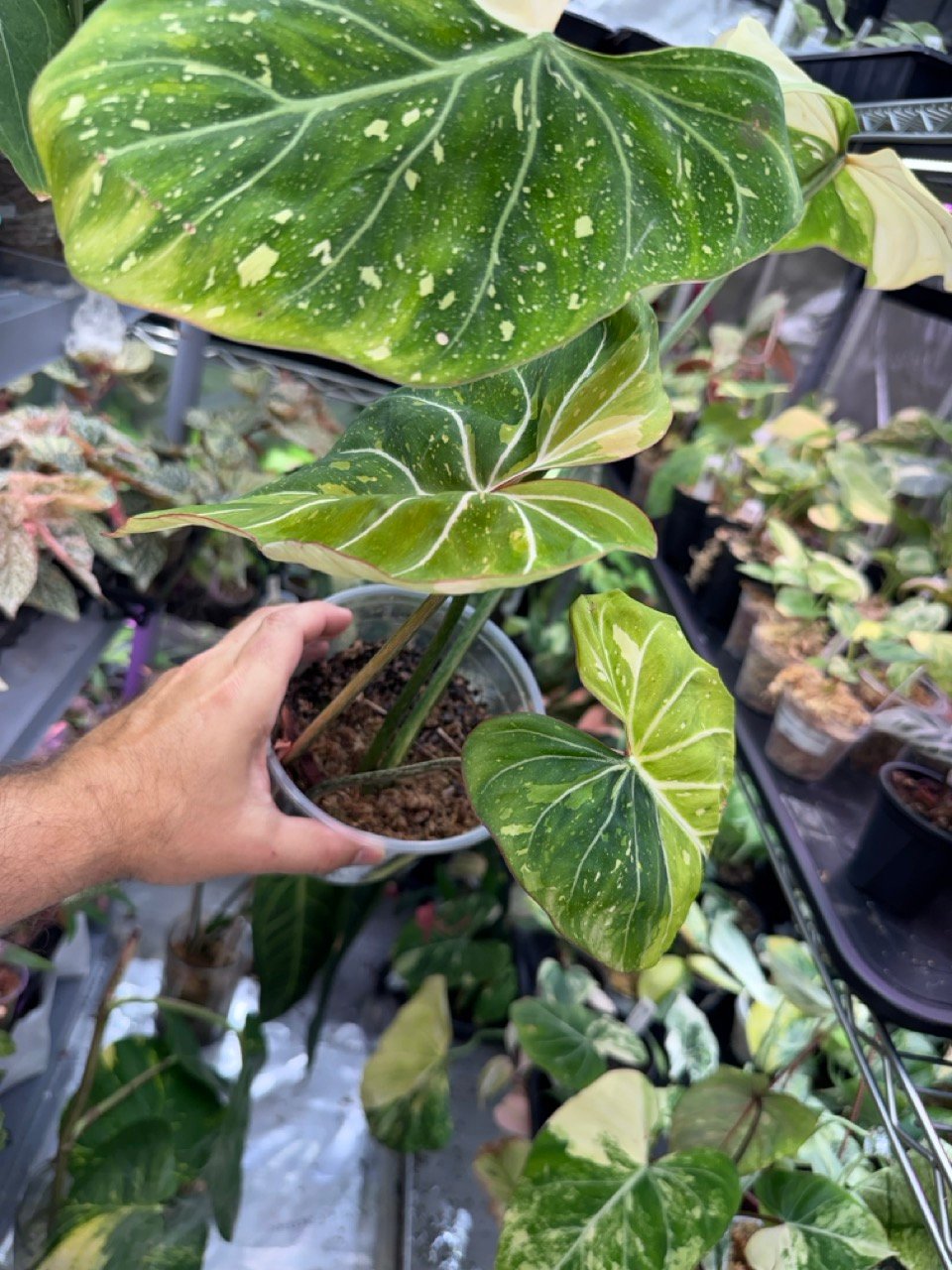
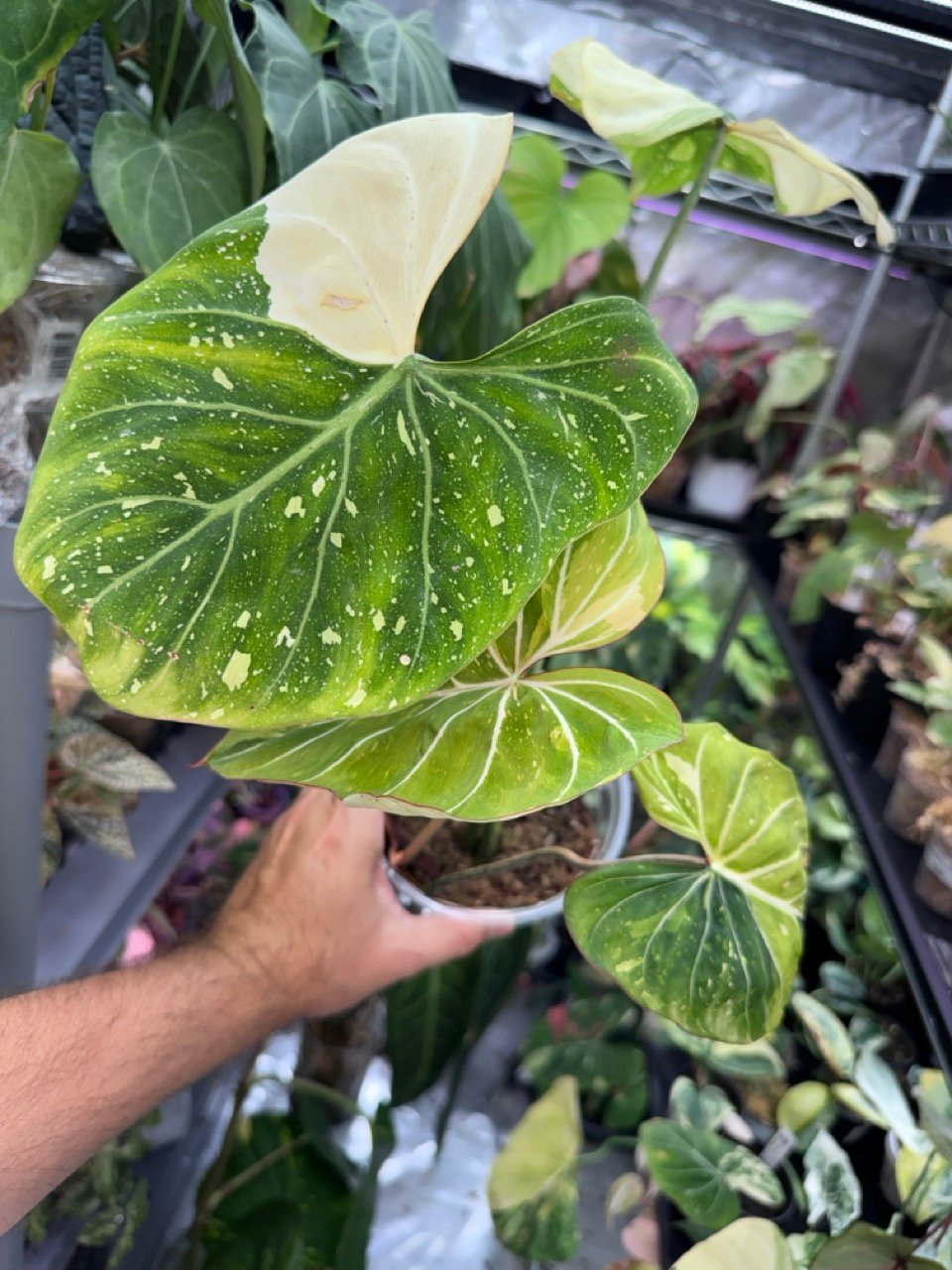
Philodendron Gloriosum Variegated Type 2 – Exact Plant #419
$150.00
In stock
Exact Plant #419
Images taken 5-18-25
Philodendron Gloriosum Variegated Type 2 For Sale – Exact Plant #419
The Philodendron gloriosum is already one of the most beloved velvet aroids in cultivation. Add Type 2 marbled variegation and you have something that serious collectors genuinely get excited about. Exact Plant #424 is a fully established specimen actively pushing a new leaf as of May 18, 2026 – photographed mid-unfurl so you can see exactly what this plant is doing right now. What ships to you is exactly what you see in the photos.What Is Type 2 Variegation?
Not all variegated gloriosums are the same, and the collector community recognizes distinct forms. Type 2 refers specifically to the marbled variegation pattern – irregular, blended cream to mint green marbling distributed across the deep green velvety leaf surface, as opposed to the bold sectoral patches of the original Type 1 form. The result is a softer, almost watercolor-like variegation that looks painted onto the leaf rather than blocked out in solid sectors. No two leaves will ever express the same pattern, which makes living with this plant an ongoing discovery every time new growth unfurls.About Philodendron Gloriosum
Native to the tropical forest floors of Colombia (and also found in Central America, Mexico, Peru, Ecuador, Brazil, and Venezuela), the gloriosum is one of the few Philodendron species that crawls rather than climbs. It grows from a rhizome that extends along the soil surface, sending up one extraordinary leaf at a time. That growth habit makes it one of the most unique aroids you can own – wide, low, and commanding rather than tall and vining. The IUCN classified Philodendron gloriosum as vulnerable in its native Colombian habitat, which adds real significance to growing a healthy specimen in cultivation. The variegated forms are even more rare – carefully maintained through select cultivation lines rather than found in nature. Key characteristics at a glance:- Large, broad, heart-shaped velvety leaves with bold white venation
- Type 2 marbled cream to mint variegation – unique pattern on every single leaf
- Ground-crawling rhizomatous growth habit – no moss pole needed
- One dramatic leaf at a time, slowly and deliberately
Care Guide
Light: Bright indirect light is ideal. A spot about 1 meter from a south-facing window, or near an east or west-facing window, works well. Grow lights at 12 to 14 hours per day are excellent for this species and will keep growth active and the variegation vivid. No direct sun – the velvety leaf surface burns quickly and the variegated areas are especially sensitive. Watering: Water when the top 1 to 2 inches of soil are dry, then water thoroughly and let it drain fully. The gloriosum likes to stay evenly moist but never soggy. Overwatering is the number one issue with this species – when in doubt, wait another day. One watering per week is a reasonable starting point and you can adjust from there based on your environment. Humidity: Aim for 60 to 80 percent. The gloriosum's velvety surface is a reliable indicator of a plant that wants elevated humidity. A humidifier will make a noticeable difference in leaf size, texture quality, and how quickly the plant pushes new growth. You can also mist the leaves lightly since the velvet surface handles it better than flat-leaved aroids. Temperature: Keep it between 65 and 85 degrees Fahrenheit (18 to 29 degrees Celsius). No cold drafts, no air conditioning vents, no windowsill exposure in cooler months. Stable warmth is what this plant wants. Soil: A well-draining aroid mix is essential. Peat, perlite, orchid bark, and charcoal is a great combination. Pure sphagnum moss also works very well for this species. The rhizome system needs structure and airflow – avoid anything that compacts or holds water against the roots. Pot choice: Wide and shallow rather than deep and narrow. The gloriosum's rhizome crawls horizontally, so it benefits from space to spread rather than depth to sink into. Repot every 1 to 2 years in spring, sizing up in width rather than depth. No support needed: Unlike most collector Philodendron, the gloriosum is not a climber. No moss pole required – just a wide container and room to crawl. Fertilizing: Balanced liquid fertilizer at half strength once a month during spring and summer. Reduce to every 8 weeks in fall and winter. Light and consistent beats heavy and infrequent with this species. Toxicity: Philodendron gloriosum is toxic to cats, dogs, and humans if ingested. Contains calcium oxalate crystals which cause oral irritation, swelling, and digestive upset. Keep away from pets and children.Shipping
This is an exact plant listing – Plant #419 ships precisely as shown in the photos. We ship Monday through Wednesday to avoid weekend transit delays. Every plant is carefully packaged to protect the foliage and rhizome during transit. Reach out before ordering if you want additional photos of the new leaf in progress – we are happy to send an update.Every Leaf Tells a Story in our collection. Hand-selected, carefully shipped, and trusted by plant lovers nationwide. Get first access to limited genetics and healthy, acclimated plants.
u00a9 2026 The Plant Nook Shop
Powered by SmallBiz.Reviews