
Anthurium Pedatoradiatum aurea var. x Crystallinum
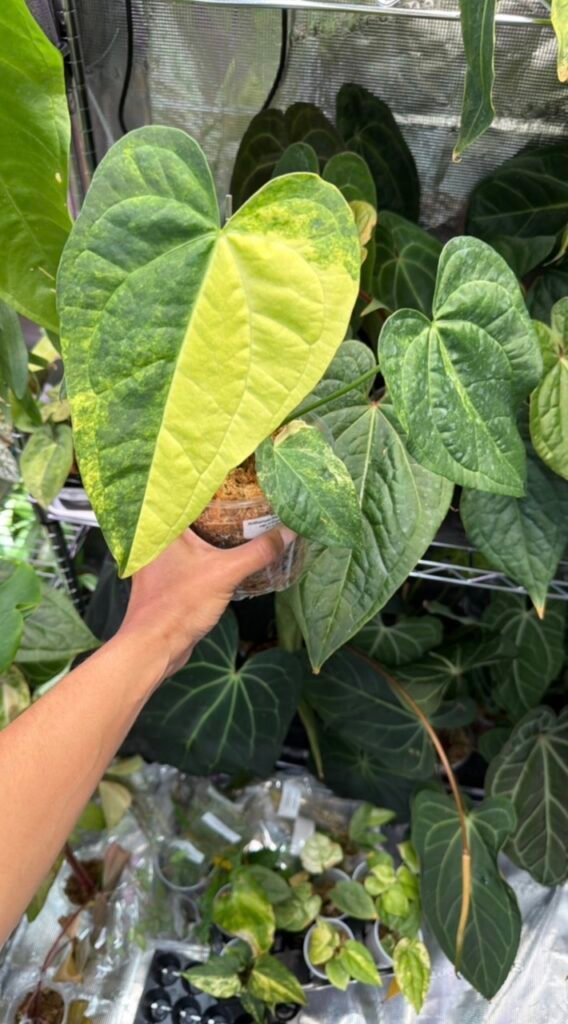
This One Had People Fighting Over It — Anthurium Pedatoradiatum Aurea x Crystallinum this one Sold Fast, but we have more! We have been doing this long enough to know when a plant is going to cause a stir. The moment this Anthurium Pedatoradiatum Aurea x Crystallinum came through our greenhouse, the reaction was immediate. It was not just that the plant was healthy — it was that the leaf stopped everyone cold. Deep forest green on the left. Electric neon aurea on the right. A near-perfect half-moon split running straight down the center of a broad, heart-shaped blade. A few of our customers saw it at the same time. Let us just say the conversation got competitive. It sold. But we want to talk about it — because this plant is a perfect example of exactly what PlantNookShop is built to find. Shop Our Anthuriums What Is This Hybrid? The Anthurium Pedatoradiatum Aurea x Crystallinum is a deliberate hybrid cross between two of the most visually compelling Anthurium species in cultivation, elevated further by the addition of aurea variegation — one of the rarest and most sought-after color expressions in the collector aroid world. Anthurium pedatoradiatum is a terrestrial species native to the humid forests of southern Mexico — Veracruz, Chiapas, and Tabasco — and is immediately recognizable for its deeply lobed, hand-like foliage that radiates outward in a wide, open fan. Common name: Anthurium Fingers. The aurea variegated form of this species expresses a vivid chartreuse to neon yellow-green coloration in the reduced-chlorophyll areas of the leaf — a warm, electric tone that reads almost luminescent against darker foliage. Anthurium crystallinum is the other parent — the velvet standard of the collector Anthurium world. Broad, heart-shaped, dark green leaves with a matte velvety surface and luminous silver-white venation that appears almost hand-drawn. It is the species that introduced generations of collectors to velvet aroids, and its genetics here contribute the leaf shape, the venation quality, and the dark, rich base coloration that makes the aurea contrast so dramatic on this hybrid. The result of crossing these two? A plant with a broadly heart-shaped to slightly lobed leaf form, velvety surface texture, defined silver venation, and the Pedatoradiatum Aurea’s electric chartreuse-to-neon-green coloration distributed across the leaf in a way that varies uniquely from specimen to specimen. What Made This Specific Plant Different Not every aurea hybrid expresses its variegation in the same way. On most specimens, the neon green tones appear as irregular streaks, sectors, or marbling distributed somewhat randomly across the leaf surface. Beautiful — but not like this one. This particular plant expressed what collectors call a half-moon split — one of the most dramatic and symmetrically striking variegation patterns possible on any plant. The leaf was divided cleanly down the center: the left half a deep, saturated forest green carrying the full velvet and silver venation of the Crystallinum parent, and the right half an electric, neon chartreuse-to-lime that seemed to almost glow from the inside out. The split was not gradual or blended. It was decisive. That kind of expression happens when a variegation sector covers exactly half the apical meristem as the leaf develops — it is a genetic moment of perfect timing that cannot be engineered or predicted. You just have to be watching for it when it happens. We were watching. Why We Selected It At PlantNookShop, we do not list plants because they are available. We list plants because they are worth listing. Every specimen that goes up on our site has passed through the greenhouse with eyes on it — evaluated for health, root development, foliage quality, and that harder-to-define quality that makes a collector plant genuinely extraordinary rather than just technically rare. This plant checked every single box and then added one we were not expecting. The half-moon split on a heart-shaped leaf in this color combination — deep forest green and neon aurea, side by side, on the same naturally elegant Crystallinum-influenced blade — is the kind of thing you see in collector forums tagged with long strings of superlatives. We see a lot of plants. This one was different. Perfect half-moon sectoral split — deep forest green and electric neon aurea, divided cleanly down the center Heart-shaped leaf form with slight lobing — the Crystallinum shape influence fully expressed Velvety matte surface texture with defined silver venation from the Crystallinum parent Strong, healthy rooting and robust overall plant health A coloration contrast that photographed beautifully and was even more striking in person The reaction from our customers told the rest of the story. Multiple people reached out about this plant within a short window of each other. It was a good problem to have. The PlantNookShop Standard — Why Our Reviews Say What They Say We get asked a lot about our reviews. People want to know why so many customers come back, why the five-star ratings consistently mention that the plant exceeded their expectations, why collectors who have bought from dozens of shops keep coming back to us specifically. The honest answer is that we are collectors first and a shop second. Every plant that ships from our greenhouse is a plant we would be proud to have in our own collection. We grow in a humidity-controlled greenhouse environment. We monitor individual plants. We catch problems early. And we only list what we genuinely believe deserves to be listed — because if a plant is just okay, it stays in the greenhouse until it is not just okay anymore. The Pedatoradiatum Aurea x Crystallinum half-moon is a perfect expression of that philosophy. It was not the largest plant we had. It was the most interesting one. And the collector who got it knew exactly what they were receiving the moment the box was opened. Care Basics for This Hybrid If you are newer to the Pedatoradiatum x Crystallinum lineage, here is what you need to know to keep plants like this one thriving. Light: Bright
Anthurium Black Venom x Fort Sherman x Ralph Lynam Variegated
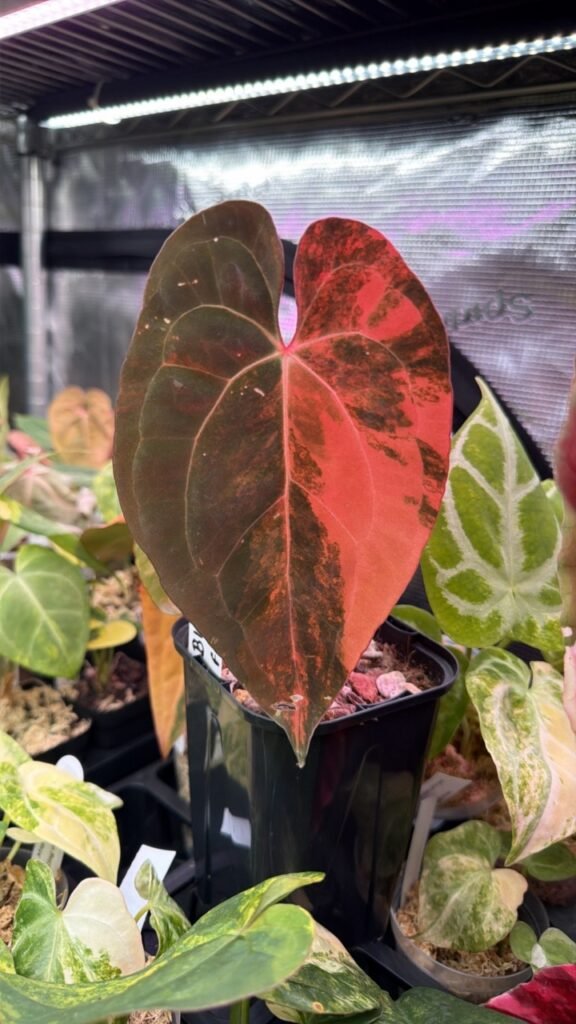
Anthurium Black Venom x FS RL Variegated — The Plant Everyone Wanted this one Sold Fast, but we have more! We have been doing this long enough to know when a plant is going to cause a stir the moment it goes up. Plant #0540 — the Anthurium Black Venom x FS RL Variegated — was one of those plants. Bold, dramatic, and unlike anything else in the greenhouse that week, it had multiple collectors reaching for their wallets at the same time. That kind of energy around a single listing does not happen often. When it does, it means the plant earned it. Shop Our Anthuriums What Is the Anthurium Black Venom x FS RL? This hybrid brings together three of the most respected genetics in the collector Anthurium world — and to understand why Plant #0540 was so extraordinary, it helps to understand what each parent contributes. Anthurium Black Venom is a cultivar of Anthurium papillilaminum selected for its near-black, deeply textured foliage and the dark, almost sculptural presence it brings to any collection. It is a plant known for its fierceness — leaves that read black in certain light, a surface that absorbs and holds color rather than reflecting it, and a collector reputation that is well established globally. Anthurium Fort Sherman x Ralph Lynam (FS x RL) is a highly regarded hybrid in the dark-foliage Anthurium community, celebrated specifically for its ultra-dark leaf coloration and the vibrant, contrasting red venation that cuts through it. The Fort Sherman x Ralph Lynam cross consistently produces offspring with an intense visual contrast — deep, near-black foliage lit up by bold red or burgundy veins that feel almost electric against the dark backdrop. Cross those two lineages together and the baseline is already extraordinary. Add variegation on top of that, and you have a plant that most serious collectors will only ever see once. What Made Plant #0540 a Showstopper The thing about variegated dark-foliage Anthurium hybrids is that the contrast between the variegated and non-variegated portions of the leaf is unlike anything else in the plant world. On most variegated plants — your common Pothos, your Syngonium — the variegation reads as white or cream against a mid-green leaf. Attractive, sure. But the contrast is moderate. On a plant like Plant #0540, the contrast is extreme. One side of the leaf was expressing bold, bright half-moon variegation — a clean, high-contrast sector of light tone that took up a significant portion of the leaf blade. The other side of that same leaf was near-black. Deep, dark, velvety, absorbing all the light around it. The two halves of the same leaf looked like they came from two entirely different plants. That is what a true half-moon does when the dark parent genetics are this strong — and it is extraordinarily rare to see it expressed this cleanly. When we photograph a plant like this and post it, the response is immediate. Comments, DMs, people tagging other people. Plant #0540 had multiple collectors reaching out simultaneously — genuinely competing for it — and that almost never happens for a single listing at this price point. The plant did that on its own. We just had the good sense to recognize it in the greenhouse before it went up. Why We Hand-Select Every Plant We Carry PlantNookShop is not a fulfillment operation. We do not list photos we did not take of plants we did not grow and select ourselves. Every single plant that goes up on our shop has been personally evaluated — held, examined under good light, checked for root health, assessed for foliage quality, and compared against every other plant of the same variety we had available at that moment. Plant #0540 passed every one of those evaluations at the highest level. Here is what stood out: True half-moon variegation — not speckled, not marginal, but a bold, clean sectoral split that covered a significant portion of the leaf blade Near-black coloration on the non-variegated side — deeply saturated, with the dark depth that only comes from strong Black Venom and FS RL genetics combining well Healthy, established root system — not a fresh cutting, not a struggling TC start, but a plant that had settled into its growing medium and was actively pushing new growth Strong leaf structure — firm, upright, no tip browning, no stress marks from transit or humidity fluctuation Exceptional photographic presence — this plant looked as good on camera as it did in person, which matters when your customers are making purchasing decisions from photos That combination is rare. All five of those boxes being checked by the same plant at the same time is the kind of alignment that makes something go from “nice listing” to “everyone is fighting over this.” That is what our 5-star reviews are built on — not just healthy plants, but plants that genuinely exceed what people expected when they opened the box. A Note on Half-Moon Variegation in Dark Anthurium Hybrids Half-moon variegation — where one half of a leaf expresses normal coloration and the other expresses the variegated form — is considered one of the most desirable variegation types in the collector plant world. It is the result of a clean sectoral chimeric mutation where the cell layers responsible for chlorophyll production are neatly divided across the leaf. In a standard green-leafed plant, a half-moon reads as green on one side and white or cream on the other. In a dark-foliage hybrid like Plant #0540, that same expression becomes near-black on one side and bright on the other — and the visual impact is dramatically amplified. The darker the non-variegated tissue, the more striking the contrast. This is why dark hybrid collectors specifically seek out variegated specimens from Black Venom, FS RL, Ace of Spades, and similar dark-genetics lineages — the variegation simply hits differently when the baseline foliage is that deep. Plant #0540 Has Found Its Home — Here Is What Is Still Available
Anthurium (Black Venom x Red Vein Dark Phoenix) #533
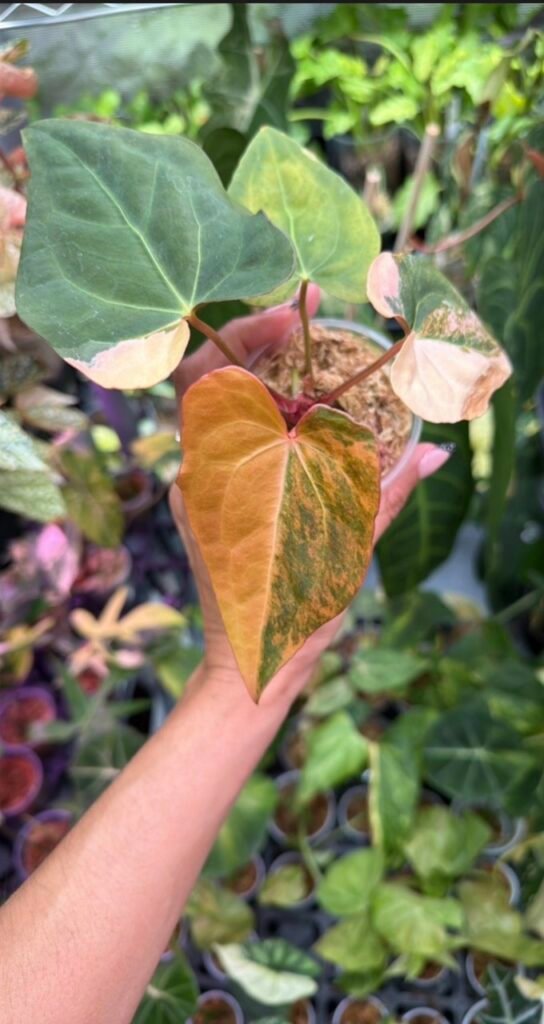
This Plant Stopped Us In Our Tracks — Meet the Anthurium Black Venom x Red Vein Dark Phoenix this one Sold Fast, but we have more! Every once in a while, a plant comes through our greenhouse that makes everyone stop what they’re doing and just stare. Plant #533 the Anthurium Black Venom x Red Vein Dark Phoenix, was one of those plants. And it sold fast. We’re not surprised. This post is about that plant. Why we selected it, what made it so special, and why that kind of selectiveness is exactly what PlantNookShop is built on. If you love rare, high-quality aroids and want to understand what goes into every plant we bring into our shop — keep reading. Shop Our Anthuriums What Is the Anthurium Black Venom x Red Vein Dark Phoenix? This hybrid is a cross between two of the most dramatic Anthurium cultivars in the collector world right now. Anthurium Black Venom is a spontaneous mutation of Alocasia Amazonica’s close relative in the Anthurium world — a cultivar known for its near-black foliage, sharp architectural leaf shape, and an overall presence that feels more like a statement sculpture than a houseplant. Anthurium Red Vein Dark Phoenix (RVDP) is a legendary hybrid created by Thai breeder Mr. Jeera Jugmongkol of Siam Flora — the result of crossing Anthurium papillilaminum variegated with Anthurium Ace of Spades. The RVDP is prized across the global collector community for its deep, dark, velvety foliage and the bold burgundy-to-red venation that runs through it like fire through dark stone. Bring these two together and what you get is a hybrid that carries the depth and drama of both parents — and in the case of Plant #533, it expressed something even more extraordinary than either parent alone. Why We Hand-Selected Plant #533 We do not buy plants in bulk and list everything we receive. That is not how we operate. Every single plant that goes up on PlantNookShop has been looked at, evaluated, and selected by hand — and Plant #533 earned its spot immediately. What caught our eye with this specific specimen was the color. Most Black Venom x RVDP seedlings will express dark foliage with some degree of red venation — that is expected from the parentage. But Plant #533 was doing something different. The leaf coloration was expressing warm orange tones — a rich, burnt amber to copper-orange shift in the venation and surface color that gave the plant an almost glowing quality under light. Orange expression in an Anthurium hybrid of this lineage is genuinely rare, and the combination of that warmth against the near-black backdrop of the foliage was unlike anything we had seen come through our greenhouse in a while. That kind of find is exactly what we look for. Not just healthy. Not just alive. Special. What Made This Plant Stand Out at a Glance Warm orange-toned venation — rare expression for this hybrid cross, unexpected and stunning Near-black base foliage with a velvety, light-absorbing surface depth Elongated, architectural leaf shape inherited from the Black Venom parent Strong, healthy root system — established and ready to grow Exceptional coloration contrast that photographs beautifully and looks even better in person It was the kind of plant you photograph first and evaluate second, because the visual impact hits before the analytical part of your brain catches up. That instant reaction is something we trust. When everyone in the greenhouse has the same reaction to a plant, it goes on the site. This Is What Our 5-Star Reviews Are Built On We hear from our customers all the time. The recurring theme across our reviews is not just that the plants arrived healthy — it is that the plants exceeded expectations. People open the box and are genuinely surprised by what they received. That does not happen by accident. It happens because we are collectors ourselves. We grow in a greenhouse environment where humidity, light, and airflow are dialed in. We water by hand, we monitor each plant individually, and when something looks off we address it before it ever gets listed. By the time a plant ships from our greenhouse to your home, it has been cared for, observed, and selected with the same care we would give our own personal collection — because it started there. Plant #533 is a perfect example of that philosophy. It was not the most expensive plant in the greenhouse that week. But it was the most interesting, and we knew the right collector would feel exactly the same way the moment they saw it. It sold quickly. The buyer knows who they are, and we hope it is thriving wherever it landed. Rare Anthurium Hybrids — What to Know Before You Buy If you are newer to collector-grade Anthurium hybrids, here are a few things worth knowing as you explore plants like the Black Venom x RVDP lineage. Hybrid expression is unpredictable — and that is the point. When two Anthurium cultivars are crossed, each seedling expresses a different blend of parental traits. Leaf shape, color, venation pattern, and texture all vary from plant to plant. That is why exact plant listings matter — you are not buying a category, you are buying a specific, one-of-a-kind specimen. Orange and warm-toned expressions are rare within dark hybrid lineages. Most hybrids from dark-foliage parents like Ace of Spades, Black Venom, and their relatives will trend toward burgundy, dark maroon, and near-black tones. When a seedling expresses warm orange or amber — as Plant #533 did — it represents a genuinely uncommon genetic expression that is unlikely to repeat in the same cross. Care for hybrids like this is straightforward for intermediate plant owners. Bright indirect light, humidity above 60 percent, well-draining aroid mix, and water when the top two inches of soil approach dryness. Avoid direct sun on the venation — it will bleach. Keep away from cold drafts and temperature swings. That is essentially the full care brief for this