
Anthurium Veitchii x Warocqueanum
$100.00
In stock
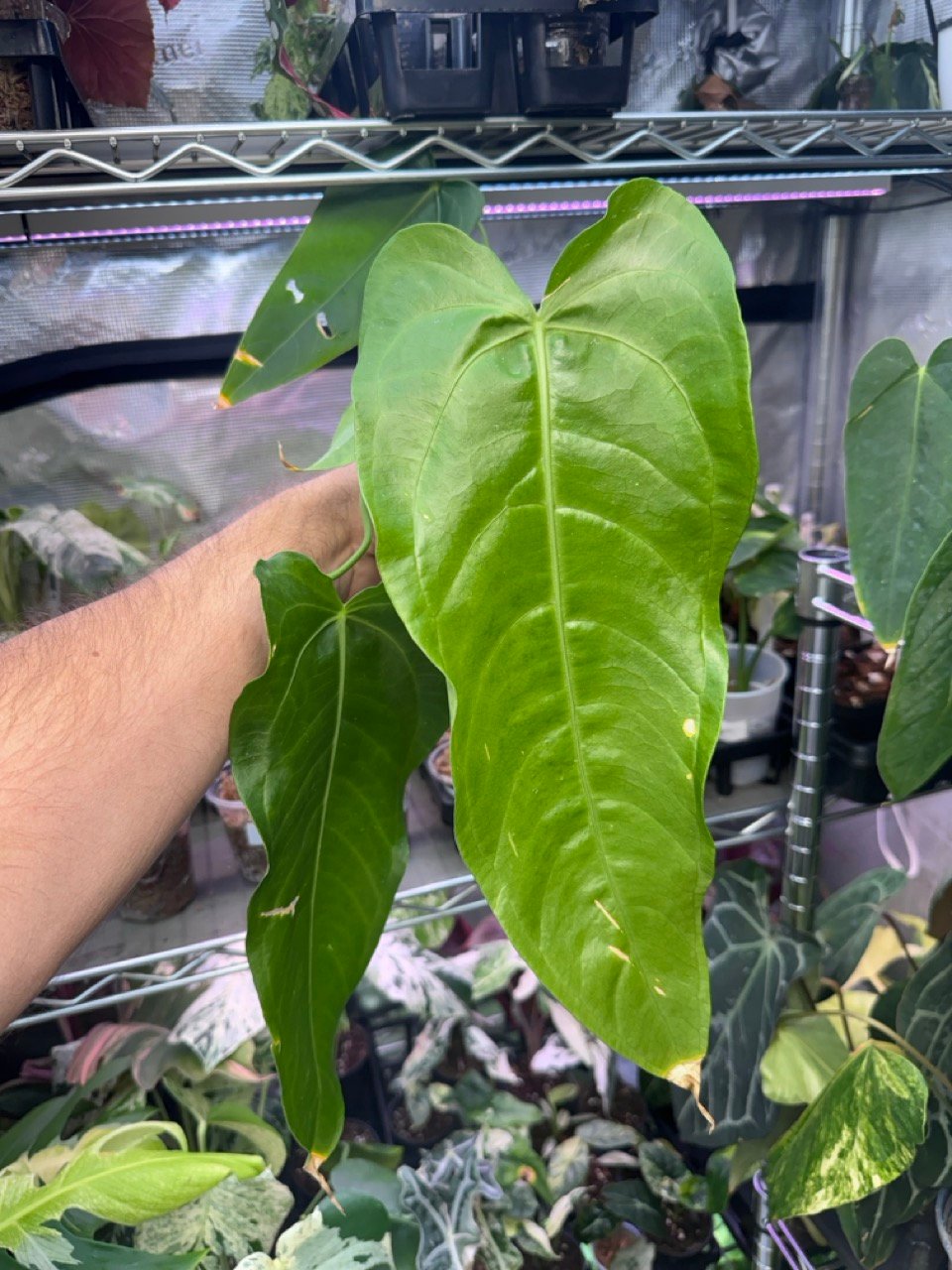
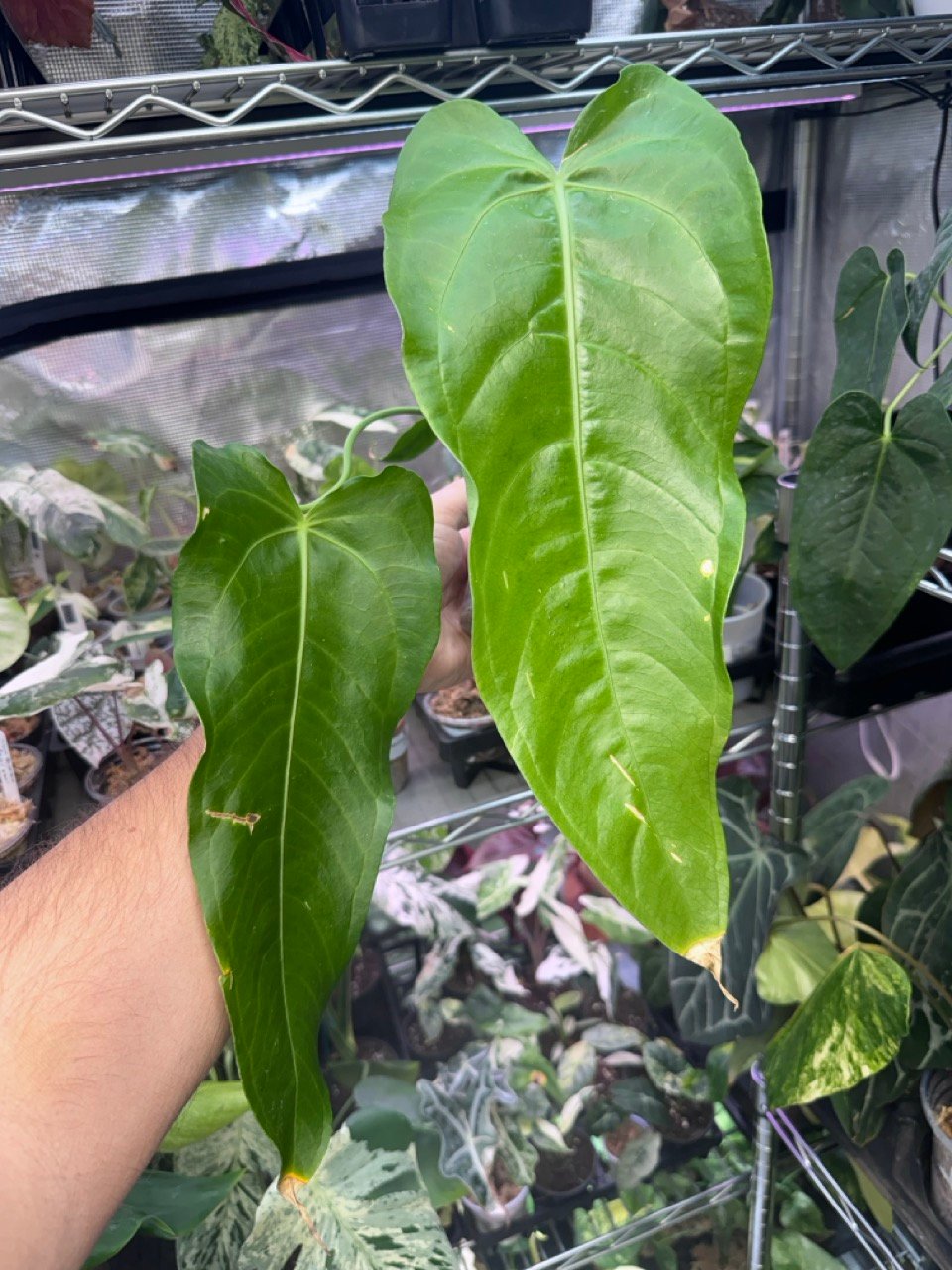
Exact Plant #552
Image taken 5-14-26
Anthurium Veitchii x Warocqueanum For Sale – Exact Plant
There is a cross that every serious Anthurium collector thinks about before they ever manage to acquire it. Two plants that represent the absolute pinnacle of their genus — one crowned King, one crowned Queen — brought together in a deliberate, carefully executed hybrid that combines everything that makes both parent species legendary. Anthurium Veitchii x Warocqueanum is that cross, and the specific specimen available here is a one-of-a-kind exact plant offering. What you see in the product photos is precisely what ships to you. Anthurium veitchii — the King Anthurium — is native to the cloud forests of Colombia and earns its title without argument. Its leaves are strap-like, elongated, and deeply corrugated with a dense, pleated ribbing that runs the full length of the blade — a texture so architectural and rhythmic it looks less like a leaf surface and more like the barrel vaulting of a cathedral ceiling. Under ideal conditions, mature King Anthurium leaves can reach over 22 inches in length as juveniles, growing to dramatically greater spans at full maturity, and the overall presence of the plant in a collection is commanding in a way that few aroids can rival. The foliage is glossy to semi-glossy, with a rich mid-to-deep green that intensifies as each leaf matures, and the corrugation creates light and shadow patterns across the surface that shift beautifully throughout the day. Anthurium warocqueanum — the Queen Anthurium — is the other half of this equation, and where the King is architectural and structural, the Queen is sumptuous and velvety. Endemic to the humid montane forests of Colombia, the Queen produces leaves that are long, narrow, and pendant — hanging downward in that characteristic graceful drape that makes large specimens look as though they are draped in dark, living fabric. The leaf surface carries the matte velvet texture of the finest collector aroids, and across that deep, dark green surface runs pale silvery-white venation with the kind of clarity and precision that appears almost deliberately rendered. The Queen can eventually produce leaves approaching 48 inches in length under ideal long-term growing conditions — a scale that, when achieved, is genuinely breathtaking in a home collection. The cross between these two species produces something that carries traits of both parents in a combination that varies beautifully across individual seedlings — which is precisely why exact plant listings of hybrids like this one carry such significance. This specific plant expresses the elongated, narrow leaf architecture of the Warocqueanum parent with the corrugated, ribbed surface texture contribution of the Veitchii — the velvet depth of the Queen's foliage meeting the structural, pleated character of the King's. The venation is prominent and luminous. The overall form is pendant and graceful. And the potential for this plant as it continues to mature is, by any measure, extraordinary.Care Guide
Light should be bright and consistently indirect. Both parent species are native to Colombian cloud forest and montane conditions where light is filtered, diffuse, and consistent rather than intense and direct. A quality grow light placed 12 to 18 inches above the canopy produces excellent results and is the preferred setup for most serious collectors growing these species and their hybrids indoors. Avoid direct sun entirely — the Warocqueanum parent's velvety surface contribution to this hybrid will bleach and scorch quickly under direct exposure, and the Veitchii parent's glossy corrugation will show burn damage that is permanent and irreversible. Watering should be consistent and attentive. Both parent species prefer growing media that stays evenly moist but never saturated — the Warocqueanum in particular is very sensitive to the extremes of bone-dry and waterlogged conditions. Many collectors growing these species successfully use pure sphagnum moss as their growing medium, watering twice weekly and fertilizing three out of every four weeks during the growing season. This approach, combined with a well-draining pot and consistent light, has produced some of the largest and most impressive specimens in cultivation. Whatever medium you choose, ensure free drainage at every watering and never allow the roots to sit in standing water. Humidity is non-negotiable for this hybrid and should be maintained at 65 to 80 percent or above at all times. The Warocqueanum parent is particularly humidity-sensitive — it is widely considered one of the more challenging Anthurium to grow in standard ambient household conditions, and the most common issue collectors report is leaf tip browning and stunted new growth caused by insufficient humidity. A dedicated grow cabinet, greenhouse setup, or room humidifier will make a dramatic difference in leaf size, velvet quality, venation clarity, and overall growth rate. This is one plant where investing in a proper humidity setup pays dividends very quickly in visible, measurable plant health. Temperature should stay warm and stable between 65 and 82 degrees Fahrenheit (18 to 28 degrees Celsius). Both parent species are Colombian cloud forest natives and appreciate warmth without extremes. Avoid temperature swings, cold drafts, and air conditioning exposure. The Warocqueanum in particular shows stress from cold more quickly and visibly than most collector aroids. Soil should be open, airy, and fast-draining. Pure long-fiber sphagnum moss works exceptionally well for both parent species and is the medium of choice for many of the collectors who have grown the largest and most impressive specimens of each. A chunky aroid mix of orchid bark, perlite, and coconut coir is an equally excellent alternative. Avoid any medium that compacts easily or retains moisture against the root zone. Support is essential as this hybrid matures. Both parent species are climbing aroids in nature — the Veitchii clings to cliff faces and tree trunks in its native habitat, and the Warocqueanum climbs tree trunks in the Colombian understory. A tall moss pole or coco coir totem will encourage the plant to grow upright, produce progressively larger leaves, and develop the elongated, pendant leaf form that makes mature specimens of these species so spectacular. Starting with a support structure early is strongly recommended. Fertilizing should be regular and consistent during the growing season. Both parent species respond well to frequent, dilute feeding — a balanced liquid fertilizer at quarter to half strength applied weekly or bi-weekly in spring and summer produces noticeably better growth than infrequent heavy applications. Reduce or eliminate feeding in fall and winter when growth naturally slows. Toxicity: Like all Anthurium, this hybrid is toxic to cats, dogs, and humans if any part of the plant is ingested. It contains calcium oxalate crystals, which cause oral irritation, swelling, and gastrointestinal distress. Keep out of reach of pets and children at all times.Shipping
This is an exact plant listing — the specific specimen shown in the product photos ships to you. We ship Monday through Wednesday to prevent weekend transit delays and ensure your plant arrives in the best possible condition. Every plant is carefully packaged to protect the foliage and root system during transit. If you would like additional photos of this plant before purchasing, or have any questions about its current growth stage or condition, please reach out before placing your order — we are happy to help.Every Leaf Tells a Story in our collection. Hand-selected, carefully shipped, and trusted by plant lovers nationwide. Get first access to limited genetics and healthy, acclimated plants.
© 2026 The Plant Nook Shop
Powered by SmallBiz.Reviews