⚡ Unique & limited plant drops • Rare variegated finds

Unique & Limited Plant Drops (Rare Variegated Plants)

Welcome to the inner circle of The Plant Nook. This is where we release our most coveted hidden gems — rare, small-batch arrivals that won’t stay in stock for long.

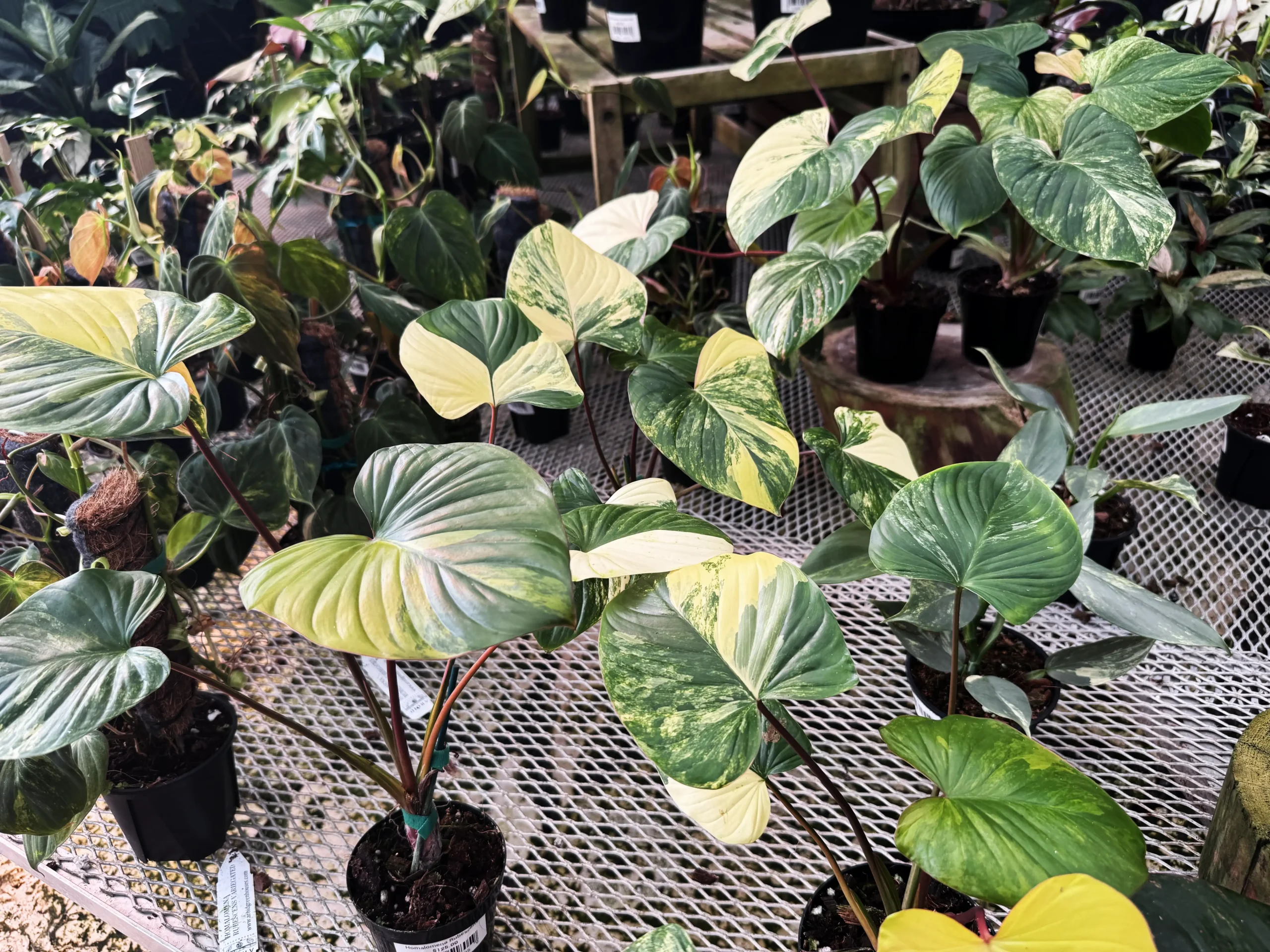
From the ethereal shimmer of Scindapsus rarities to the vibrant, neon-pink flushing of Phyllanthus urinaria “Chamberbitter” Variegated, these are the plants that define a collection. Our selection rotates constantly, featuring everything from high-contrast Pink Homalomenas to unique Epipremnum mutations.

Blink — and you might miss them.
Don’t worry — we will not spam you.
🔥 Small-batch releases ⭐ Collector-grade plants ⏳ Fast sell-outs
🌴 Opening Soon on Palmstreet

We’re Launching on Palmstreet — Don’t Miss It

Join our text list for exclusive updates on our official Palmstreet grand opening, surprise plant perks, early access, and rare drops you won’t see anywhere else.

Join Our Text List for Palmstreet Updates
Don’t worry — we will not spam you.
🌱 Early access 🎁 Free plant giveaways ⚡ Limited drops
🌿 Helpful Tips & FAQ • Universal Rare Tropical Care

Welcome to The Plant Nook Family!

All of our rare tropicals are grown in our greenhouse in Easley, SC, under high-output T5 LED lights. We maintain 75–80°F and 70–90% humidity to ensure every specimen is robust and vibrant before it reaches your door. Because your plant is coming from a highly optimized environment, the first 14 days in your home are the most important for long-term success.

📦 Universal Unboxing & Acclimation Protocol

Shipping involves total darkness and temperature fluctuations. Follow these steps to bridge the gap between our Easley greenhouse and your unique home environment.

The First 48 Hours: Stabilize

  • Unbox Immediately: Gently remove packing materials like poly-fil or paper to allow fresh airflow.
  • Inspect Roots: Healthy roots are white/tan and firm. If roots are dark or mushy, trim with sterilized scissors and treat with diluted hydrogen peroxide.
  • Hydration: If the substrate is bone dry, give a small drink of distilled/RO water. If damp, do not water until acclimation is underway.

Days 1–14: The “Humidity Bridge”

  • High-Humidity Chamber: Start at 70%+ using a clear bin, propagation box, or large clear bag.
  • Gradual Airflow: Every two days, open the lid/bag slightly more (start with a 1-inch gap) to toughen the leaf cuticle for home air.
  • No Stress Zones: Don’t repot, fertilize, or move repeatedly for at least 3–4 weeks.

🪴 Substrate Engineering: The Plant Nook Standards

We use two primary methods to keep roots oxygenated and stable.

1) The “Mother Plant” Method (Semi-Hydro)

  • Media + Pot: Lechuza Pon in Naked Root pots.
  • Capillary Action: Pon wicks water from a reservoir up to roots, preventing drought + waterlogging.
  • 360° Aeration: Slits prevent root binding and increase gas exchange.

2) The “Plant Nook” Chunky Aroid Mix

For most tropicals, we recommend a soil-less chunky mix that mimics the forest floor: 40% Pine Bark, 30% Peat/Coco Coir, 20% Perlite or Orchid Bark, and 10% Worm Castings/Charcoal.

Why it works: large air pockets for oxygen-hungry roots + enough moisture retention to prevent dehydration.

✨ Care by Plant Style: Quick Reference

Genus Light Needs Water Preference Expert Tip
Monstera Bright, indirect (12hr+) Top 75% dry before watering Use a moss pole to produce large, split leaves.
Philodendron Bright, indirect Top 50% dry “Sticky” spots (EFNs) can be a healthy sign.
Anthurium Filtered/bright indirect Evenly moist; never soggy Velvet leaves are sensitive to low humidity.
Alocasia Bright, intense indirect Top 1–2 inches dry May go dormant in winter—check the rhizome.
Hoya Bright, indirect Allow to dry completely Likes being slightly root-bound; don’t cut flower spurs.
Syngonium Medium to bright indirect Top 50% dry If it reverts greener, increase light.
Scindapsus Low to bright indirect Allow to curl slightly before watering Durable vining tropical; great for beginners.
❓ Why are the edges of my leaves turning brown and crispy?

Most commonly: low humidity or mineral burn from tap water. Keep humidity above 50% and switch to distilled, rain, or RO water.

❓ What are these tiny, clear droplets on stems and leaves?

On Philodendrons/Anthuriums, droplets are often EFNs (nectar glands). On Alocasia/Monstera, droplets at leaf tips are usually guttation (expelling excess water).

❓ Why is my variegated plant putting out all-green leaves?

That’s reversion—the plant is making more chlorophyll because light is too low to support its energy needs. Move closer to grow lights.

❓ I found little “bulbs” in my Alocasia soil. What do I do?

Those are corms. Sprout them in a shallow container of Fluval Stratum or Pon (the “Puddle Method”) under high humidity to grow new baby plants.

❓ How do I handle Spider Mites?

Wipe every part of the leaf with 70% isopropyl alcohol and castile soap. Avoid systemic granules—they’re often ineffective against mites.

Tip: If something looks “off” after shipping, don’t panic—stability + humidity + gentle light solve most transit stress.

Plants for every nook, grown with love in our South Carolina Greenhouse. Explore our hand-selected collections of Alocasias, Monsteras, Anthuriums, and other exceptional plants and Tissue Cultures.

Helpful Links

About Us

FAQ's

Acclimation Tips

Our Guarantee

Contact

All Plants are shipped out of Easley, SC

© 2026 The Plant Nook

Powered by smallbiz.reviews

Privacy Policy | Terms of Use